Andromeda
A princess among the stars
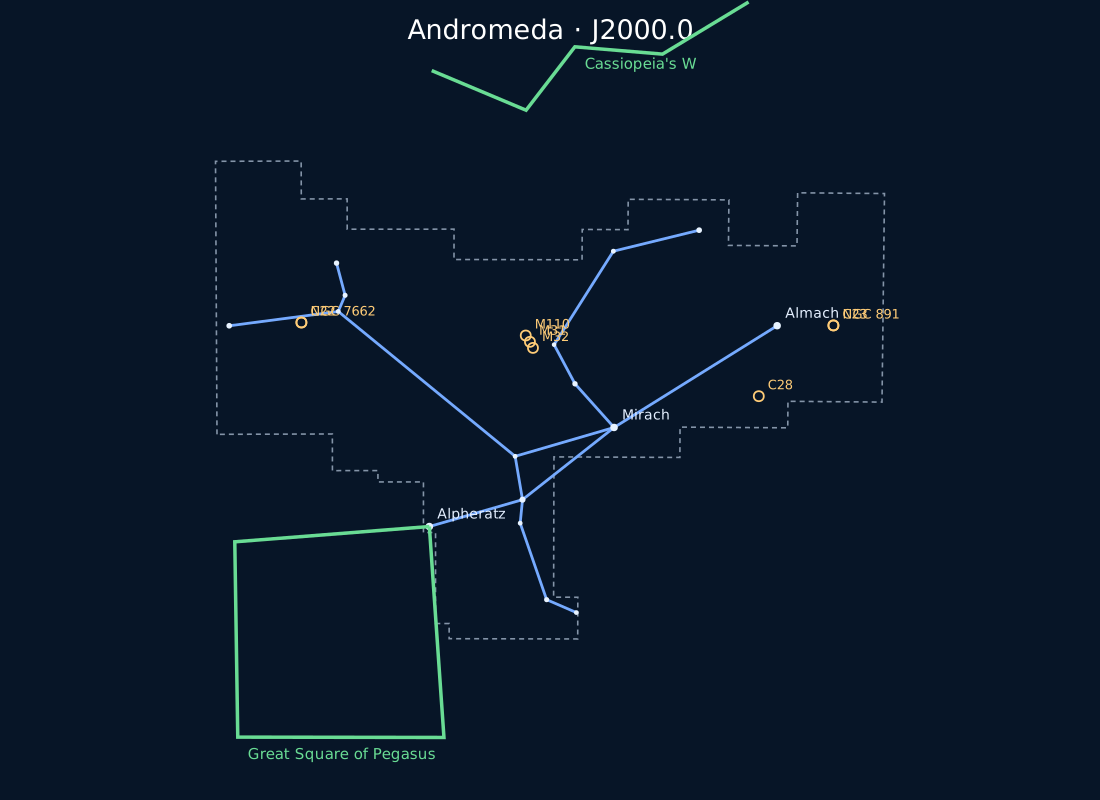
Andromeda carries a rescue story across the northern sky, beside the great galaxy that shares her name.
Read the story Open the chartStar Almanack
Explore the constellation portraits and their chart layers.
Andromeda carries a rescue story across the northern sky, beside the great galaxy that shares her name.
Read the story Open the chart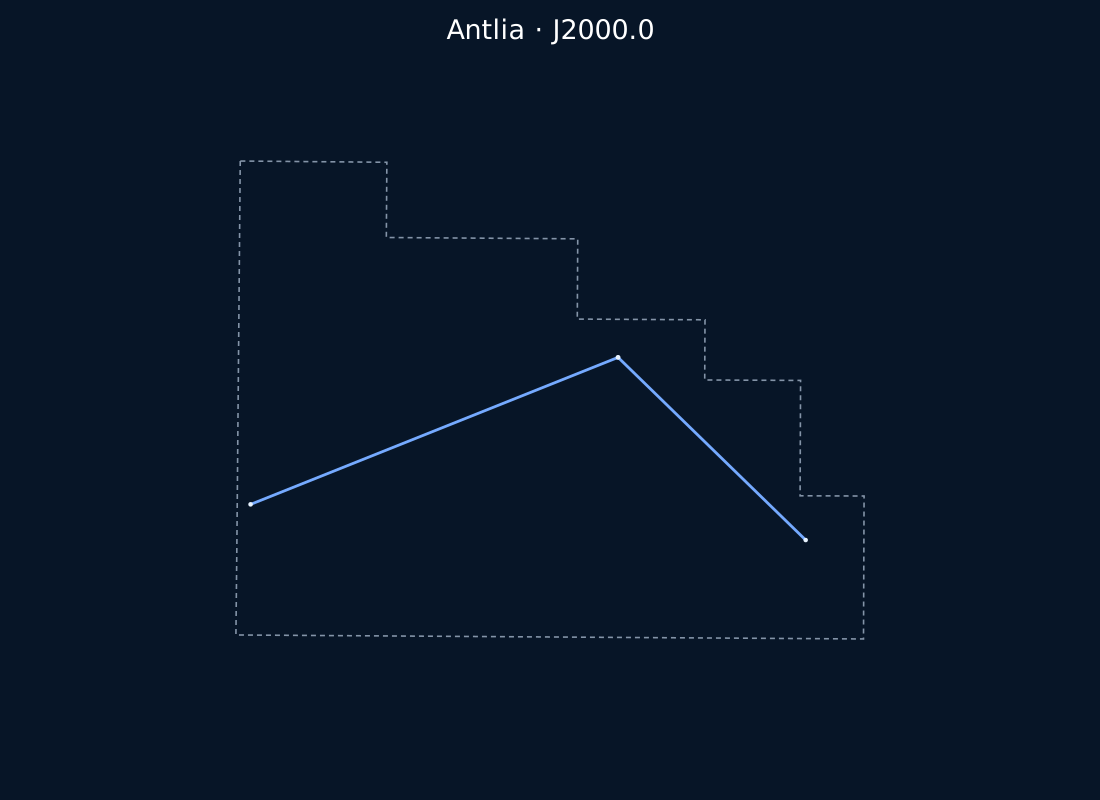
Antlia gives an instrument of experimental science a home among the faint stars of the southern sky.
Read the story Open the chart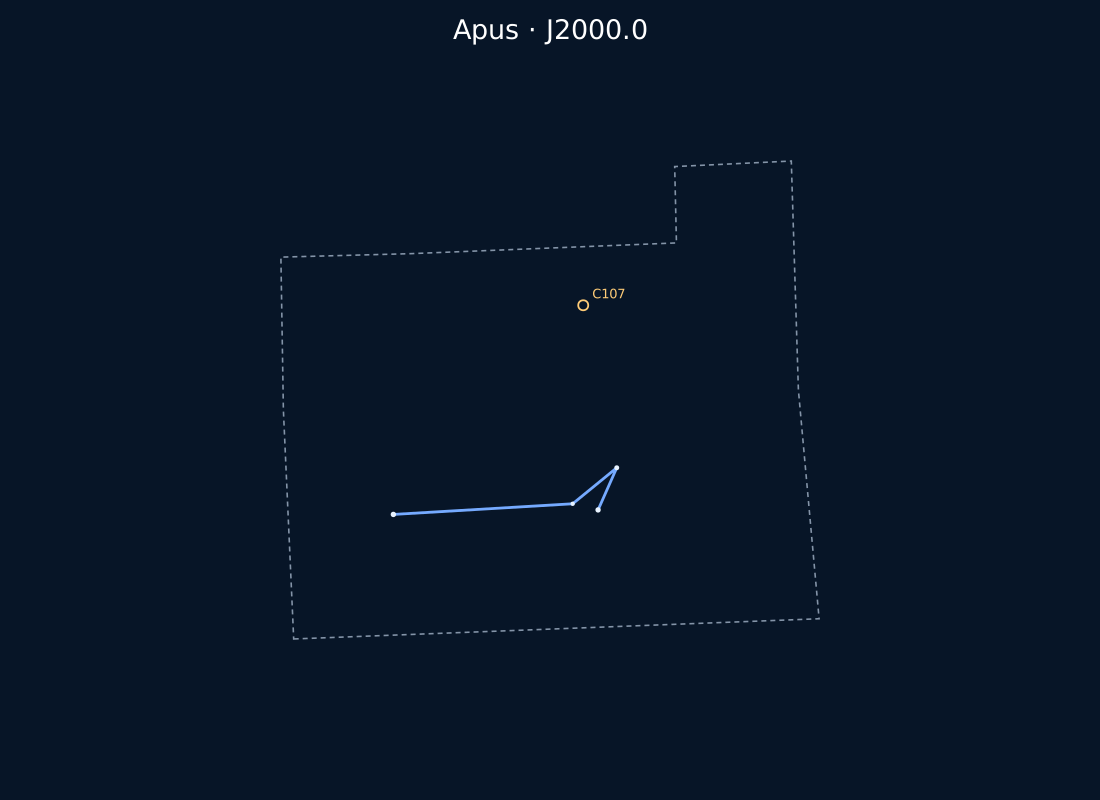
Apus preserves a bird of paradise, a mistaken European belief, and the ocean voyages that carried southern stars onto new maps.
Read the story Open the chart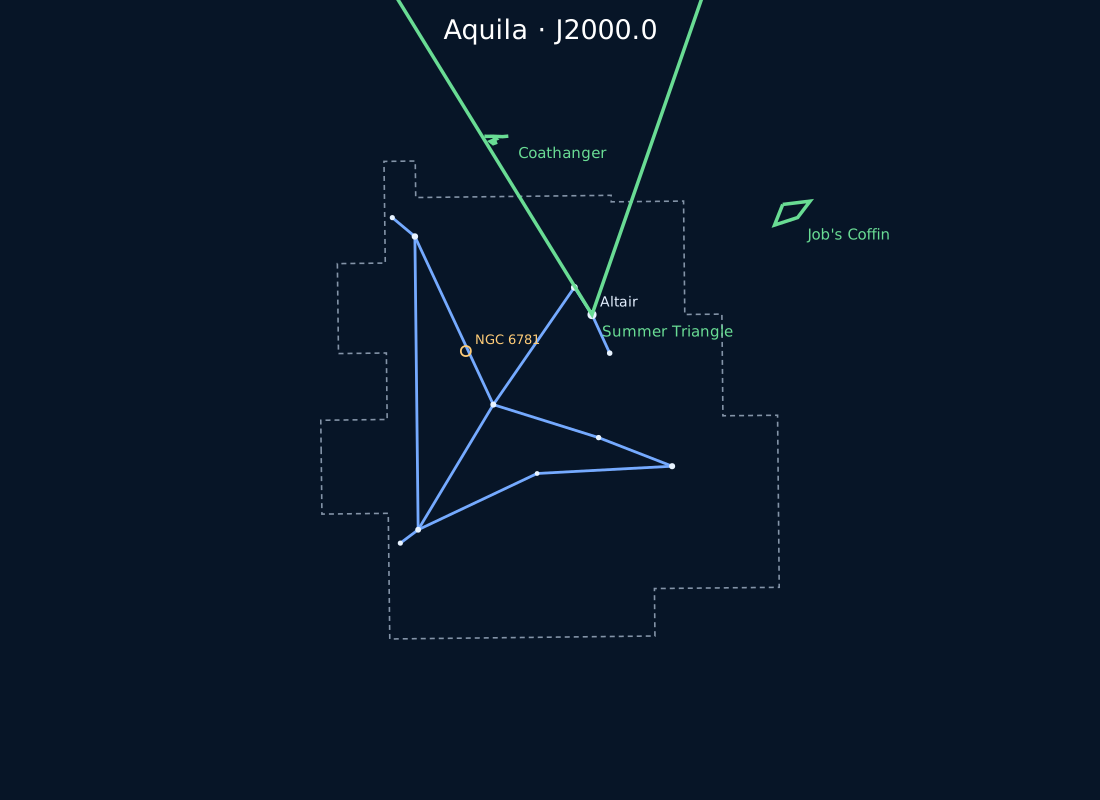
Aquila joins the royal bird of Greek mythology to Altair, a star that belongs to other stories and has a remarkable shape of its own.
Read the story Open the chart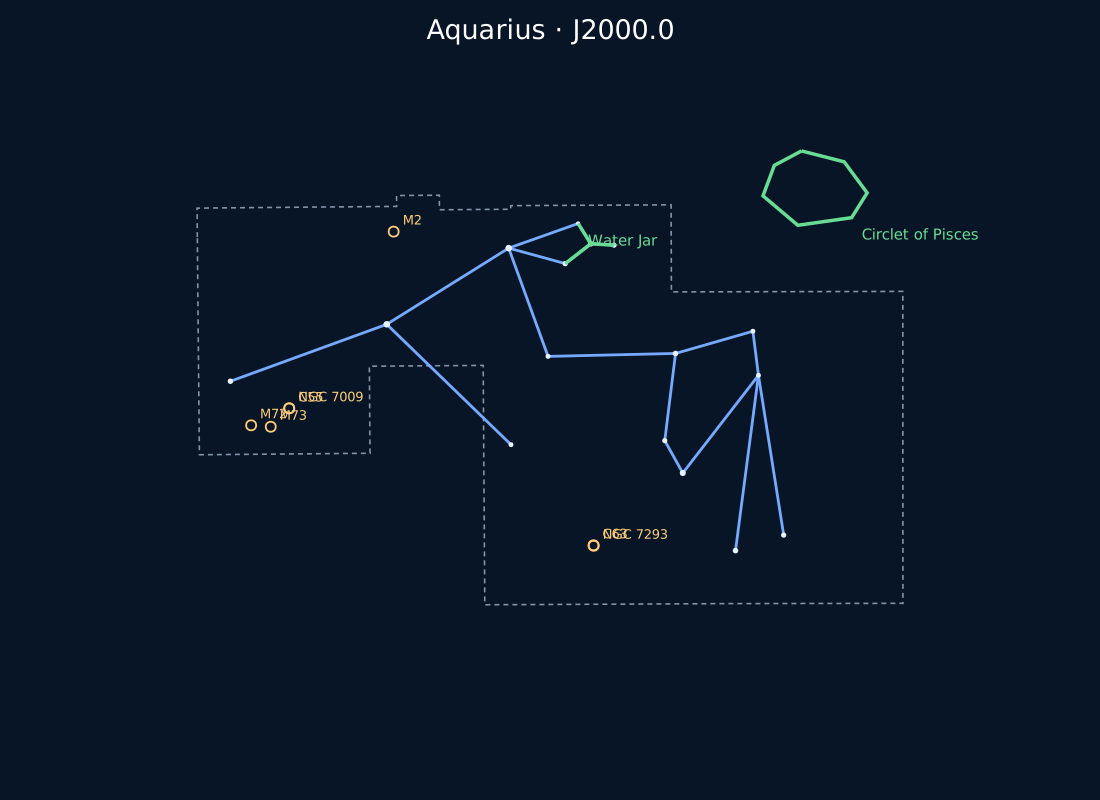
Aquarius carries a vessel through an ancient celestial seascape, where rain, rivers, and the service of the gods meet.
Read the story Open the chart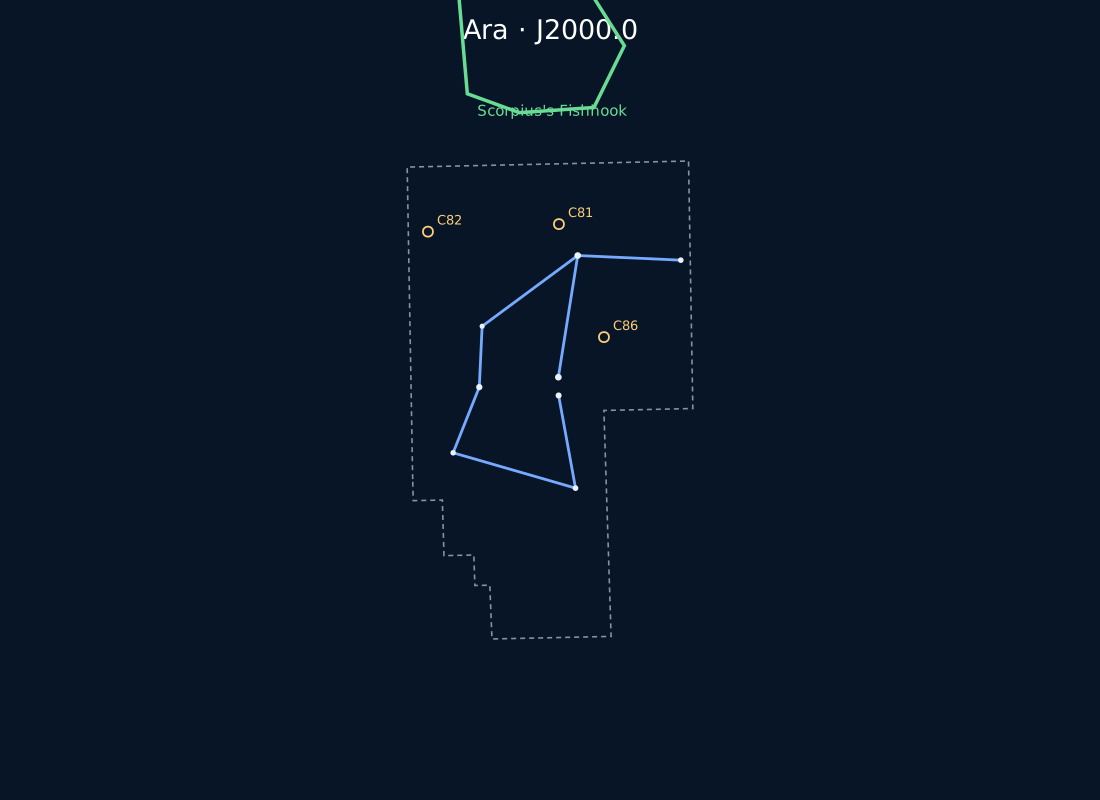
Ara marks a place of offerings and allegiance beneath Scorpius, with young and ancient star clusters beyond its imagined flame.
Read the story Open the chart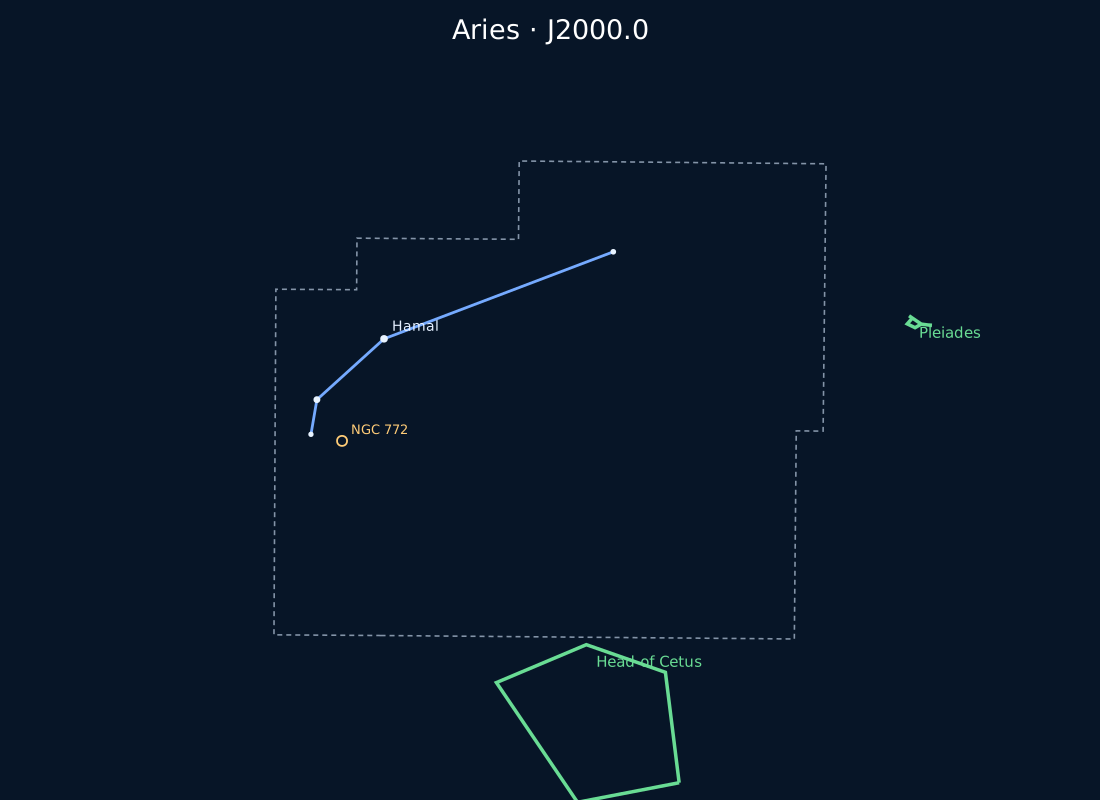
Aries recalls the rescue that produced the Golden Fleece, while its name survives in an astronomical landmark that has moved beyond the constellation.
Read the story Open the chart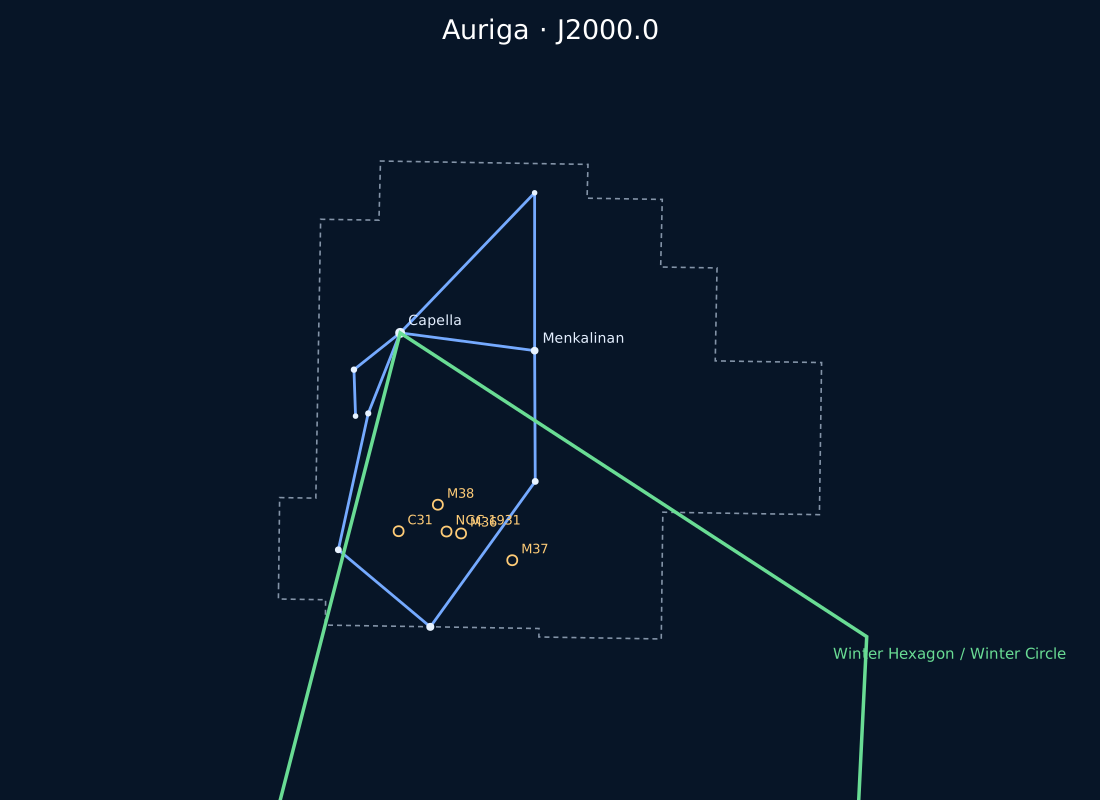
Auriga gathers a driver, a divine nurse, and her young around bright Capella—an ancient picture whose parts never quite form a single story.
Read the story Open the chart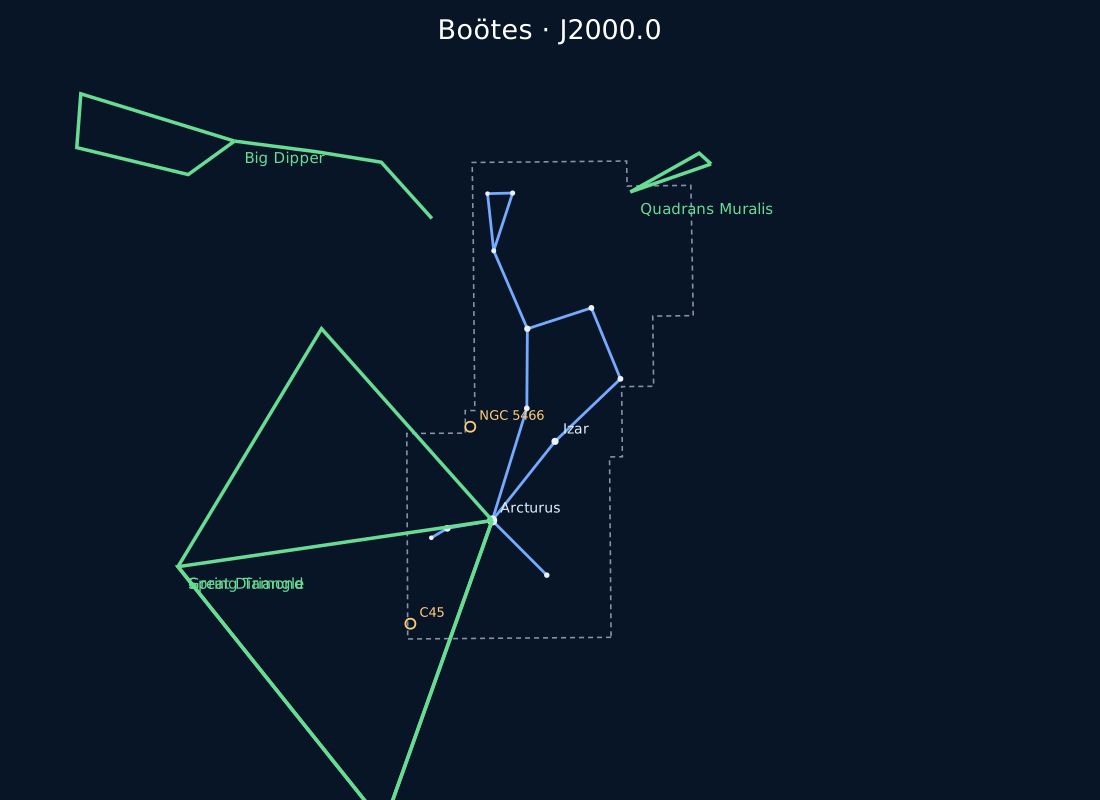
Boötes follows the northern Bear with bright Arcturus, while herdsmen, hunters, and a tragic giver of wine compete for his identity.
Read the story Open the chart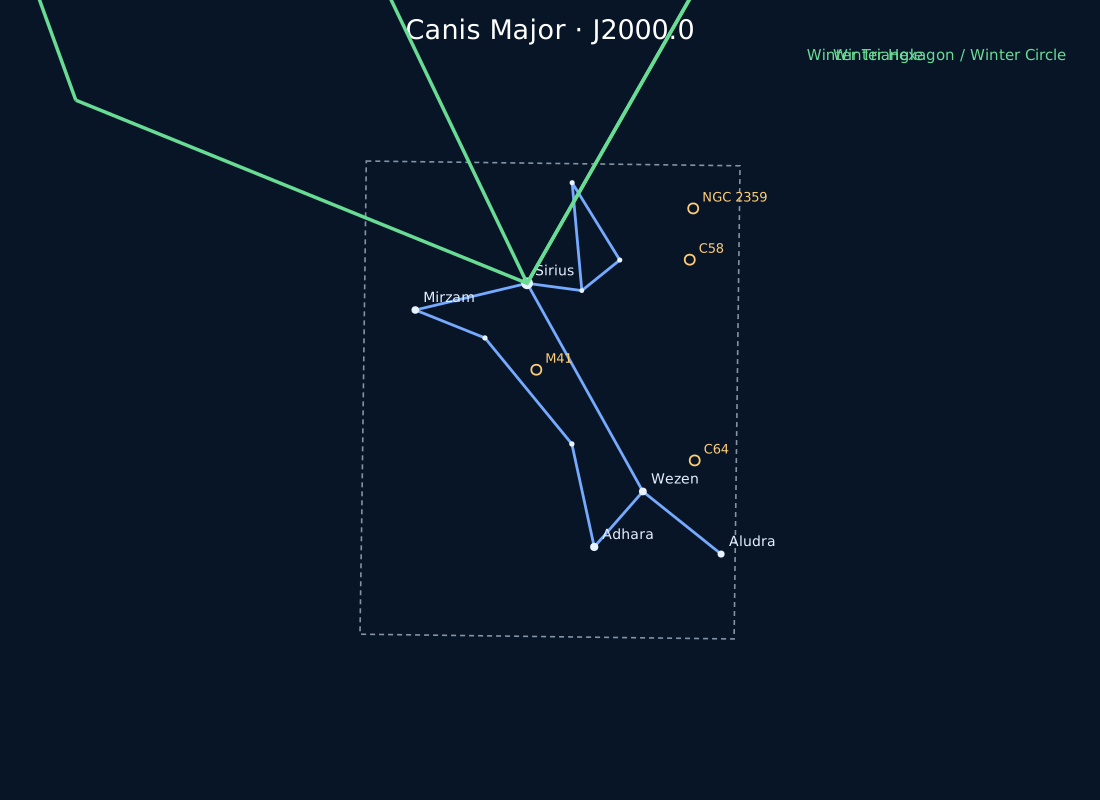
Canis Major follows Orion through the atlas, but Sirius opens a wider history of calendars, impossible hunts, and a hidden stellar companion.
Read the story Open the chart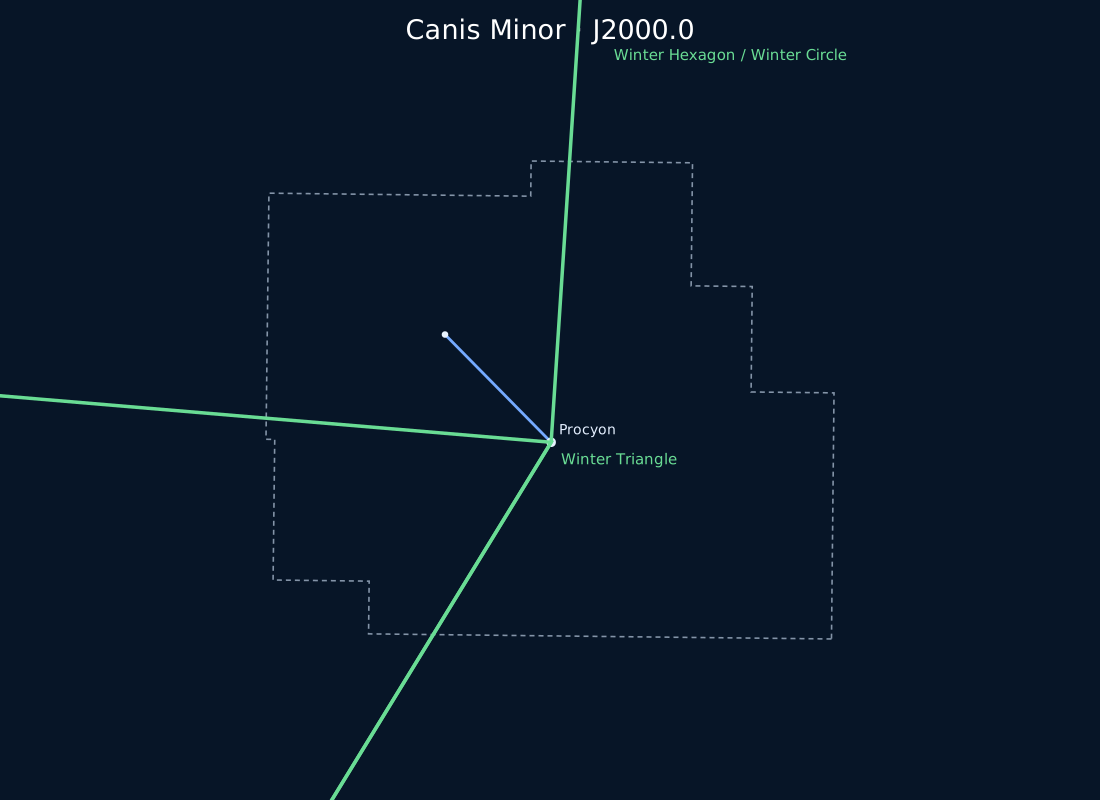
Canis Minor keeps an old rising order in the name Procyon, a bright guide star with a much fainter companion.
Read the story Open the chart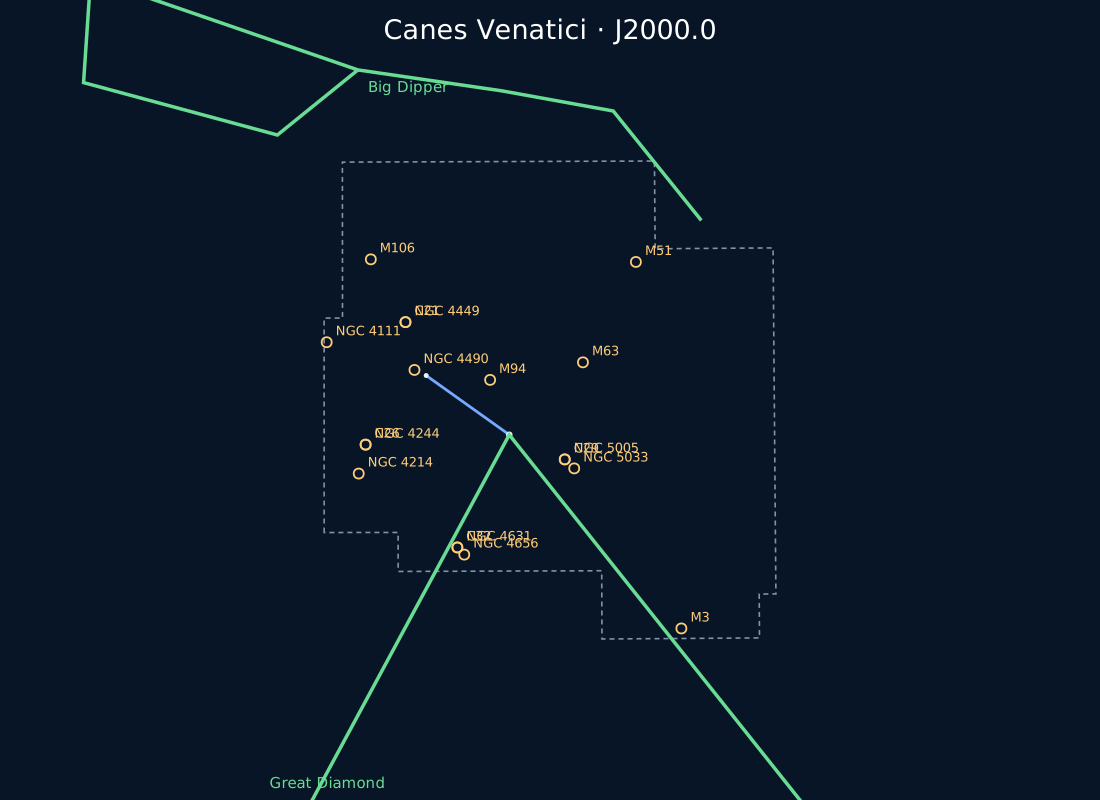
Canes Venatici gives Boötes a pair of hunting companions, while Cor Caroli and the Whirlpool Galaxy lead from atlas history into deeper space.
Read the story Open the chart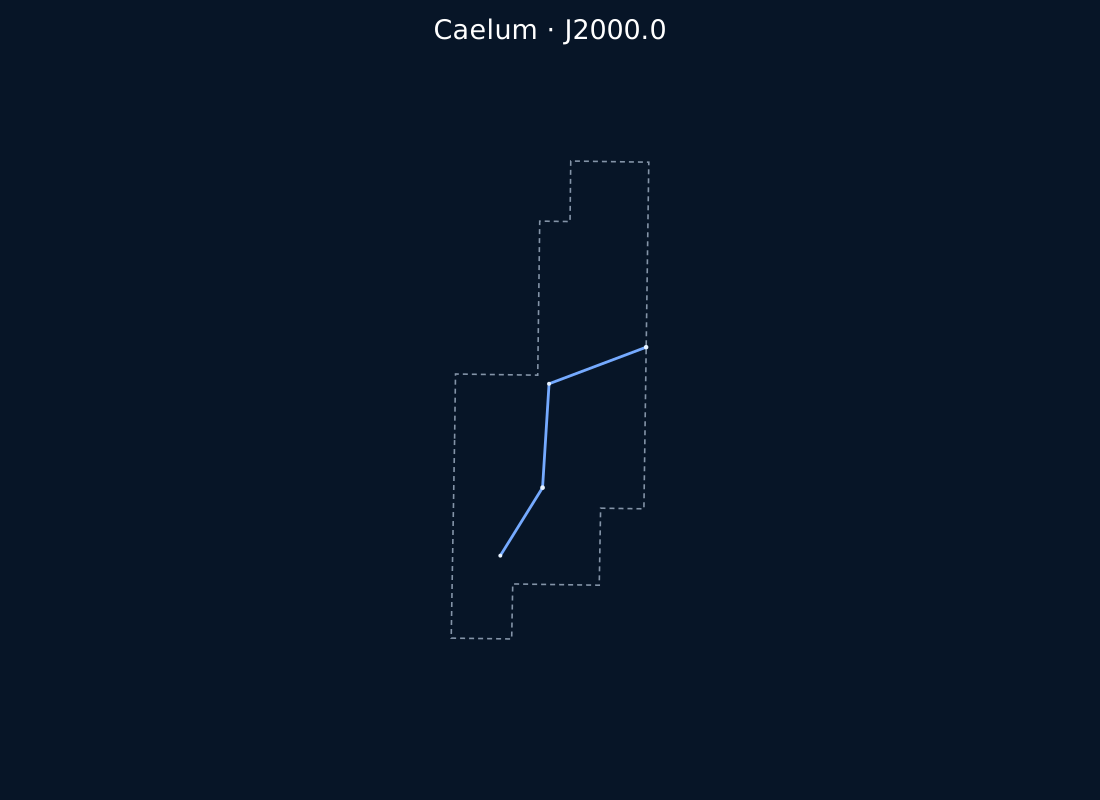
Caelum commemorates the engraver's craft—a faint southern constellation named for a tool that helped pictures and knowledge travel.
Read the story Open the chart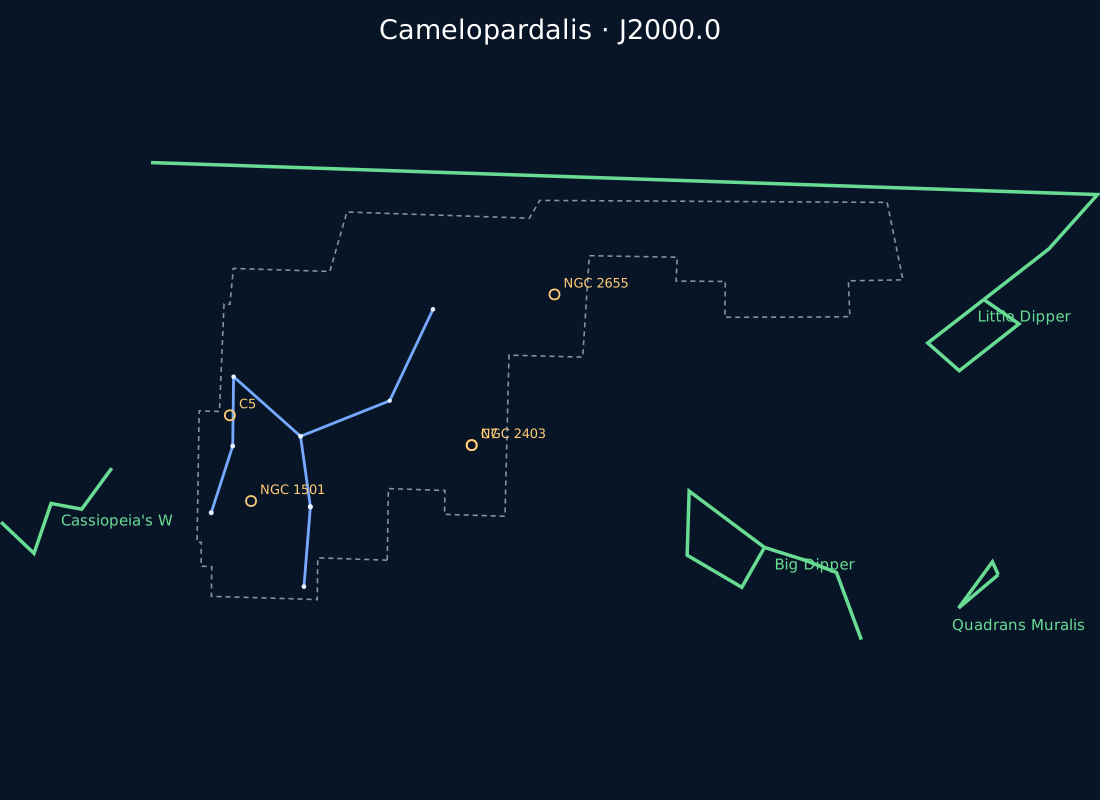
Camelopardalis fills a faint northern region with a seventeenth-century animal, a binocular cascade, and a galaxy partly hidden by our own.
Read the story Open the chart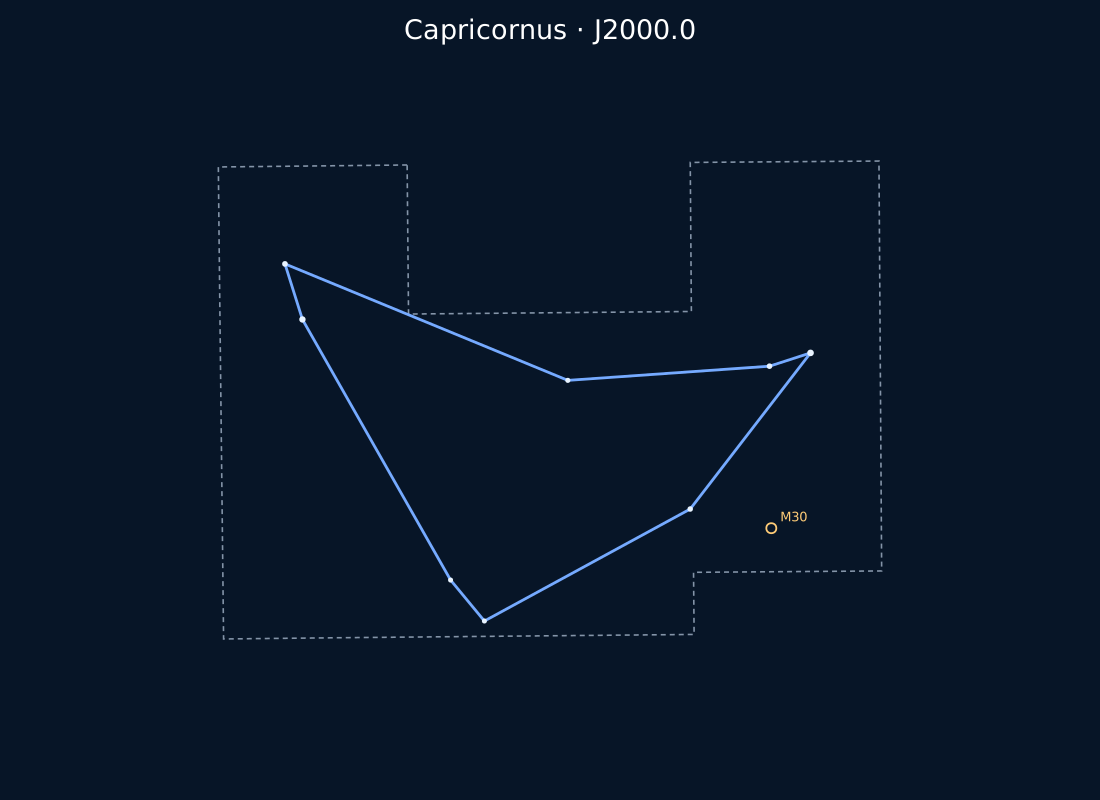
Capricornus carries an ancient hybrid through the zodiac, joining Mesopotamian water imagery to Greek tales of escape and assistance.
Read the story Open the chart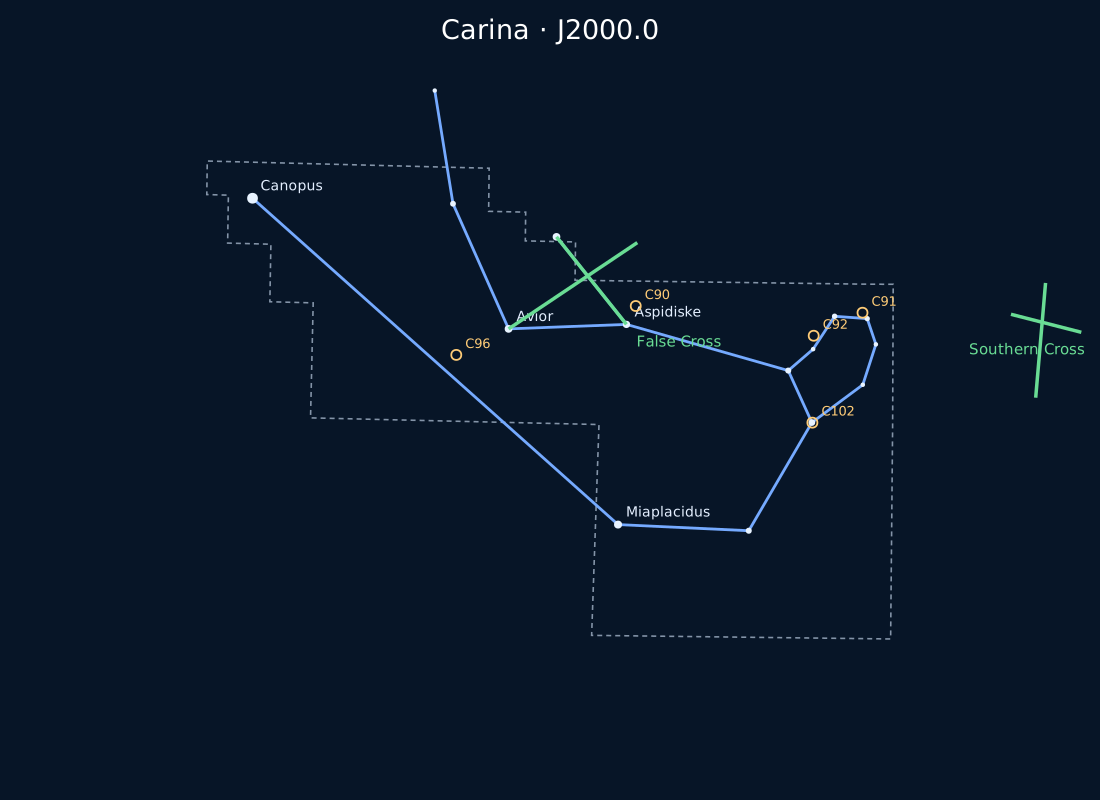
Carina preserves part of the ancient Argo, with Canopus as a brilliant landmark and Eta Carinae recording a much less orderly voyage through stellar life.
Read the story Open the chart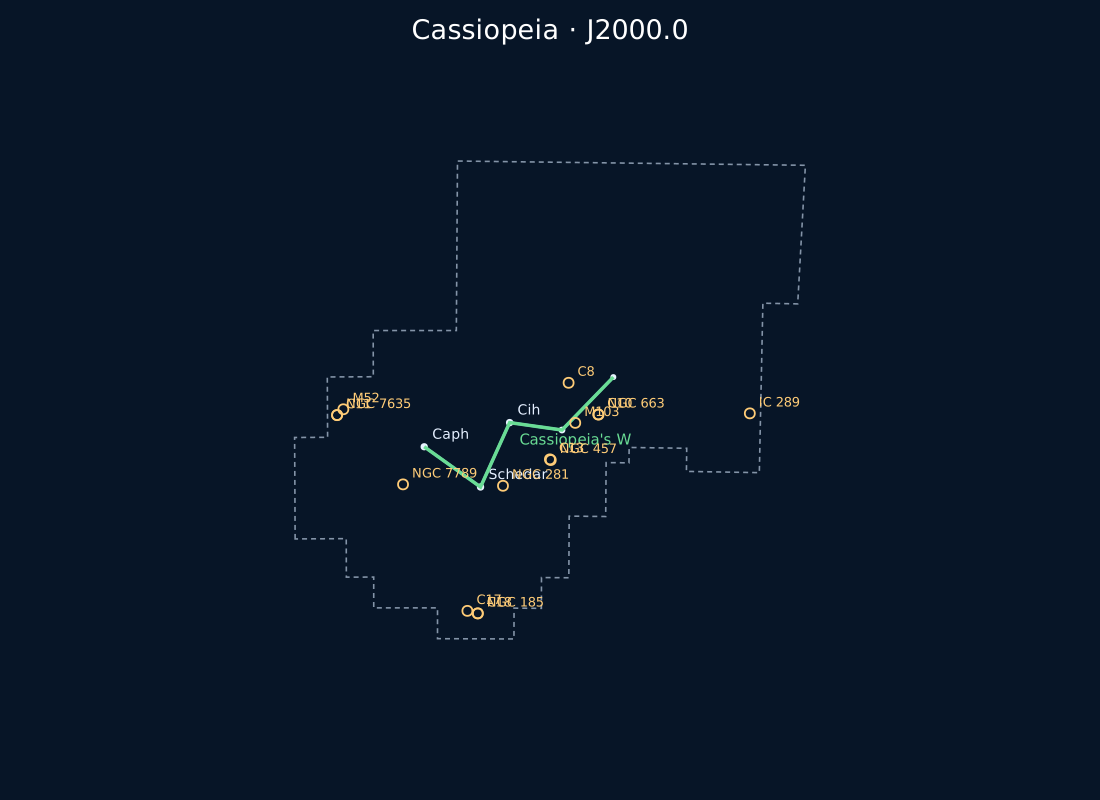
Cassiopeia's familiar zigzag carries a story of dangerous pride and a record of the changing heavens that once startled Tycho Brahe.
Read the story Open the chart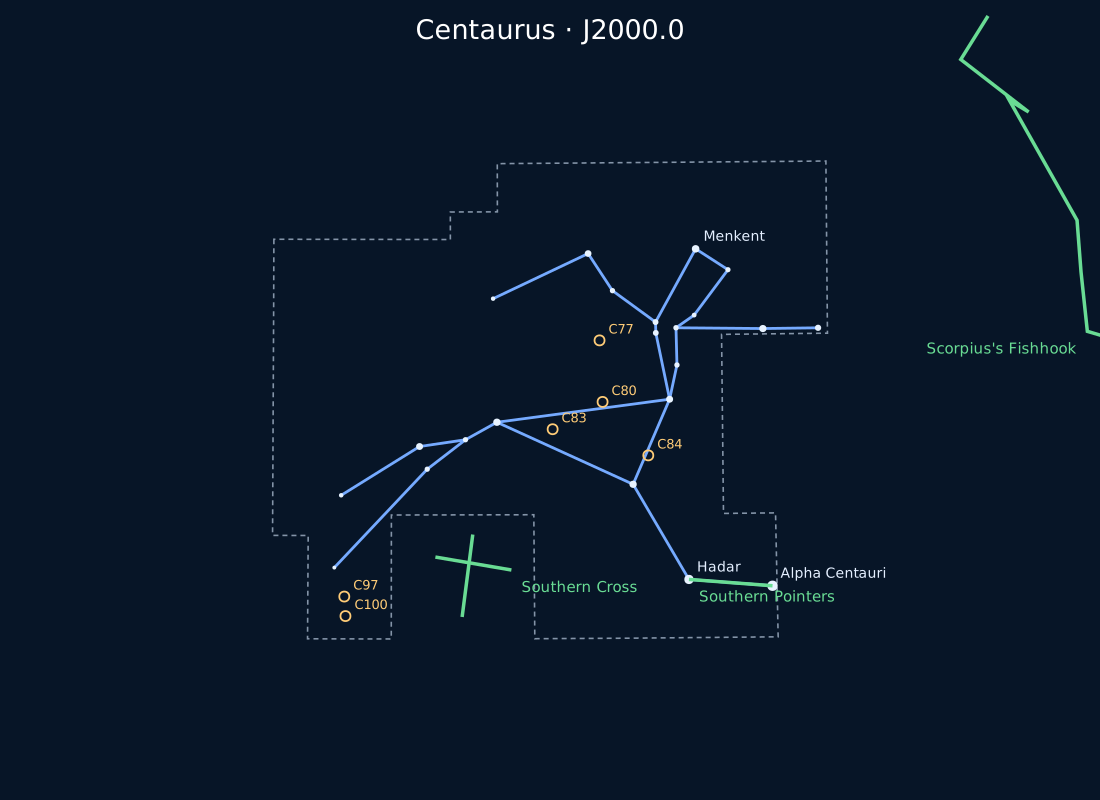
Centaurus preserves the wise centaur Chiron, whose teaching and incurable wound give the southern figure a history beyond its bright stars.
Read the story Open the chart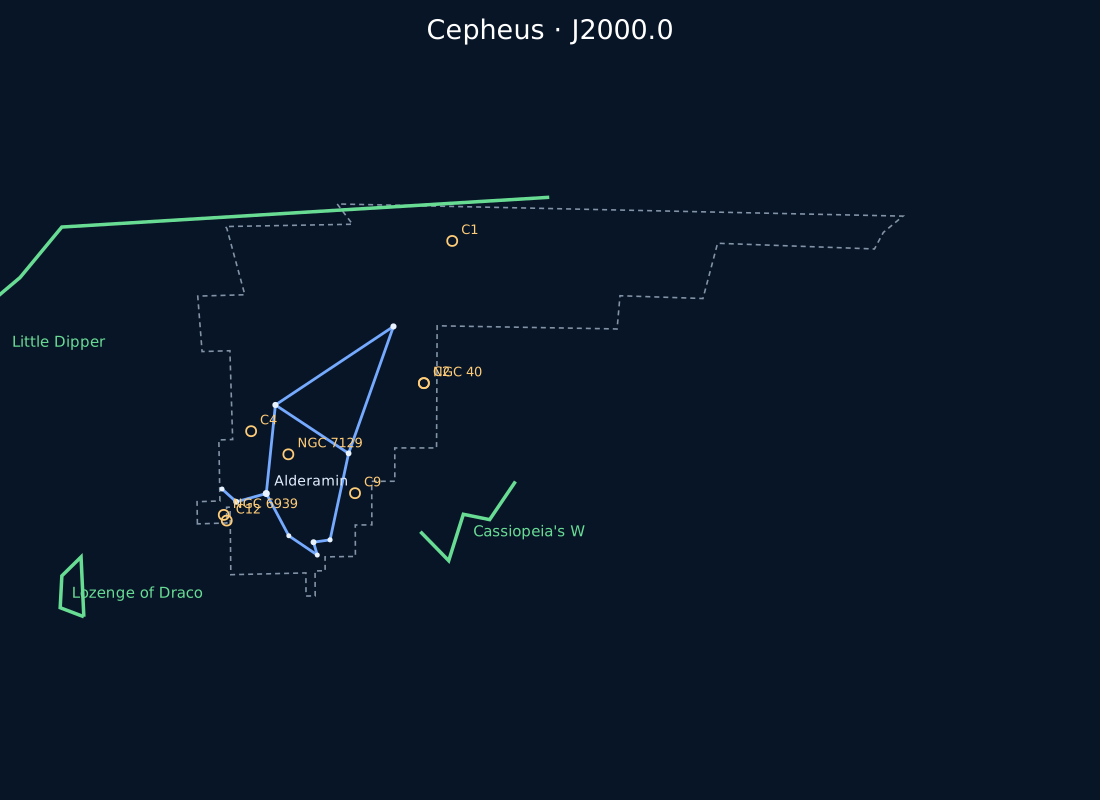
Cepheus keeps a place in Andromeda's royal family, while a regularly pulsing star in his constellation helped give astronomy a measure of distance.
Read the story Open the chart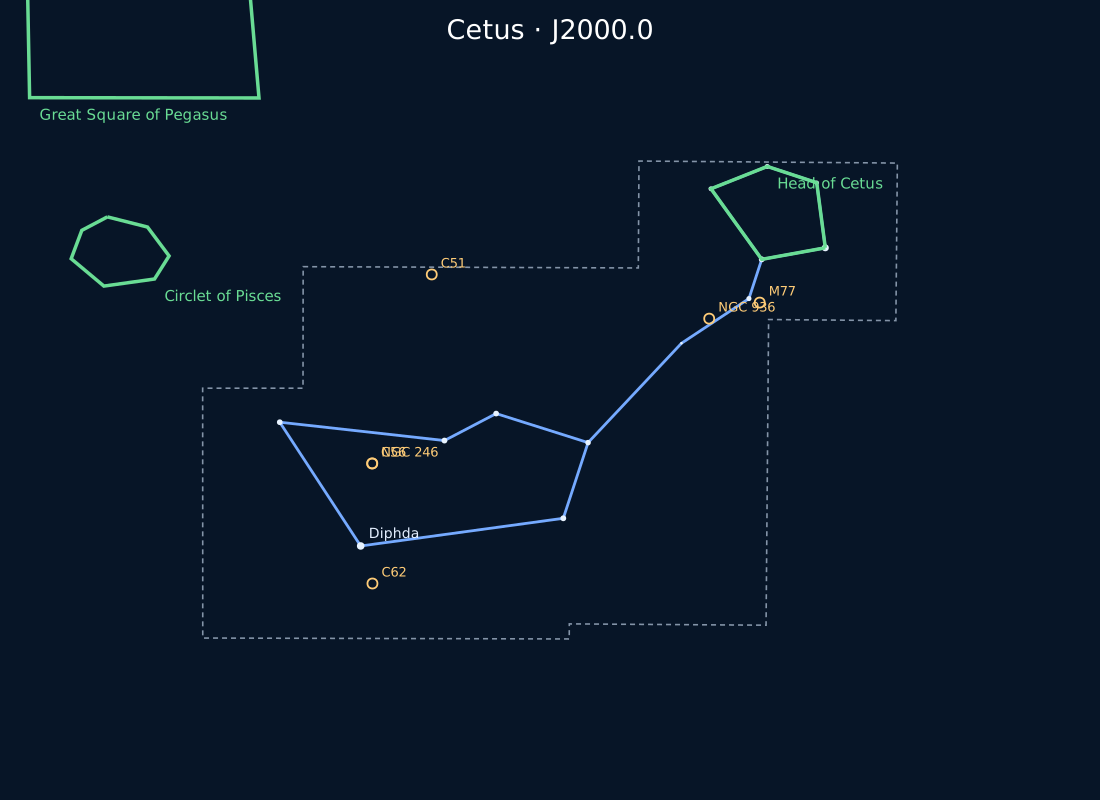
Cetus supplies Andromeda's danger, while the changing star Mira turns the monster's broad region into a place where appearances cannot be taken for granted.
Read the story Open the chart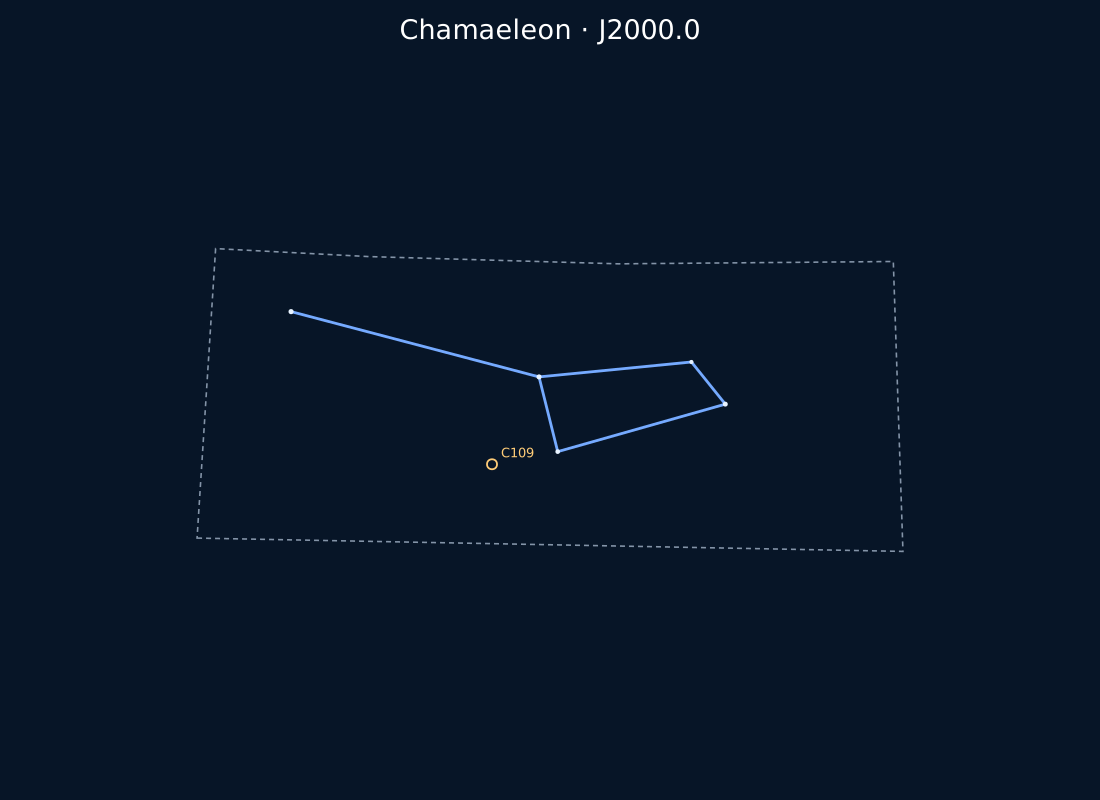
Chamaeleon brings a real animal into the far southern atlas, while dark clouds in its direction conceal stars still taking shape.
Read the story Open the chart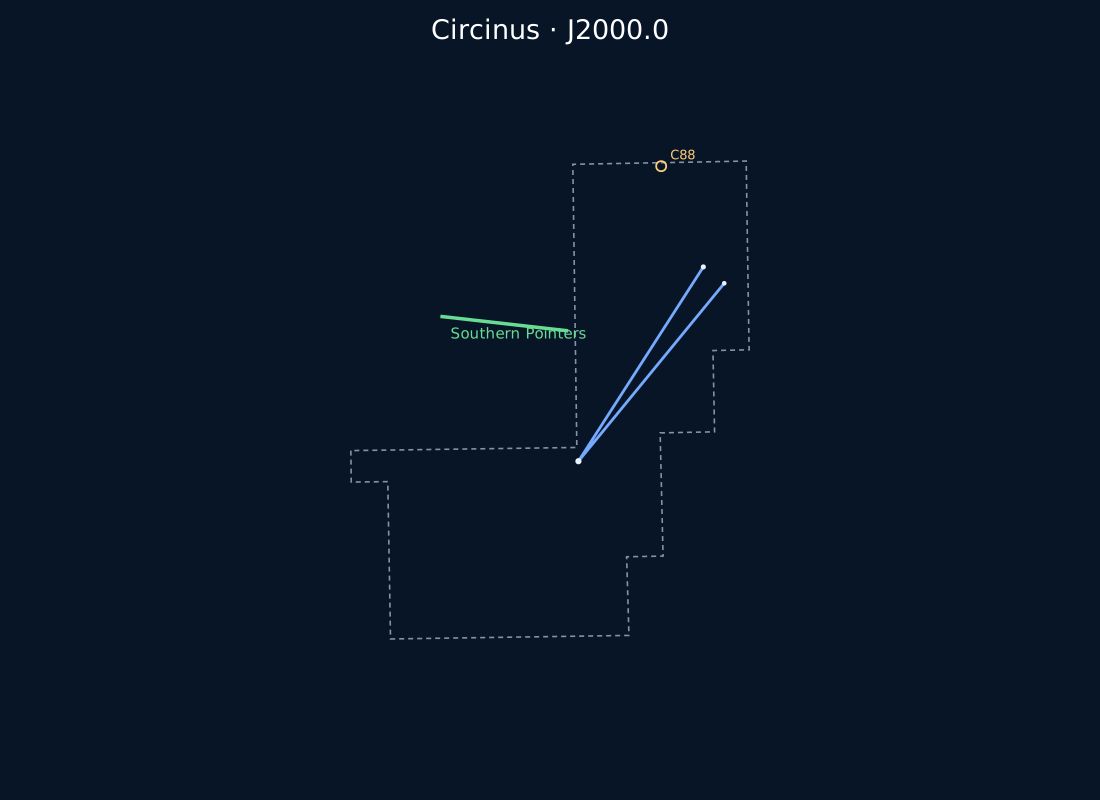
Circinus honors the drawing compass, a tool for making exact relationships on paper, in a small region that also points toward an active galaxy.
Read the story Open the chart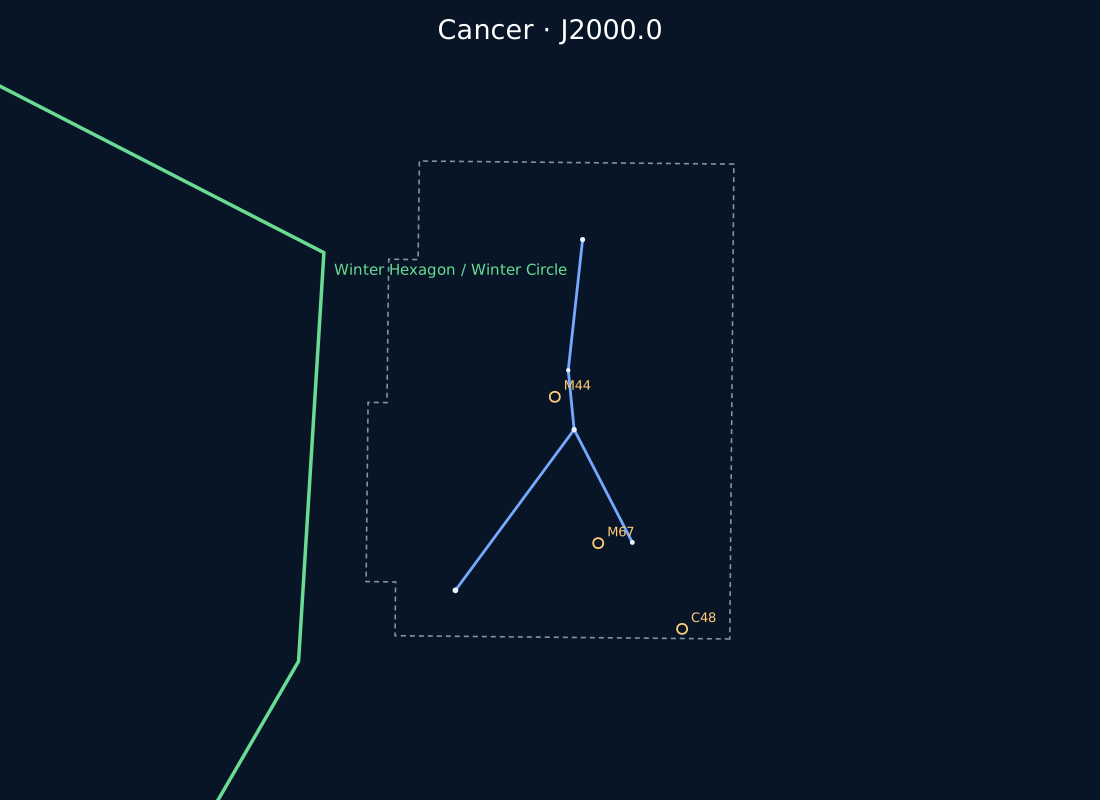
Cancer remembers a crab defeated beside the Hydra, while its faint stars surround a cluster that observers noticed long before telescopes.
Read the story Open the chart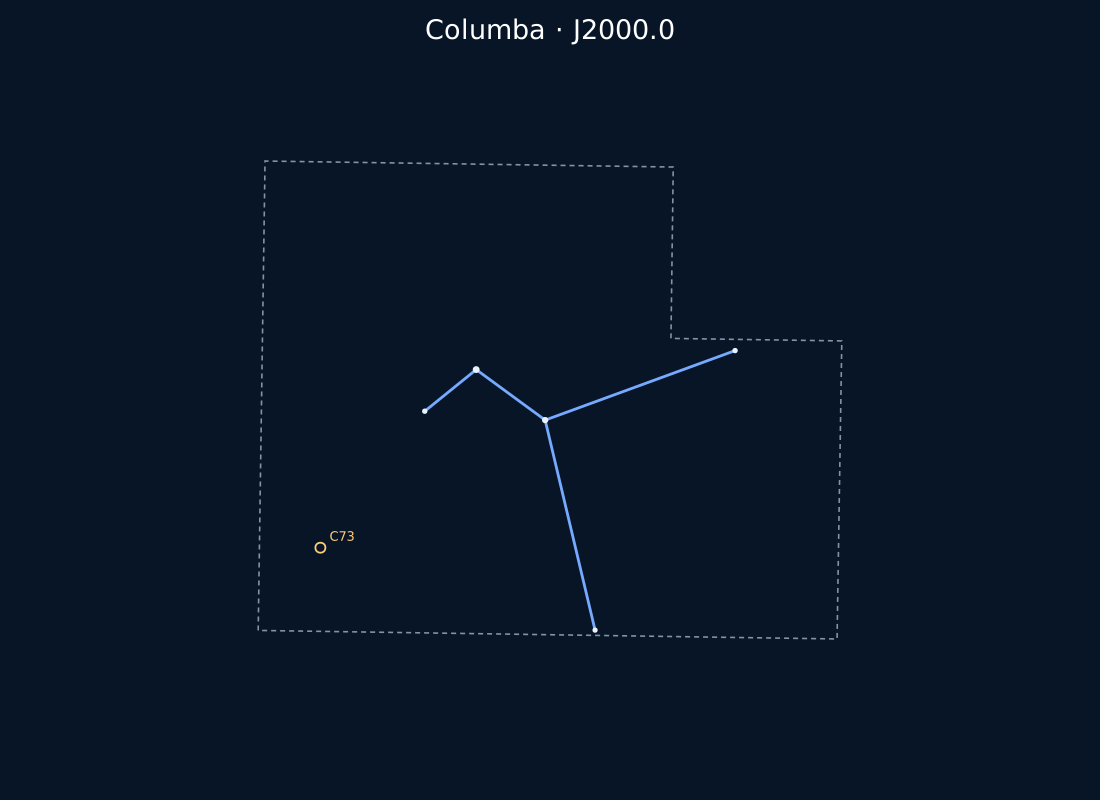
Columba brings Noah's messenger into the southern sky, a late constellation whose small bird carries an older story about waiting for the waters to recede.
Read the story Open the chart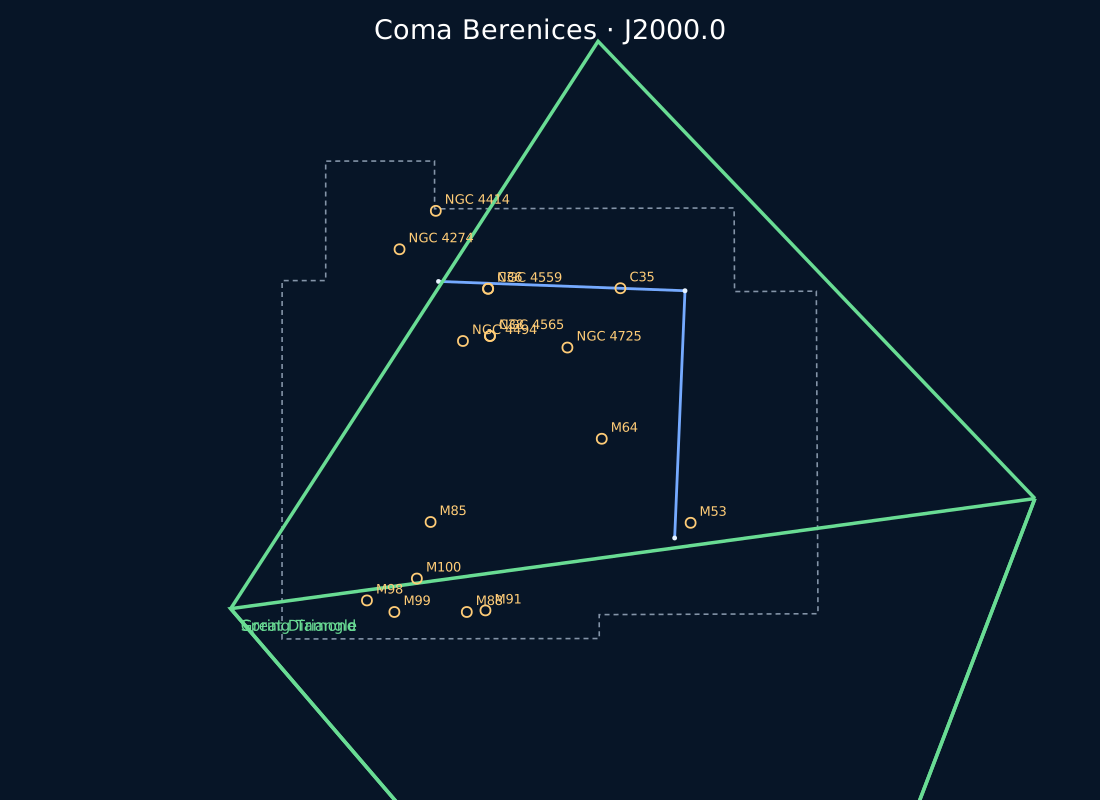
Coma Berenices preserves the story of a royal lock of hair, carried from a vow and a court poem into a faint, star-filled part of the atlas.
Read the story Open the chart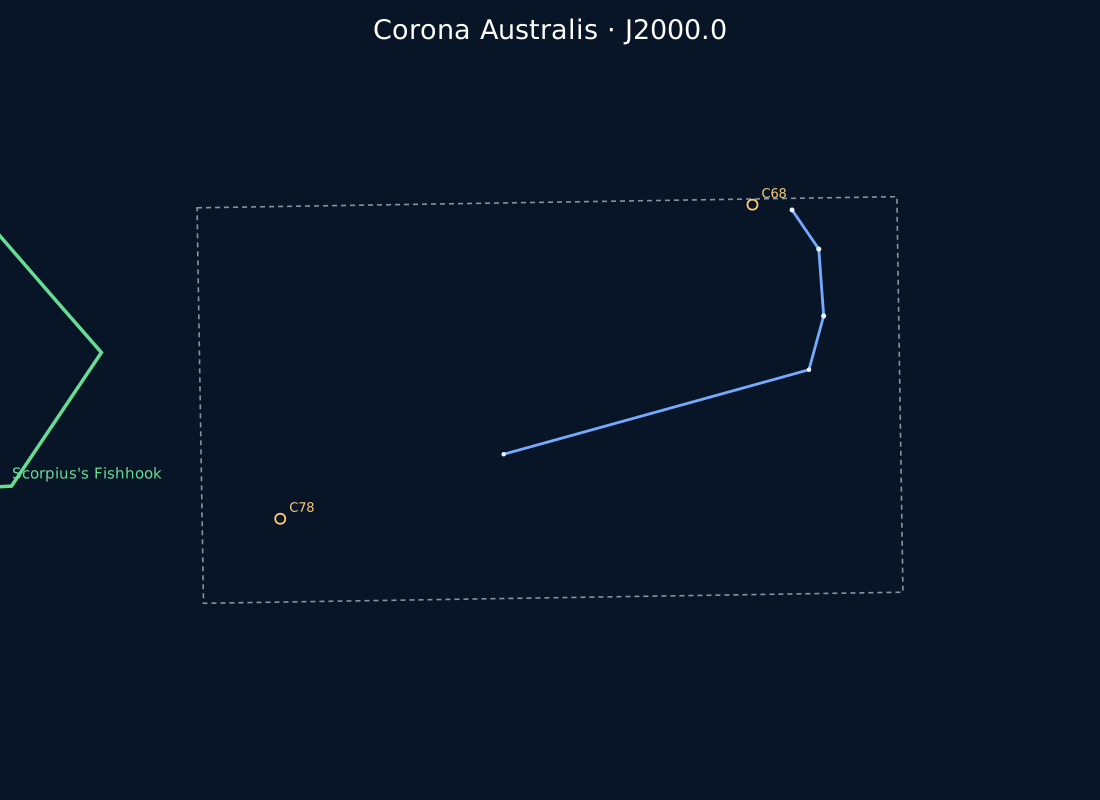
Corona Australis keeps a modest southern curve of stars distinct from Ariadne's northern crown, with dusty stellar nurseries nearby.
Read the story Open the chart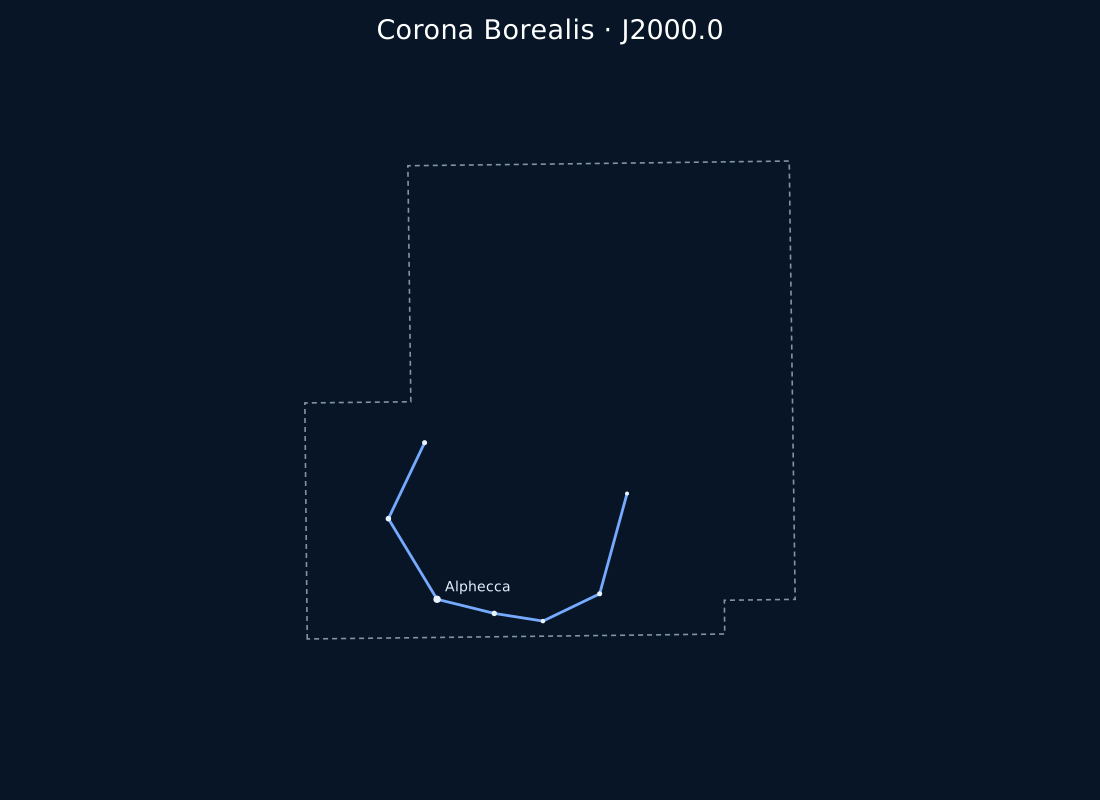
Corona Borealis preserves a small arc of stars associated with Ariadne, while a remarkable variable can fade behind dust within the Crown's region.
Read the story Open the chart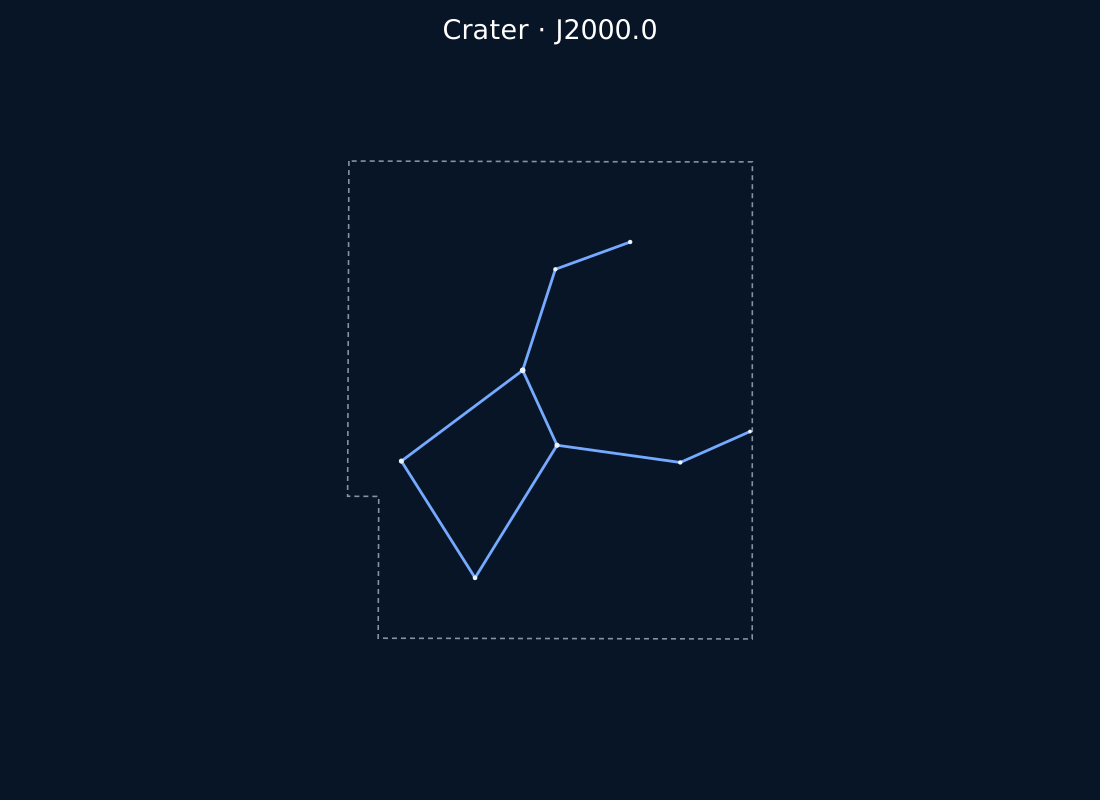
Crater turns an everyday vessel into part of Apollo's failed water errand, preserving a familiar object whose name means something different on a planetary map.
Read the story Open the chart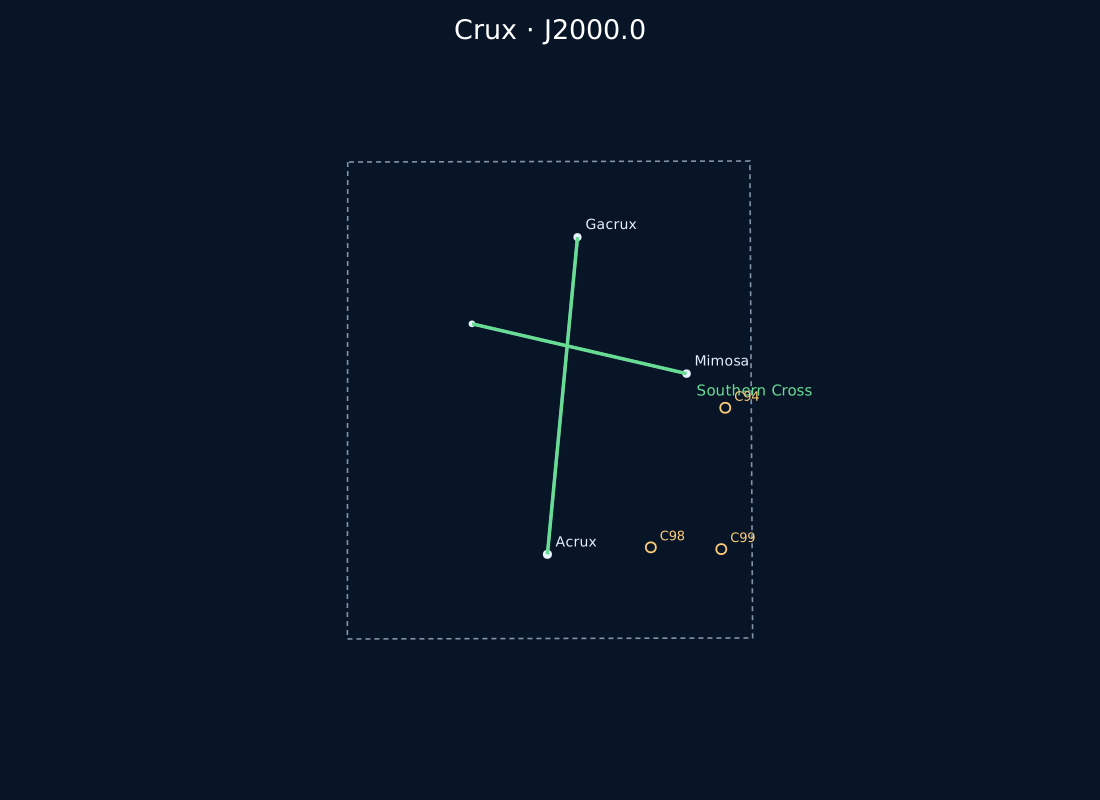
Crux turns four conspicuous stars into a southern landmark, while the dark Coalsack beside them offers another way to read the Milky Way.
Read the story Open the chart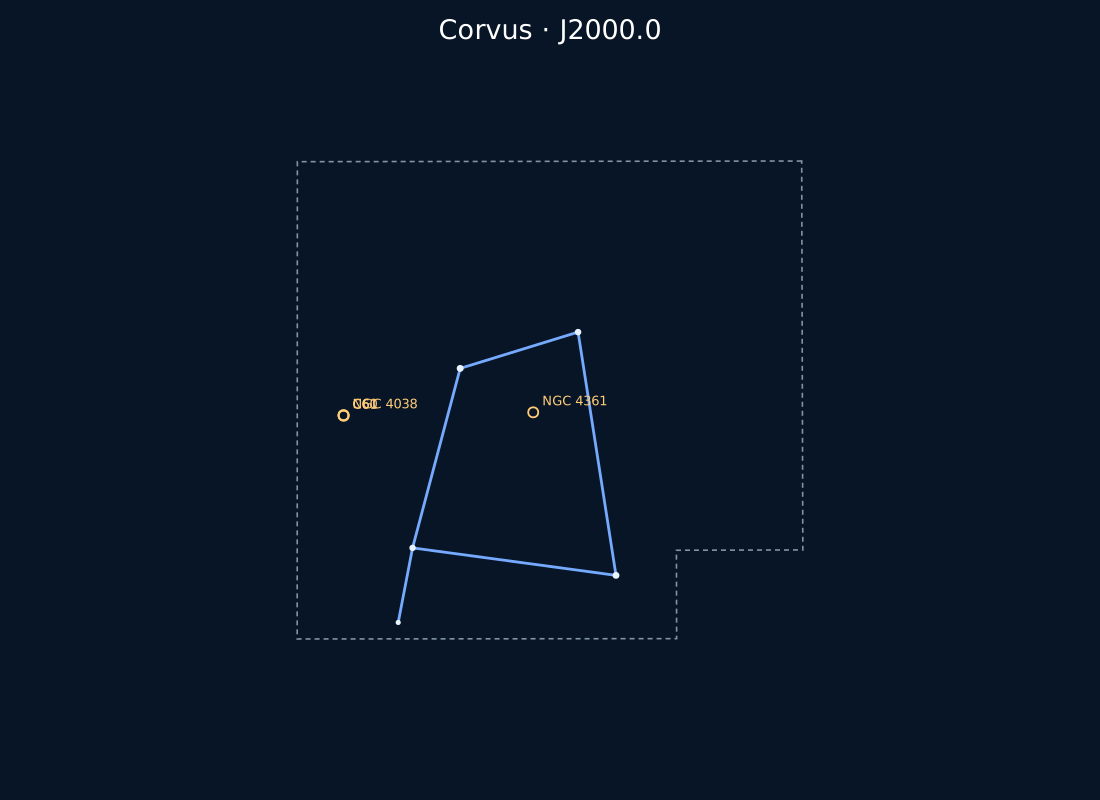
Corvus remembers Apollo's delayed errand, while the Crow's small stellar outline points toward galaxies undergoing a much slower encounter.
Read the story Open the chart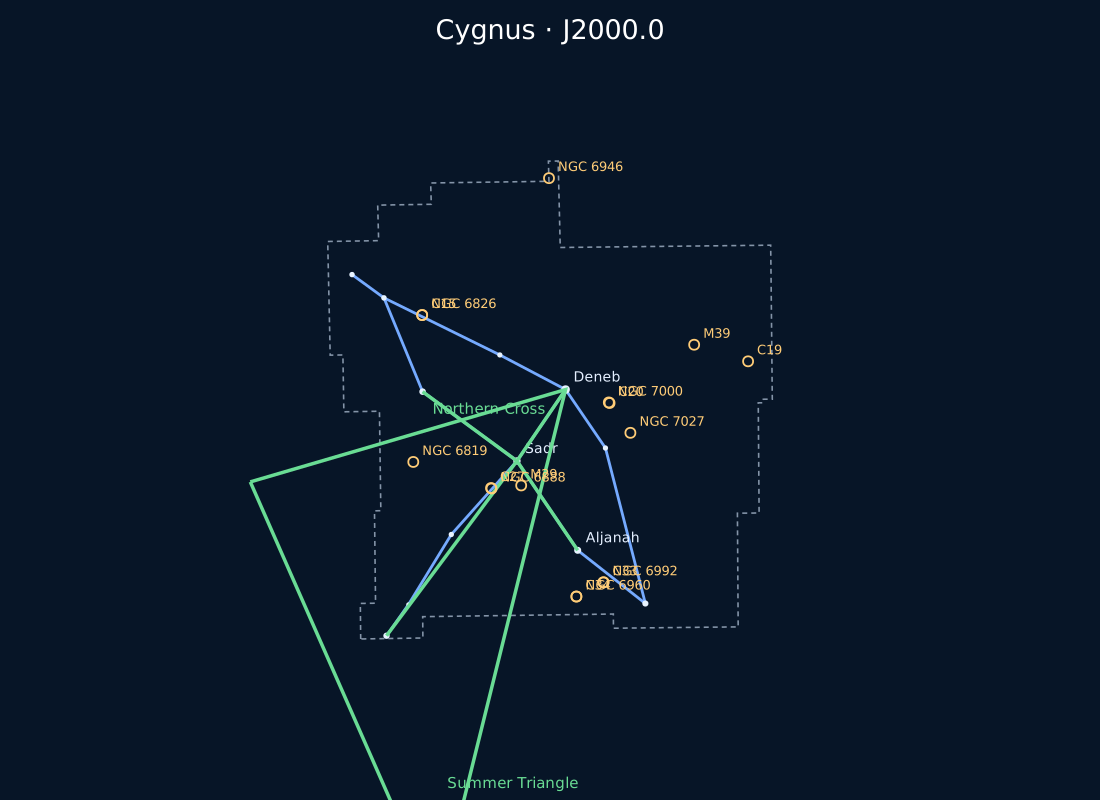
Cygnus spreads its wings across the Milky Way, carrying several Greek identities within the familiar Northern Cross.
Read the story Open the chart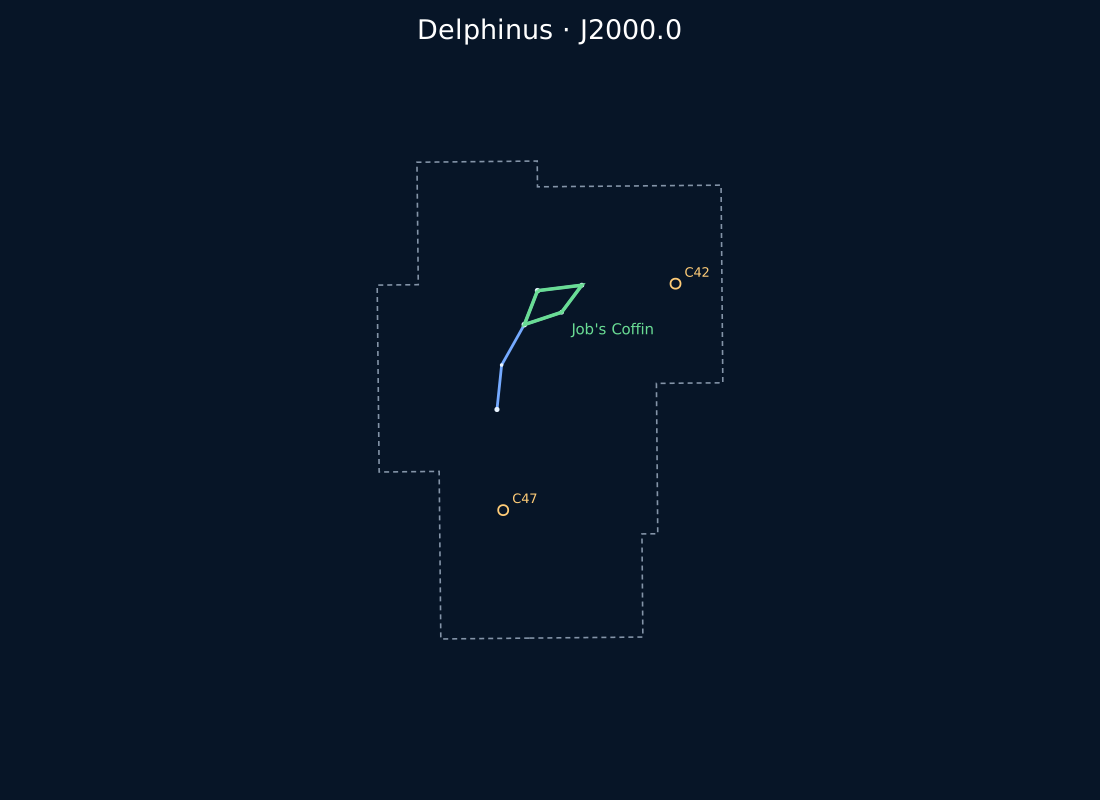
Delphinus turns a small diamond of stars into a sea creature remembered for carrying messages and rescuing a musician.
Read the story Open the chart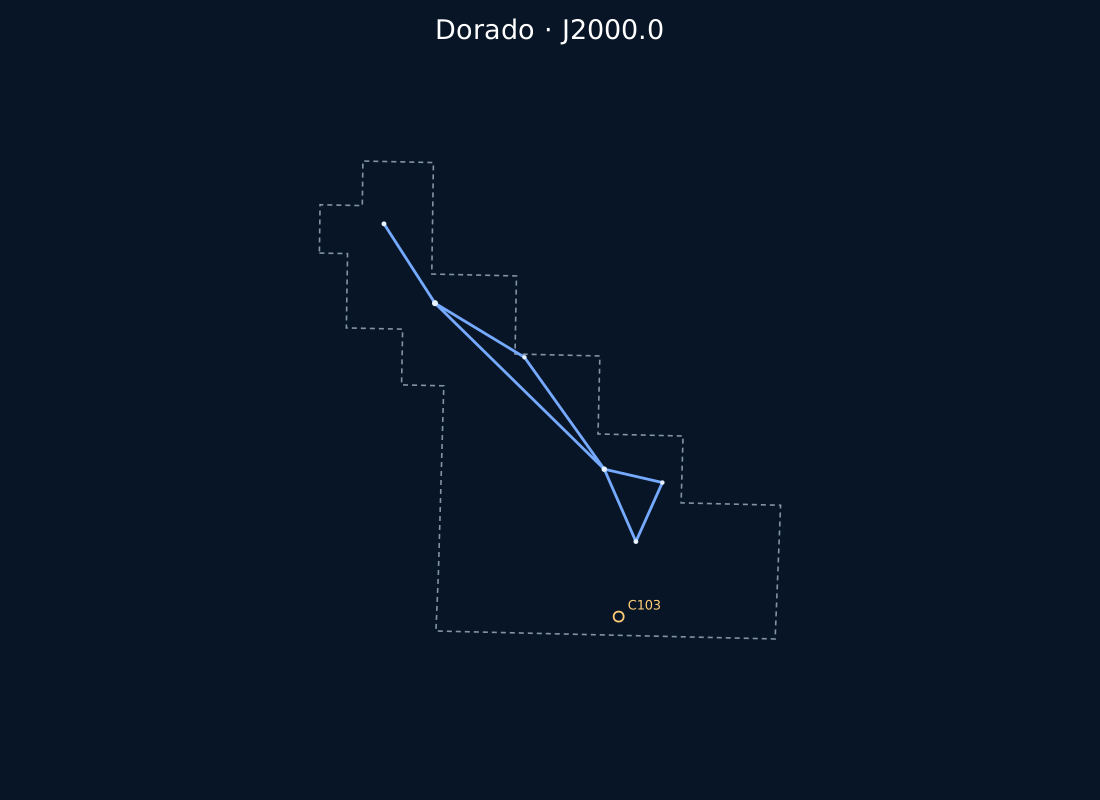
Dorado carries the history of southern voyages in its name, while the Large Magellanic Cloud makes its modest stars a gateway to another galaxy.
Read the story Open the chart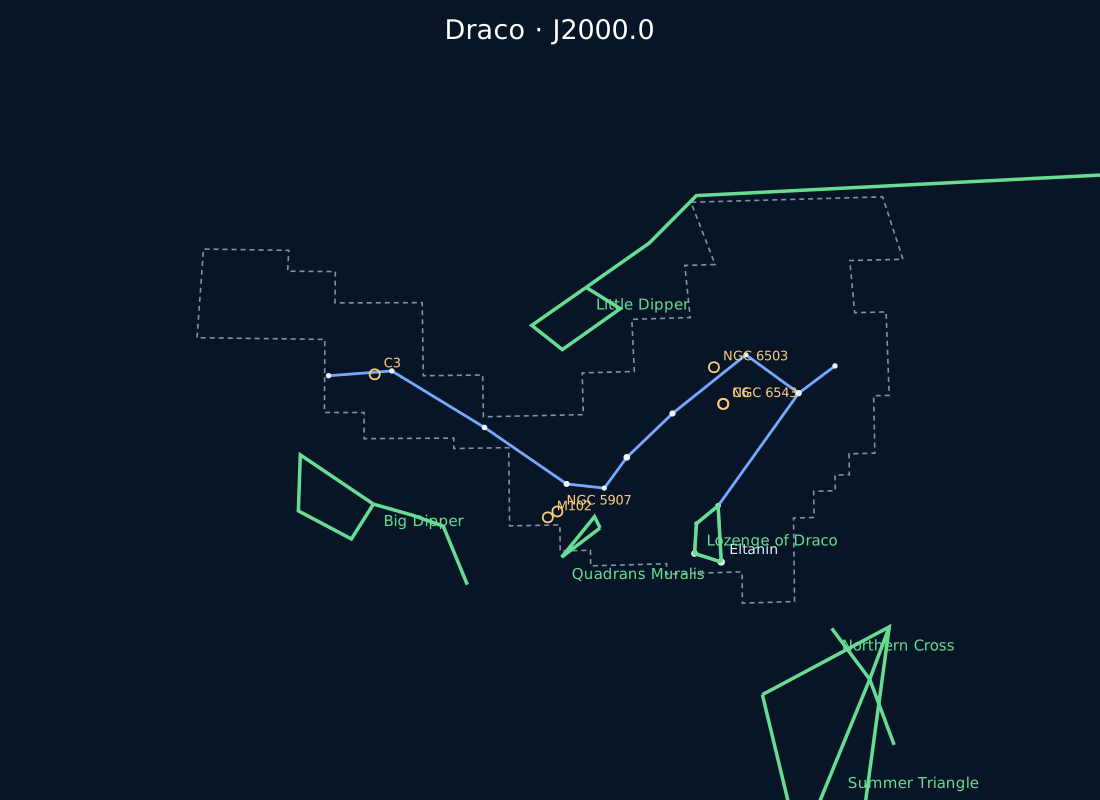
Draco curls through the northern sky, preserving a guardian of golden apples and a star that once stood close to the celestial pole.
Read the story Open the chart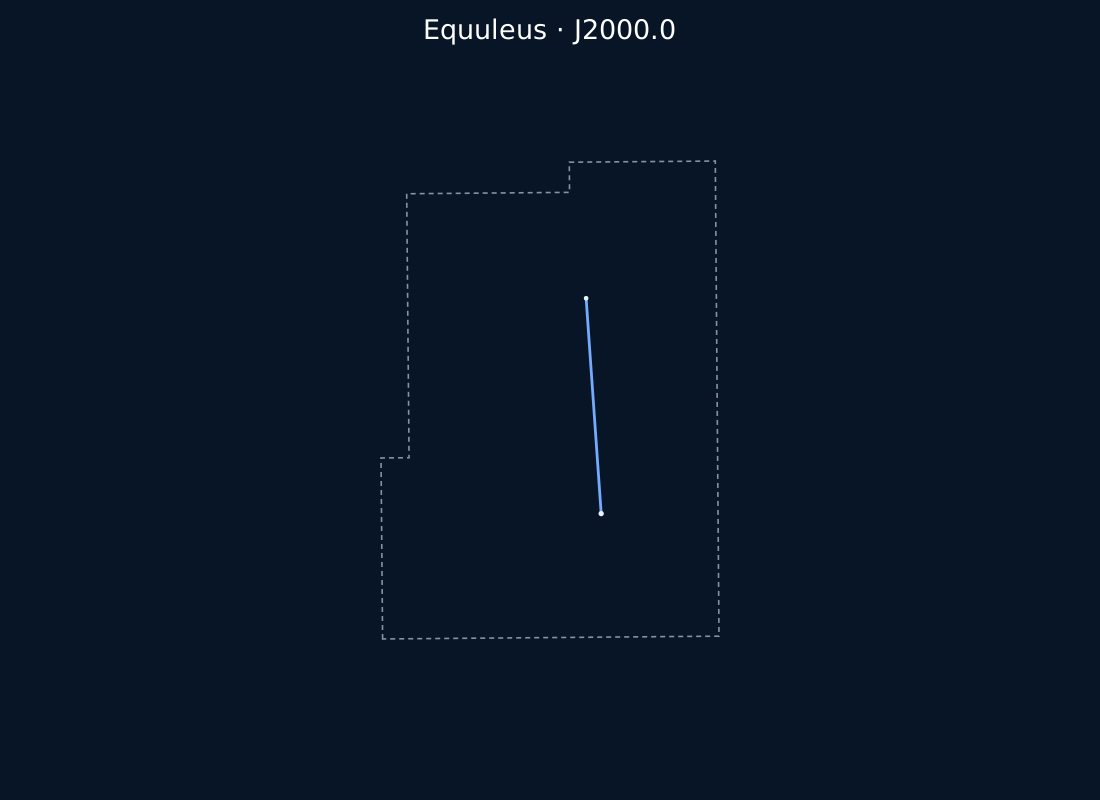
Equuleus places a small equine head beside Pegasus, but the surviving explanations do not agree on which horse it represents.
Read the story Open the chart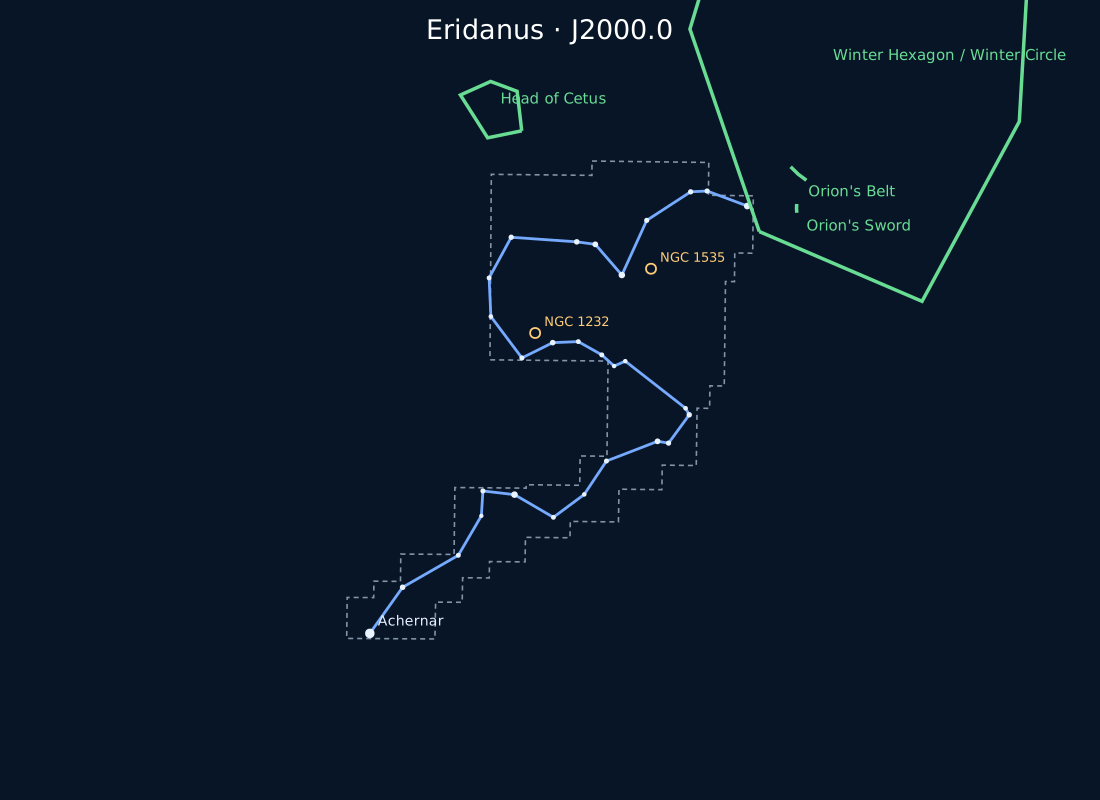
Eridanus winds away from Orion toward the southern star Achernar, carrying a story of a disastrous journey and a changing celestial shoreline.
Read the story Open the chart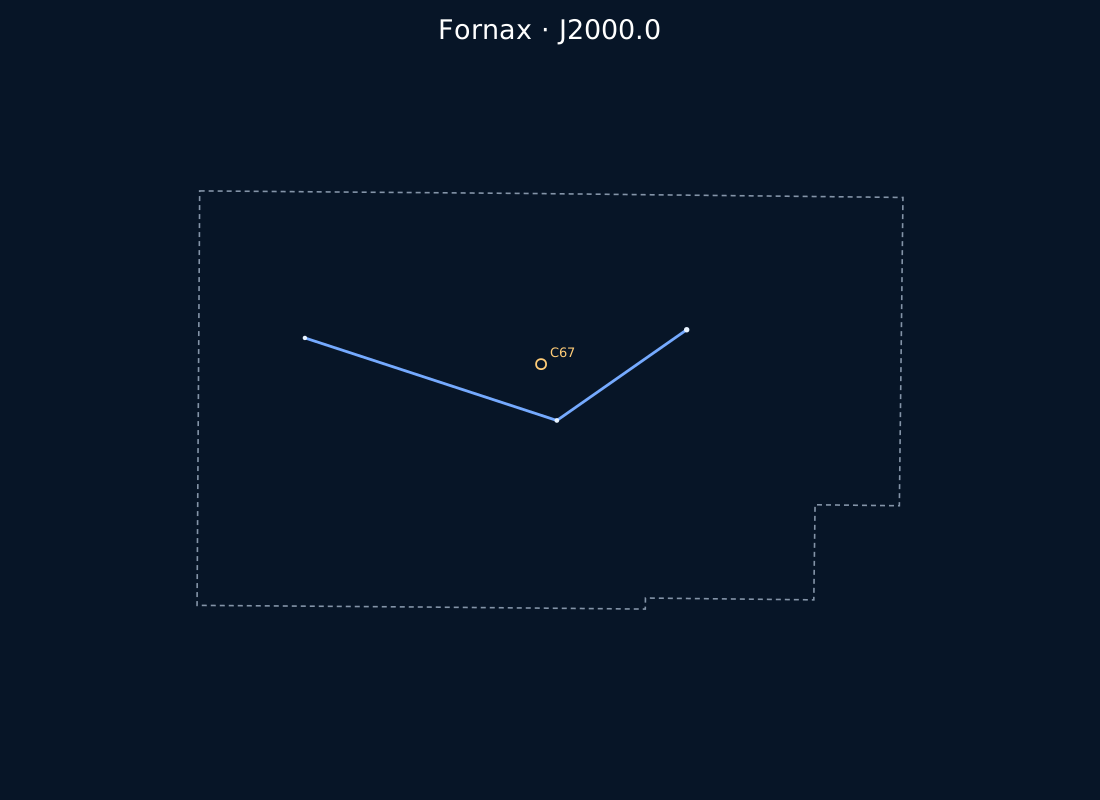
Fornax commemorates laboratory heat in a faint southern region that later became a window onto thousands of distant galaxies.
Read the story Open the chart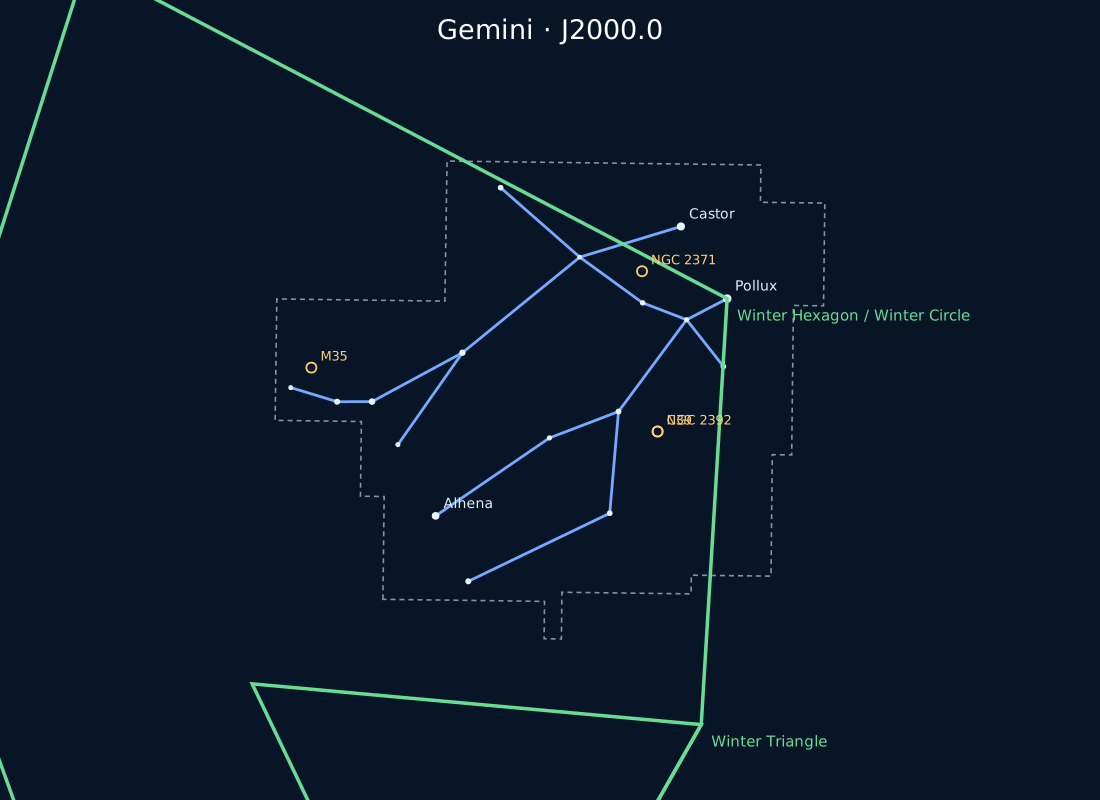
Gemini places Castor and Pollux side by side, preserving a story of shared fate behind two bright lights that are physically very different.
Read the story Open the chart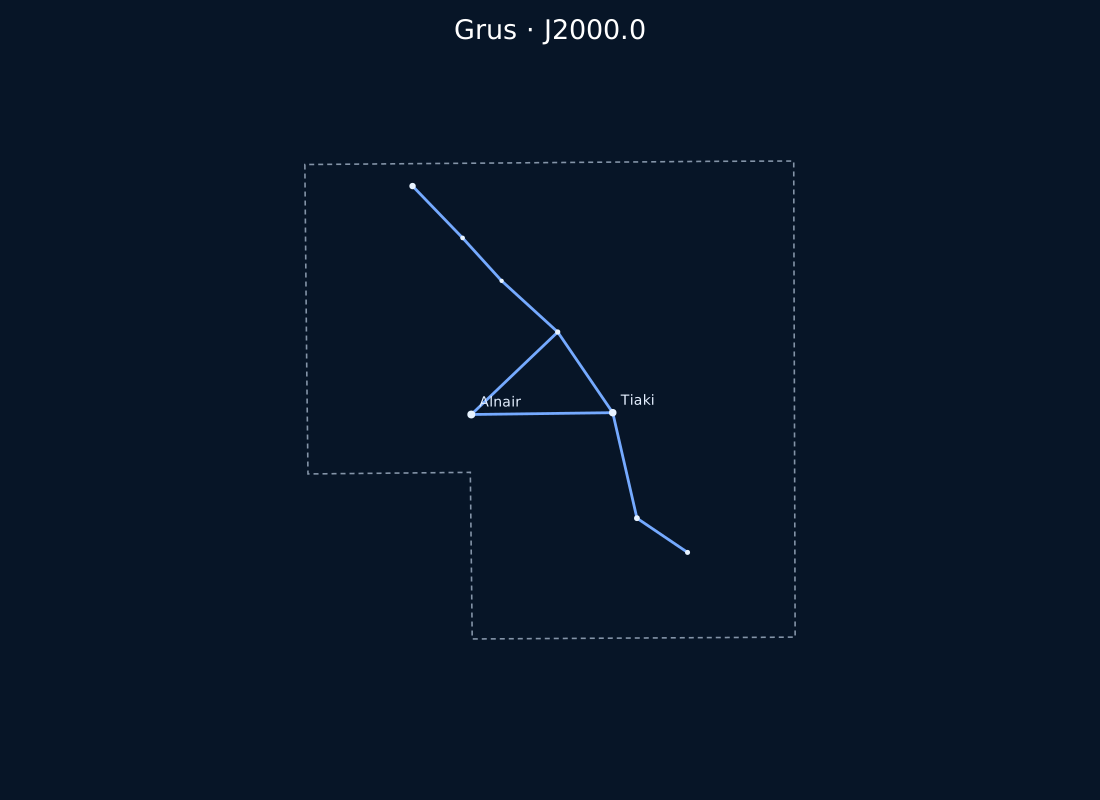
Grus gives a long-necked bird its own southern outline, while an older star name remembers the larger constellation to which some of its stars once belonged.
Read the story Open the chart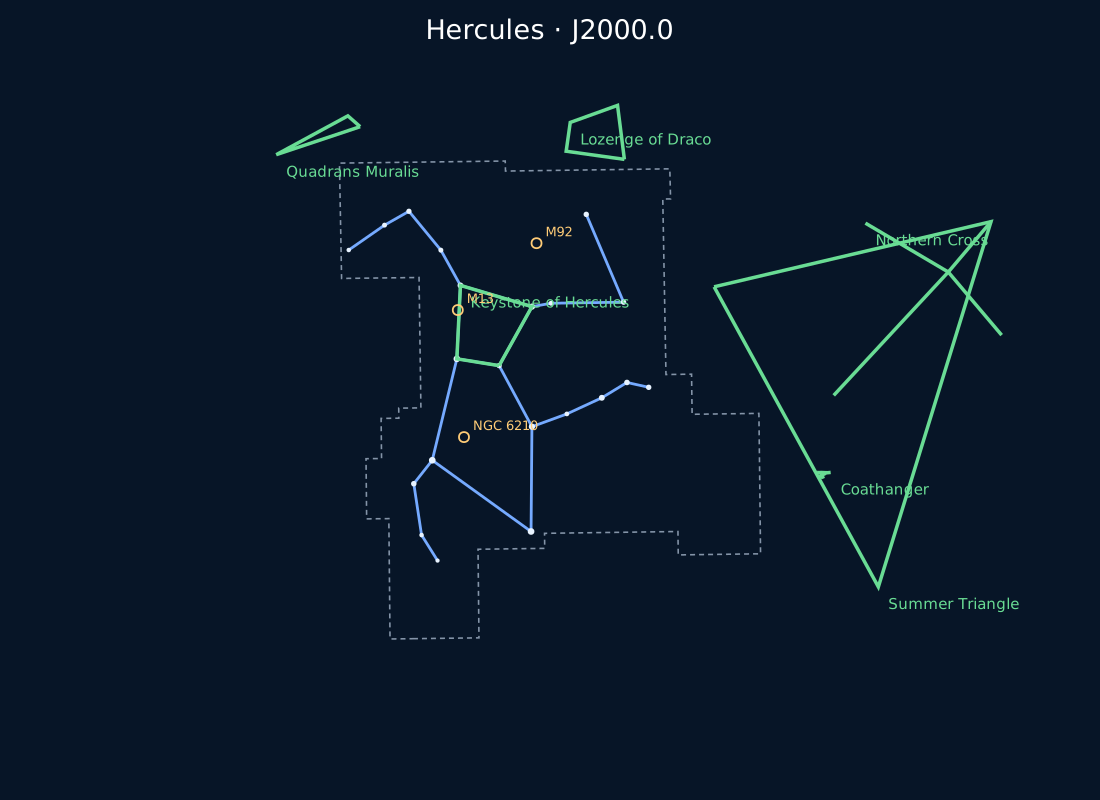
Hercules gives a famous identity to an older posture in the sky, with a modest central pattern leading toward a magnificent globular cluster.
Read the story Open the chart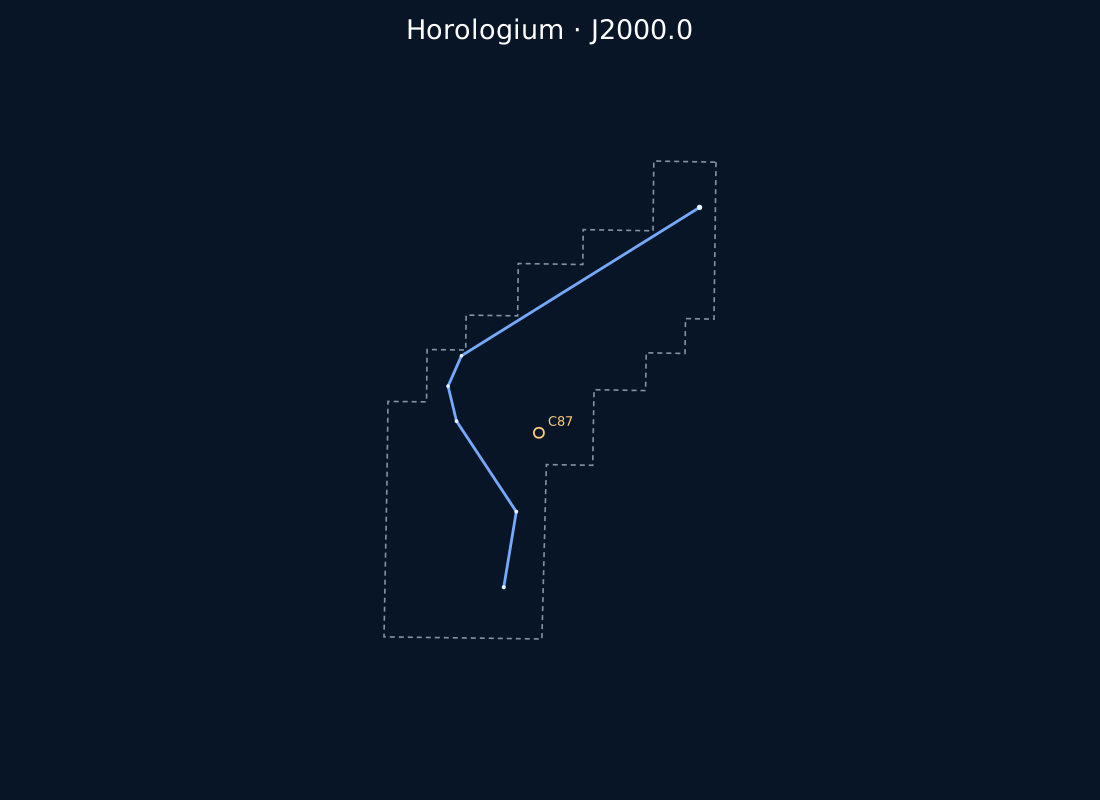
Horologium commemorates pendulum timekeeping, an instrument whose regular motion helped astronomers turn passages across the sky into measurements.
Read the story Open the chart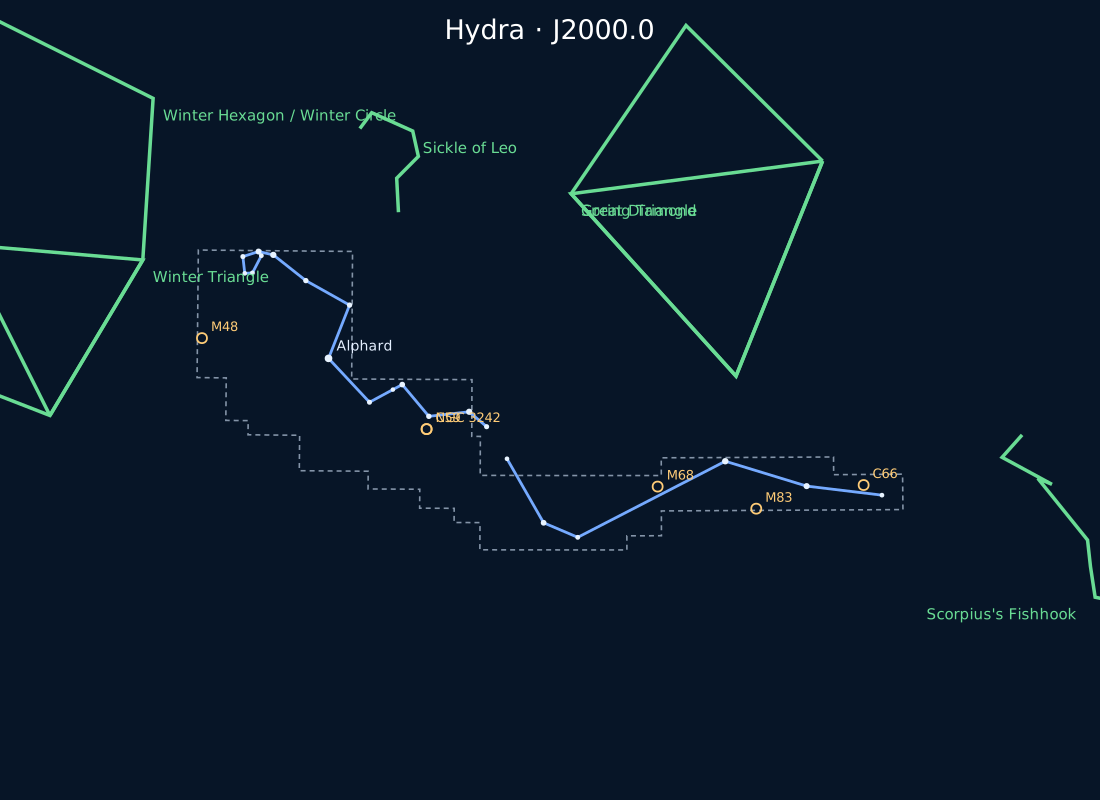
Hydra stretches beneath several neighboring figures, carrying both the monster of Heracles's labor and a quieter water snake in Apollo's errand.
Read the story Open the chart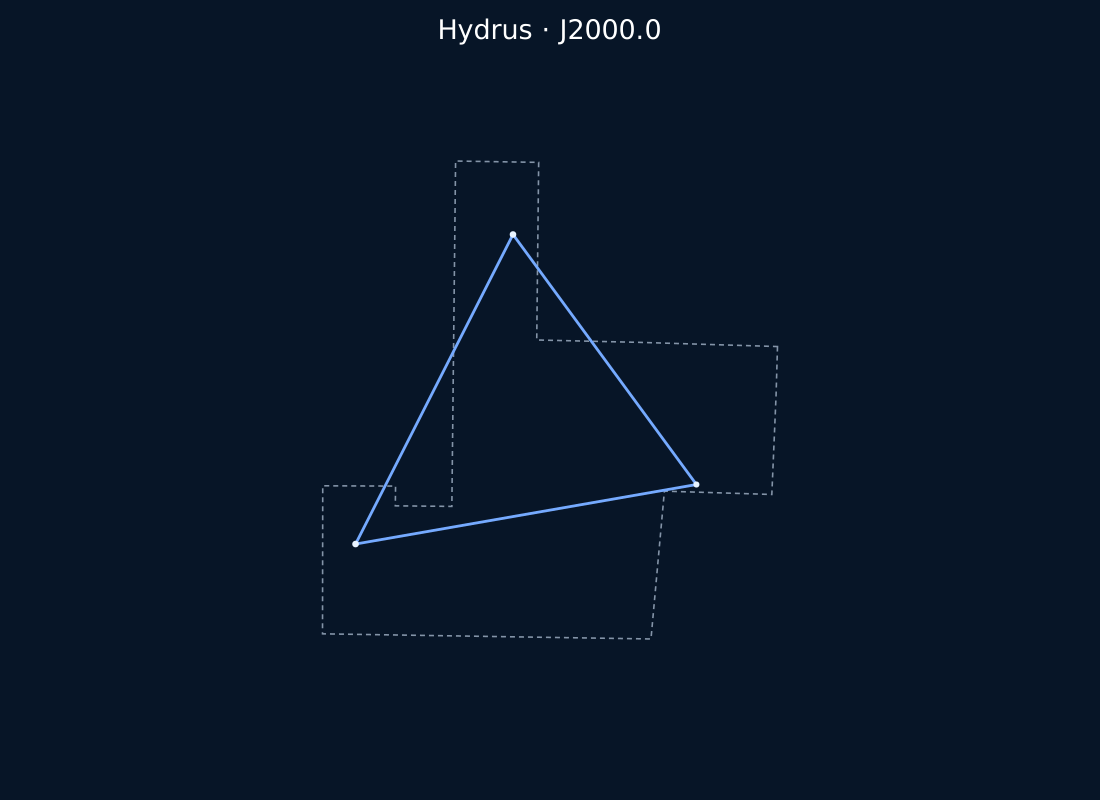
Hydrus belongs to the southern constellation scheme of Dutch voyagers, sharing a watery name with Hydra but not its ancient battle.
Read the story Open the chart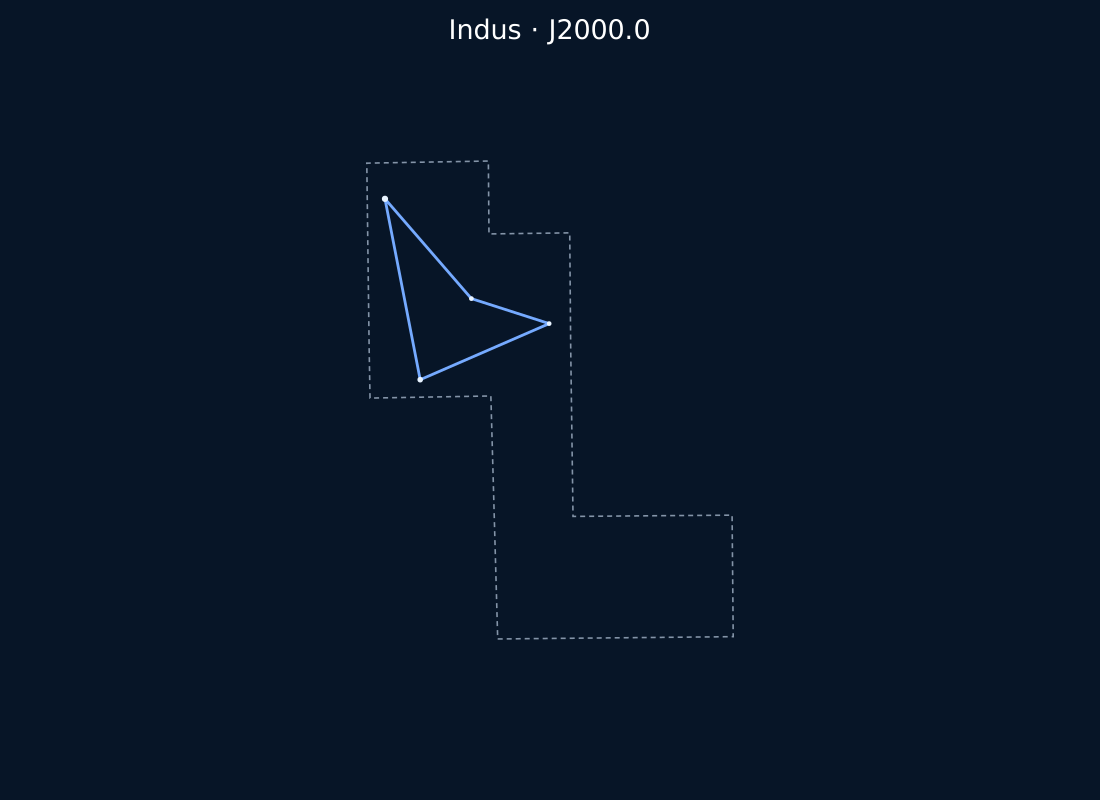
Indus preserves a European name for an Indigenous person, but the constellation's history leaves the precise identity uncertain.
Read the story Open the chart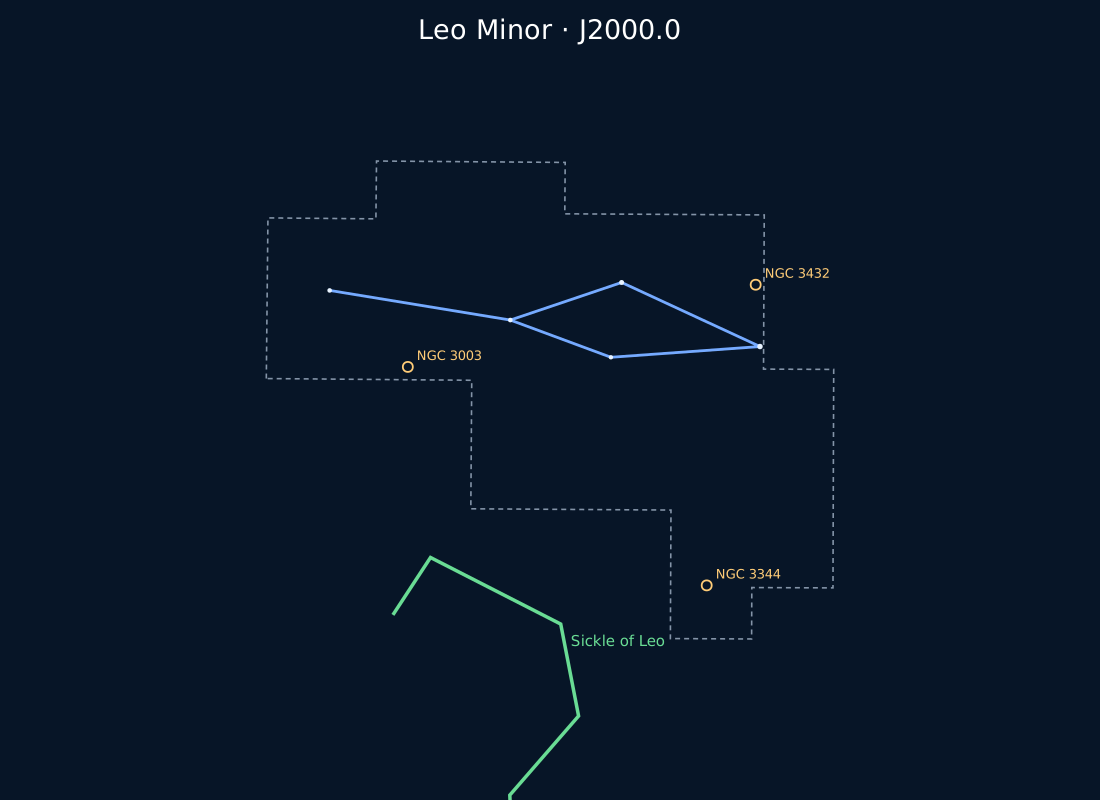
Hevelius placed a lesser lion between Leo and the Great Bear, giving faint stars an identity of their own.
Read the story Open the chart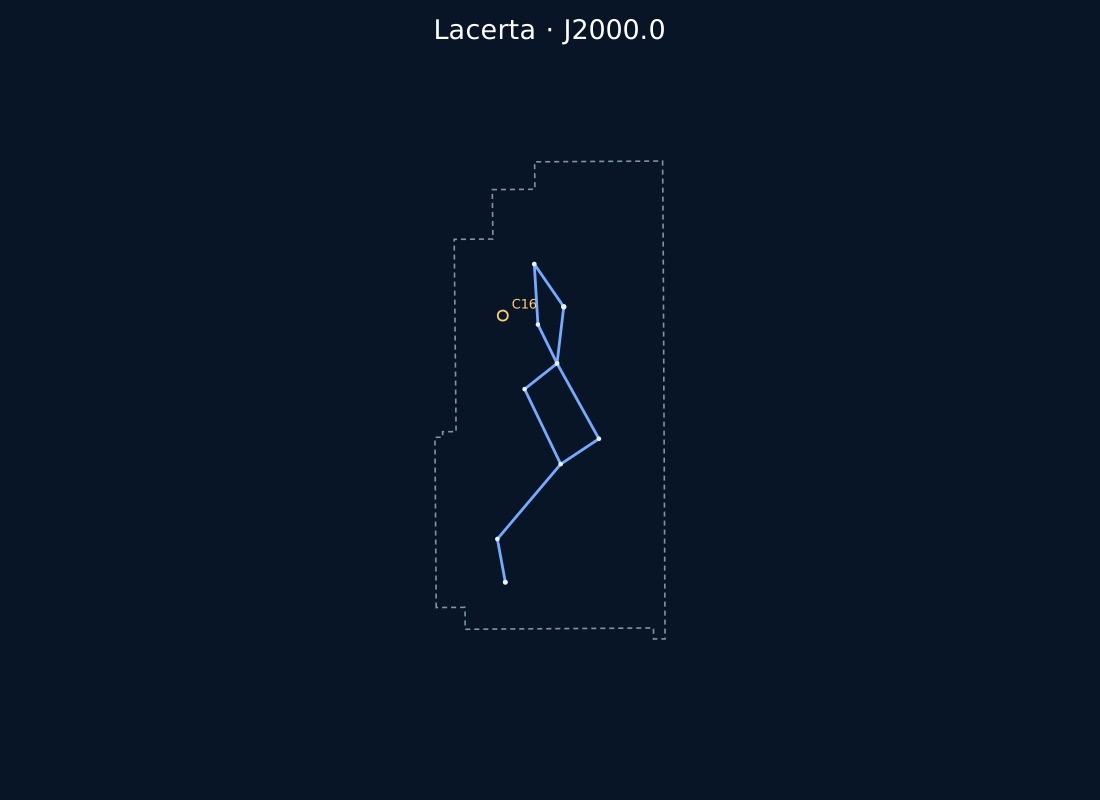
Between the northern sky’s grander figures, a small reptile found room to stay.
Read the story Open the chart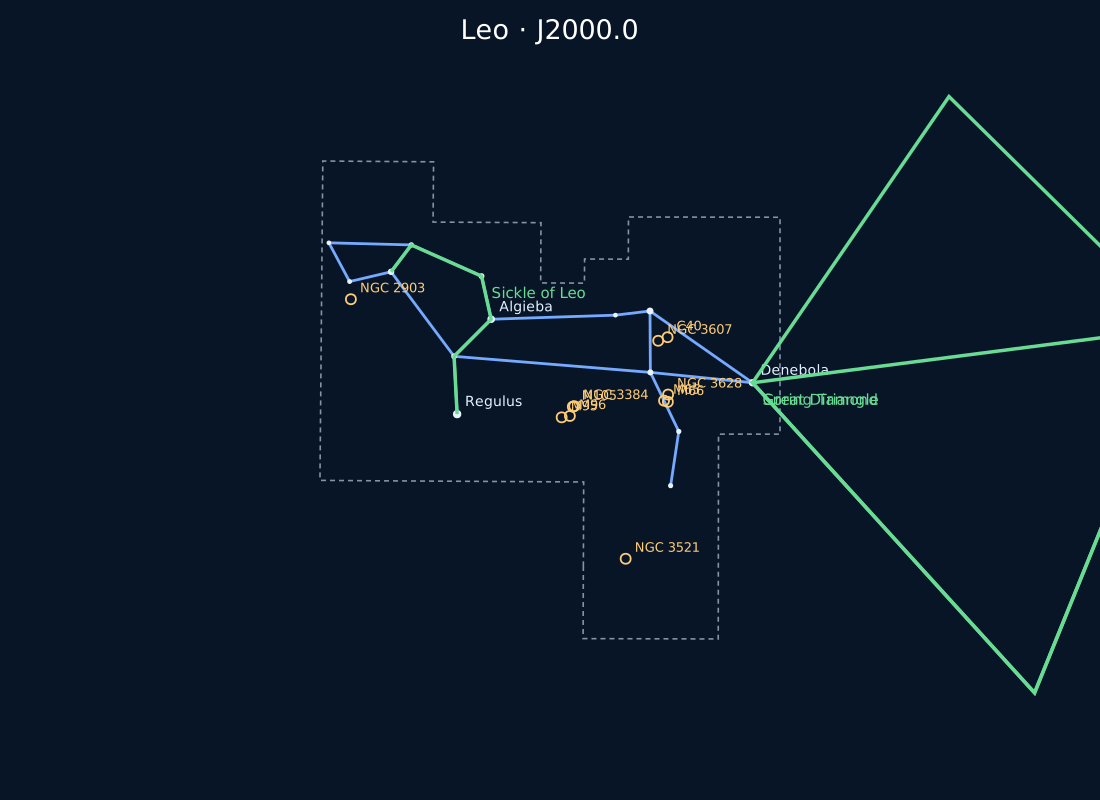
Leo carries the memory of Heracles’ first labor, with a bright curve of stars for its mane.
Read the story Open the chart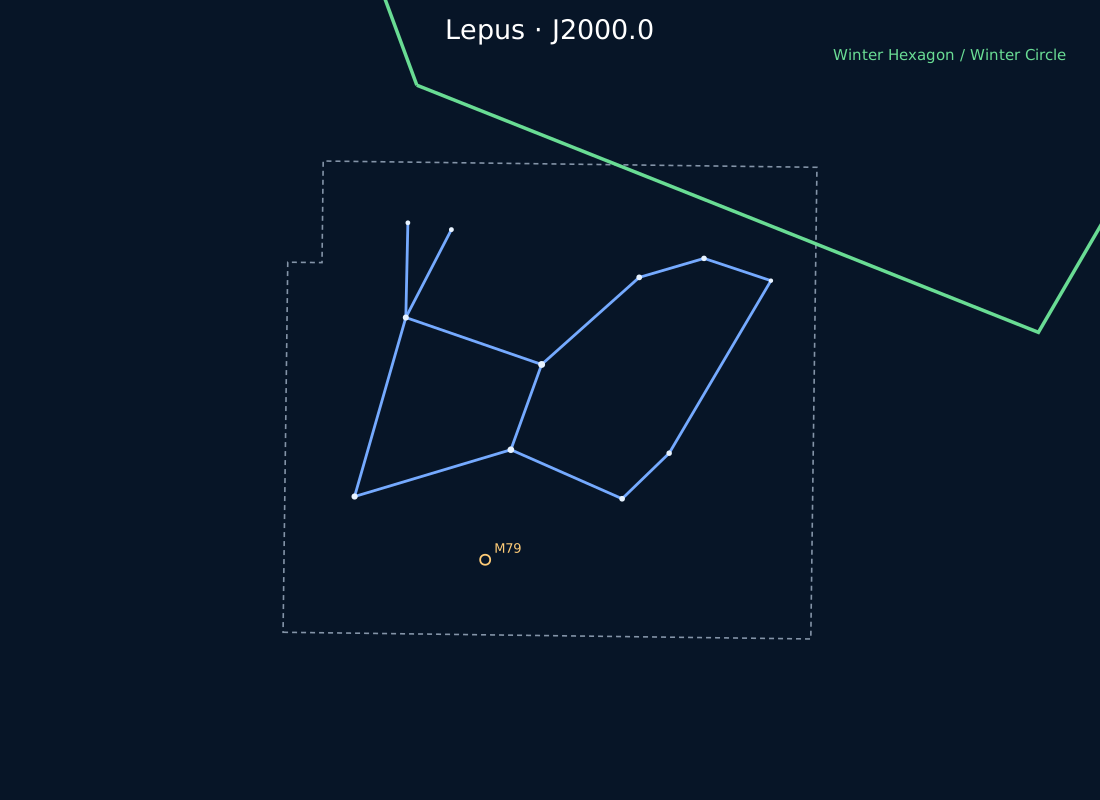
Under Orion’s feet, Lepus turns a small animal into the center of several very different stories.
Read the story Open the chart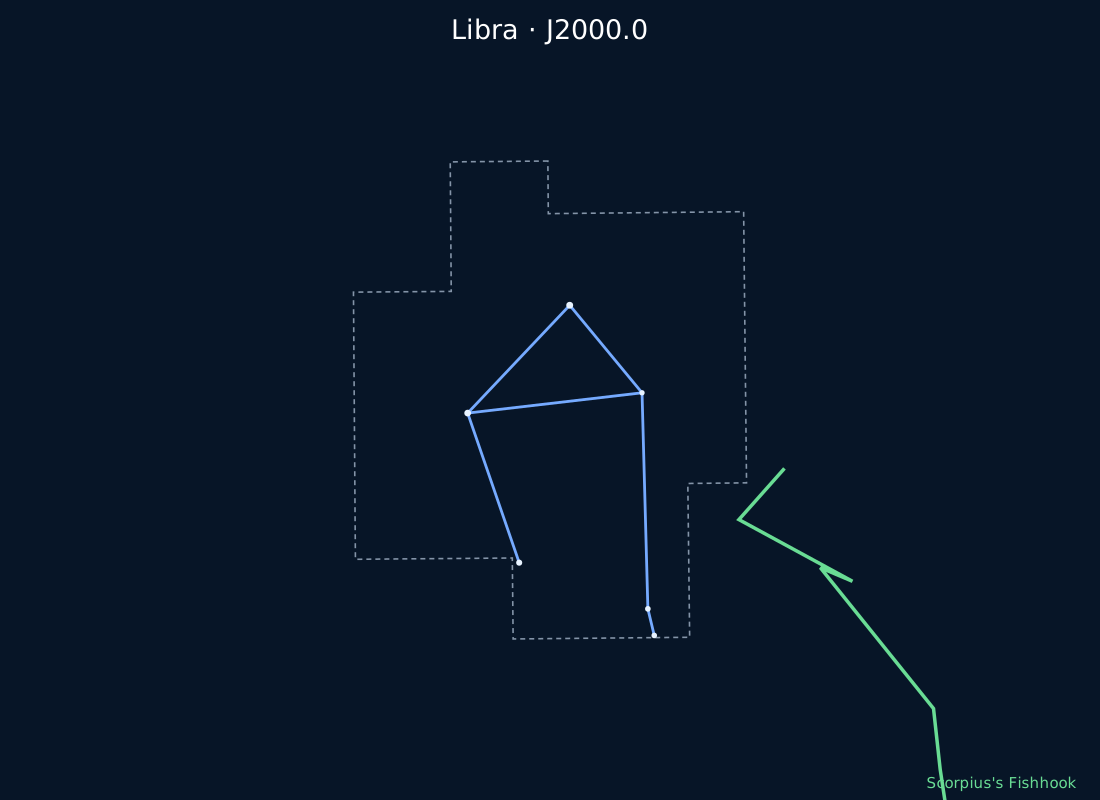
Libra’s scales preserve a long exchange of images between Babylonian, Greek and Roman skies.
Read the story Open the chart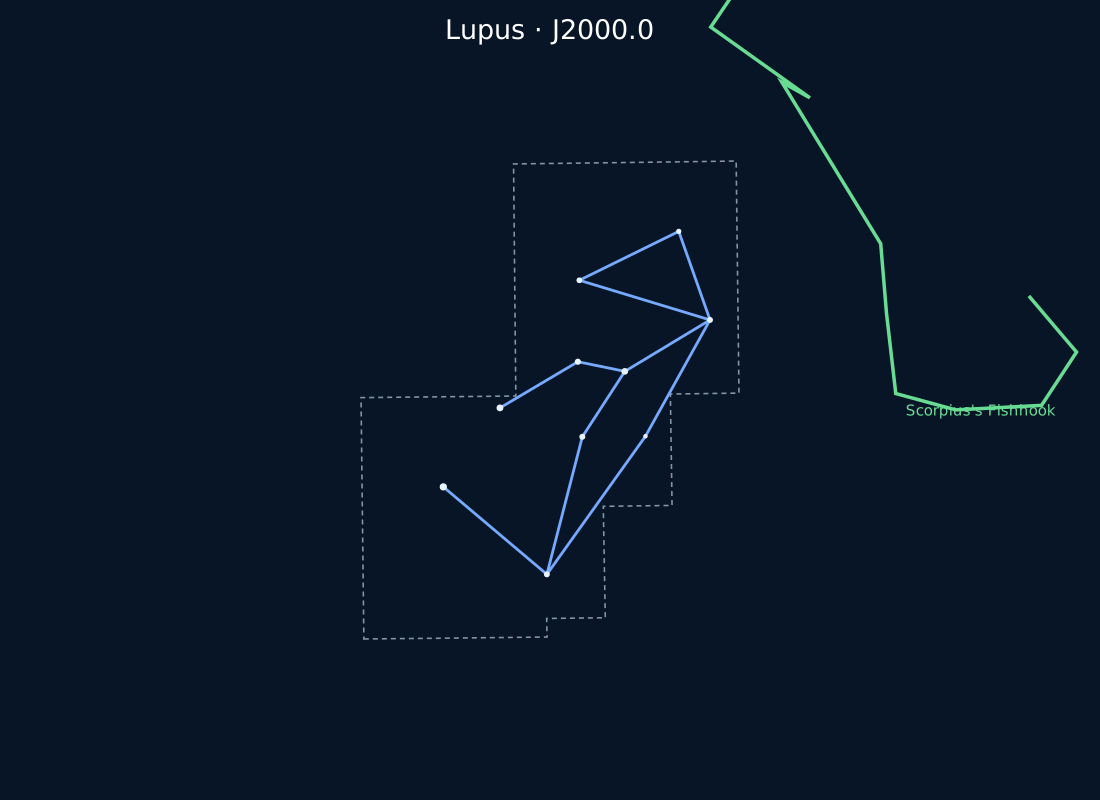
Now called the Wolf, Lupus once played a less specific role in a larger celestial scene.
Read the story Open the chart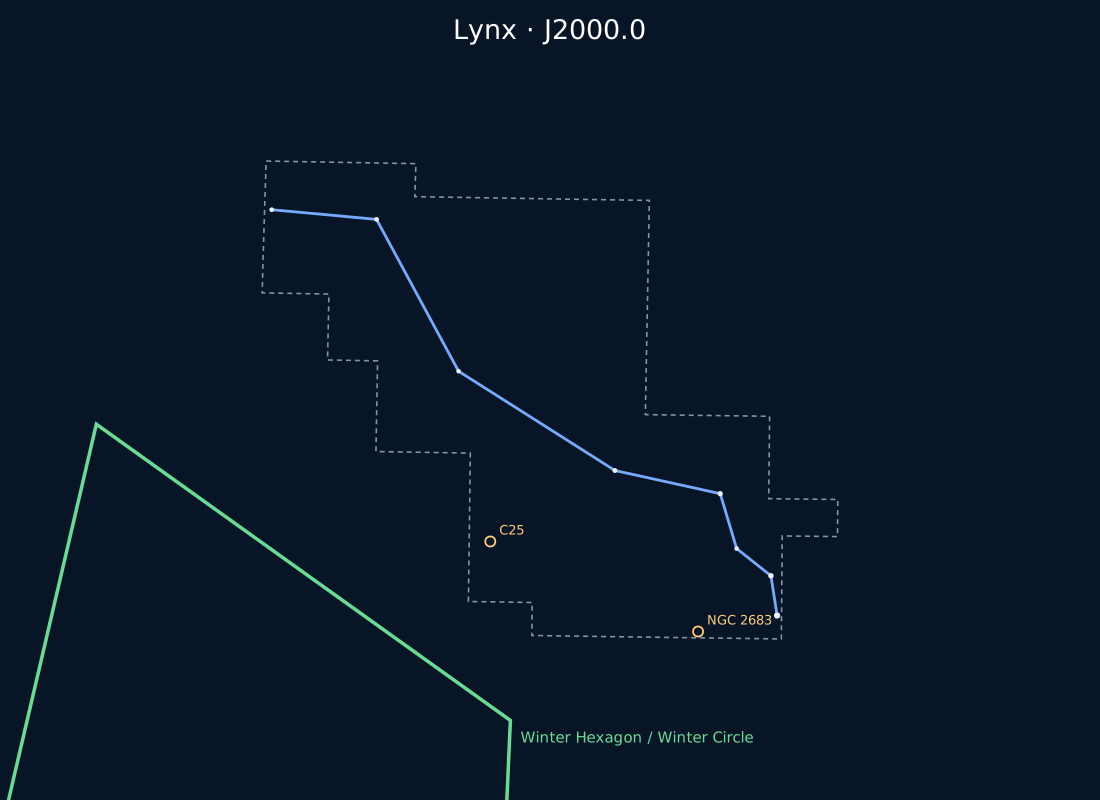
Hevelius gave a faint northern constellation a name that asks observers to look more closely.
Read the story Open the chart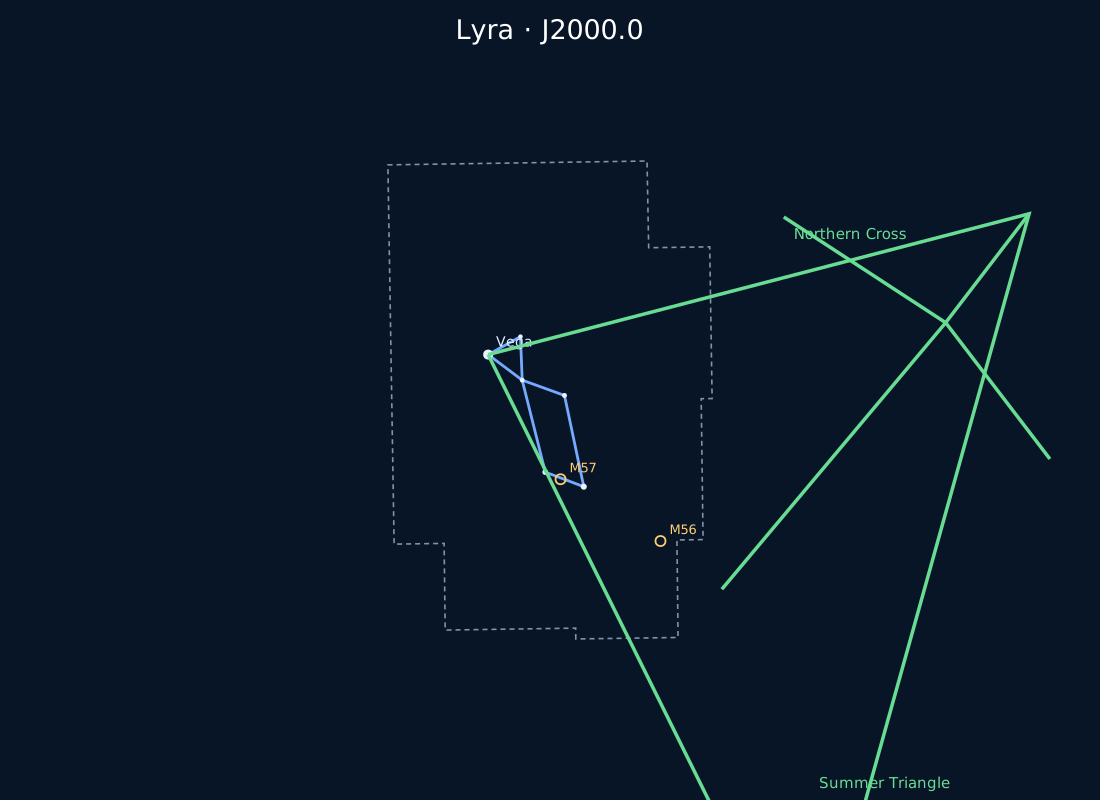
Lyra’s small pattern holds the instrument of Orpheus, whose song nearly brought Eurydice back from death.
Read the story Open the chart
Lacaille named this faint southern constellation for Table Mountain, with a neighboring galaxy as its cloud.
Read the story Open the chart
A faint southern constellation honors the instrument that opened an unfamiliar universe close at hand.
Read the story Open the chart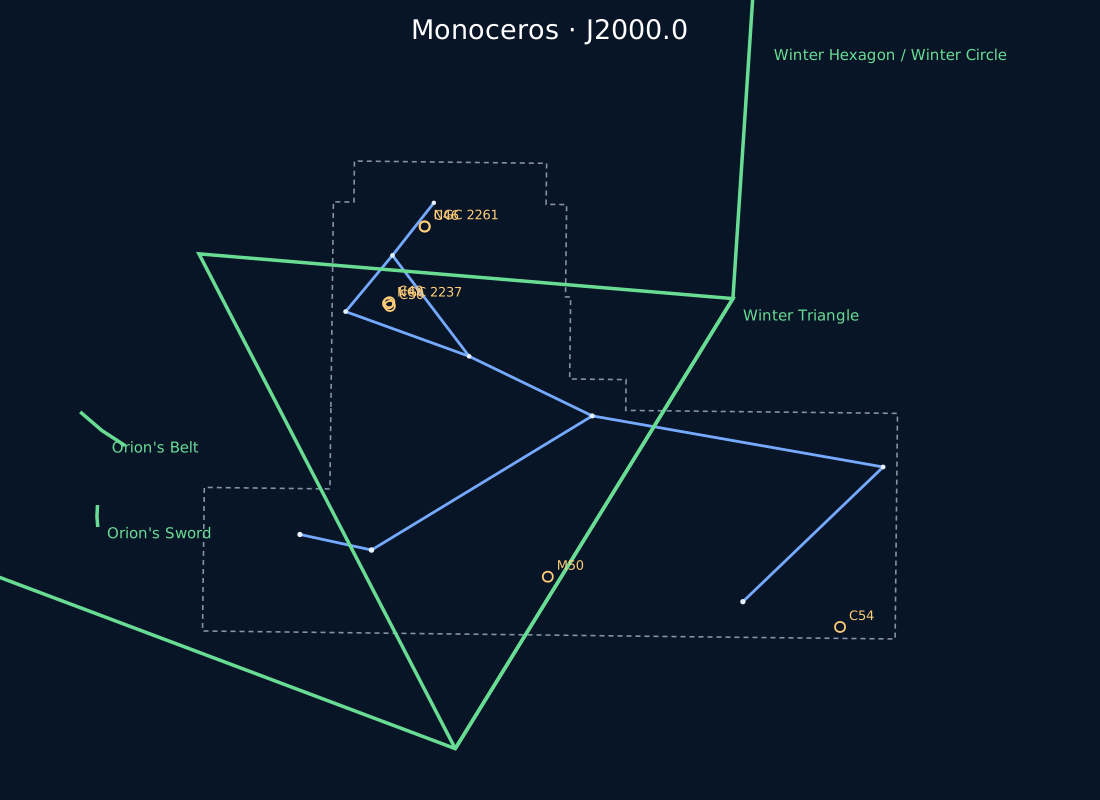
Monoceros brought a legendary creature into a faint part of the sky already crowded with real wonders.
Read the story Open the chart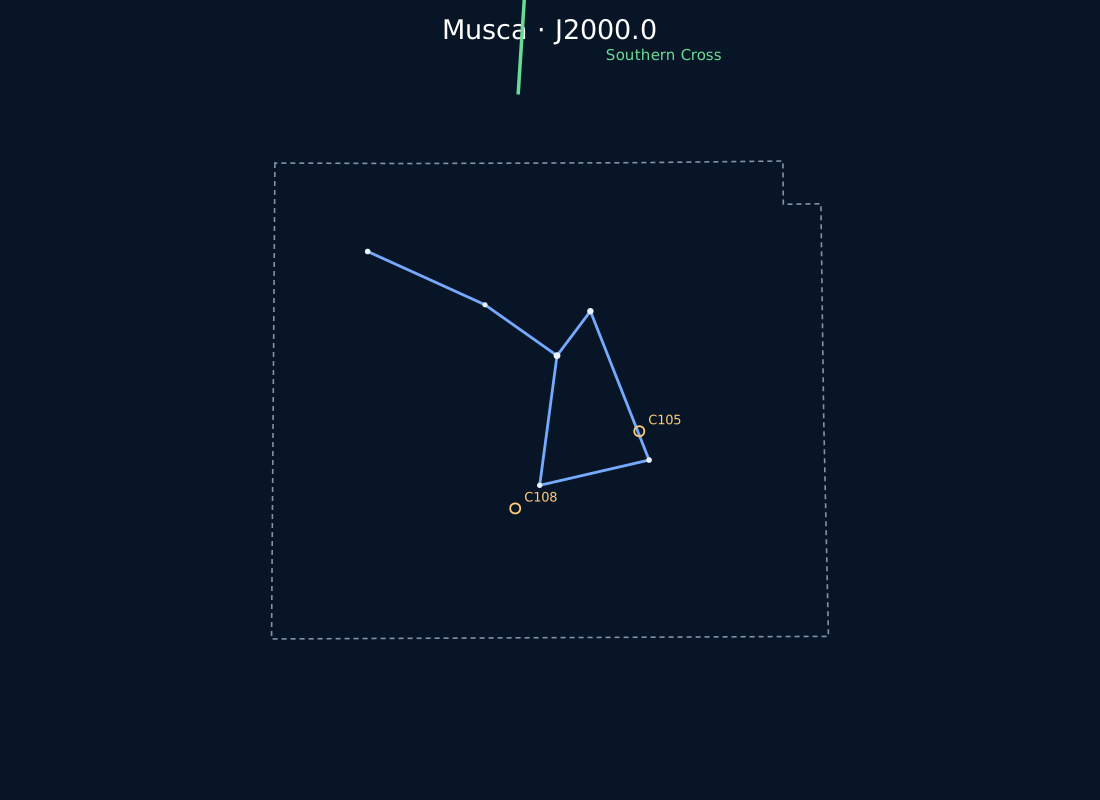
Musca belongs to the animals added to European maps after voyages brought the far-southern stars into view.
Read the story Open the chart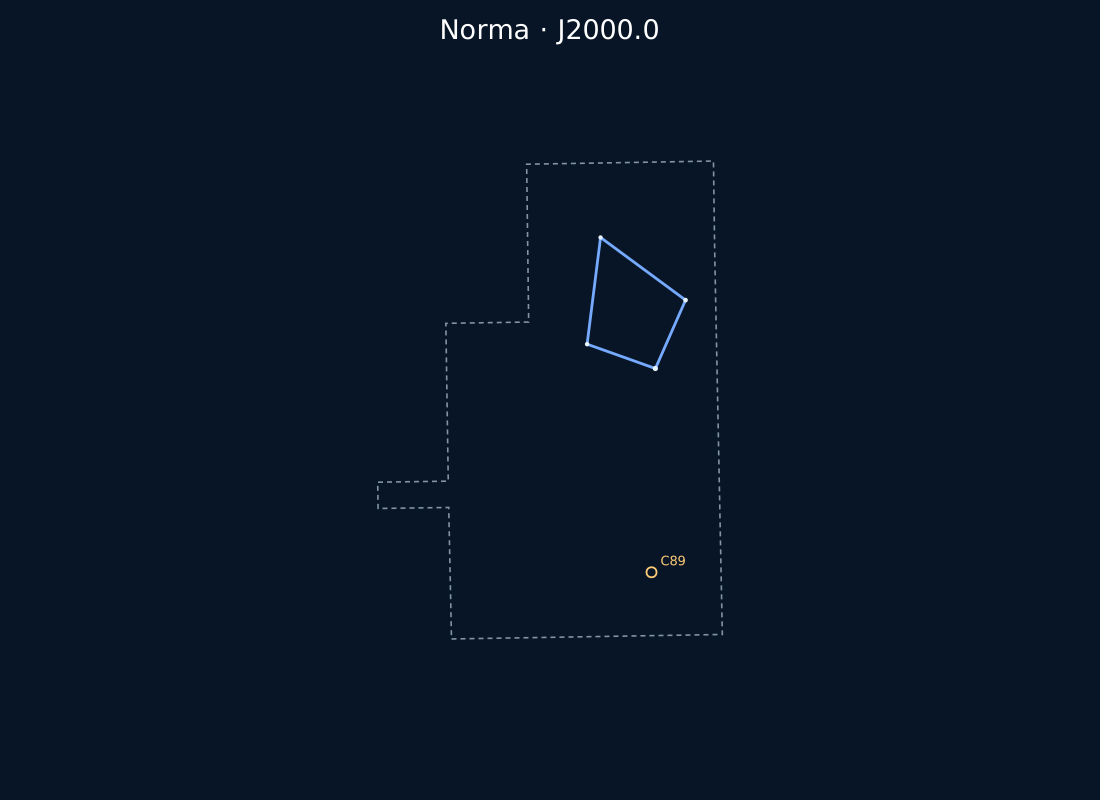
Norma honors the quiet work of drawing and building, where a dependable corner can matter more than a dramatic figure.
Read the story Open the chart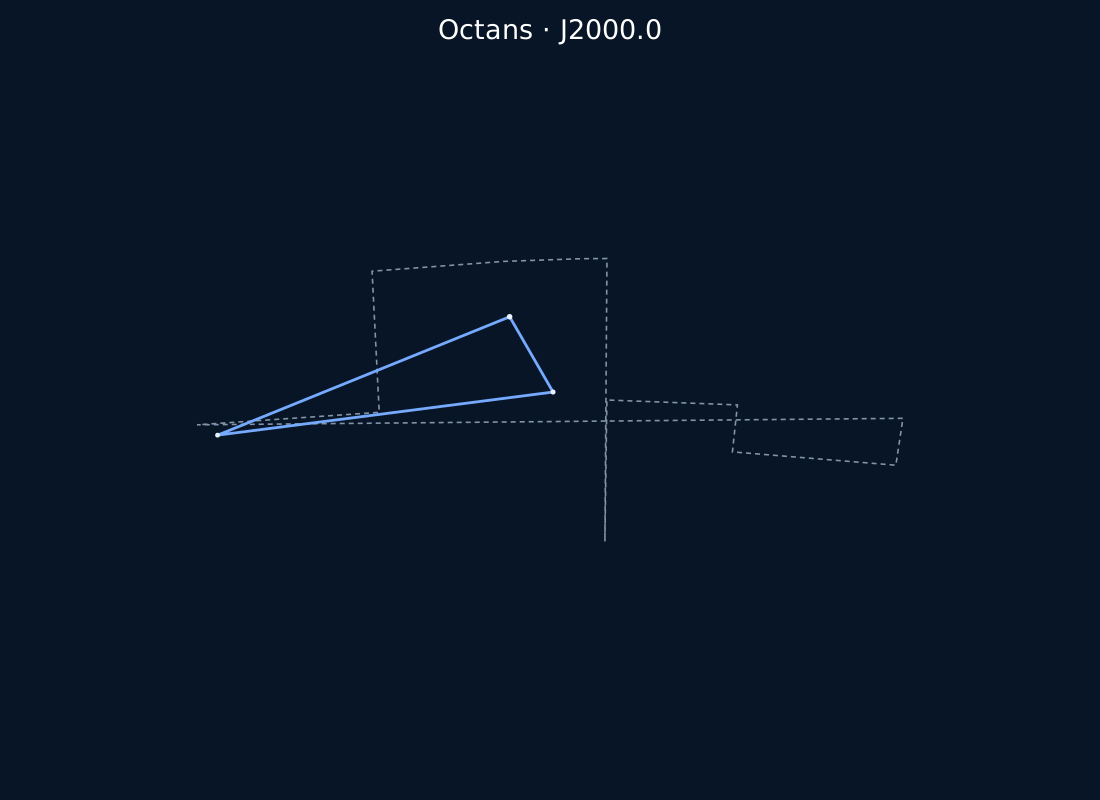
Octans names a navigator’s tool in the faint southern sky surrounding the point about which the stars appear to turn.
Read the story Open the chart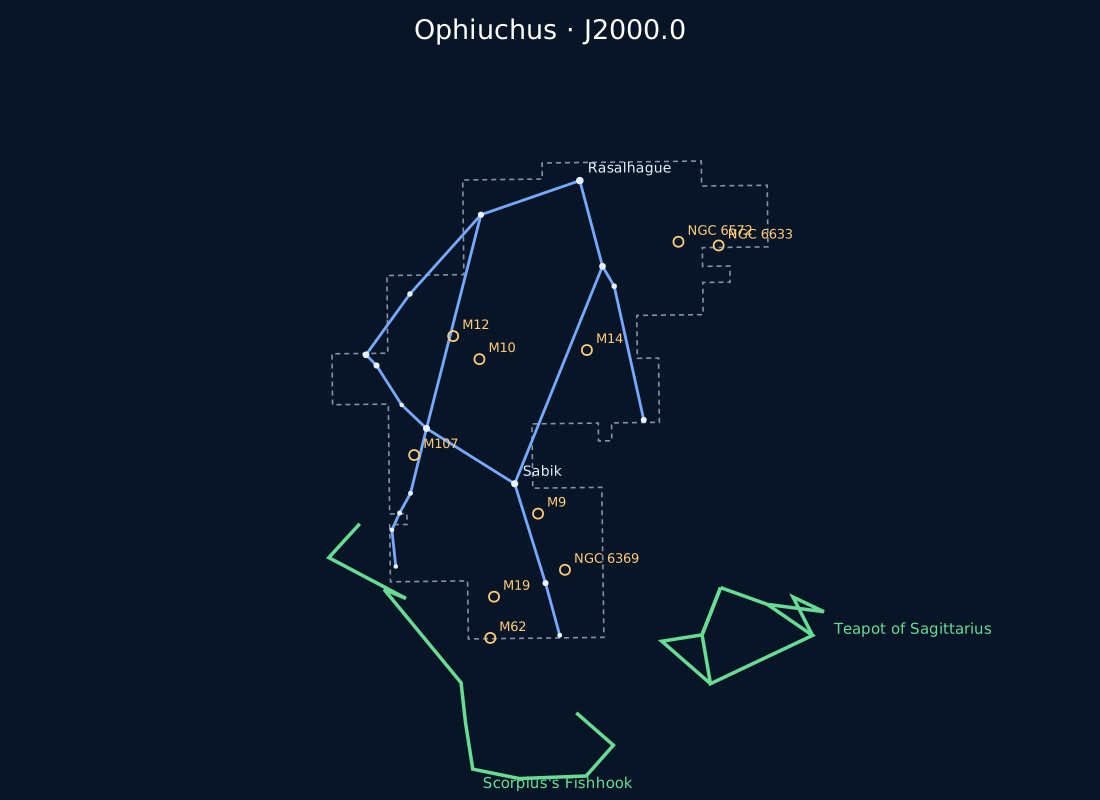
Ophiuchus brings the art of medicine into the sky, along with a story about the peril of overcoming death.
Read the story Open the chart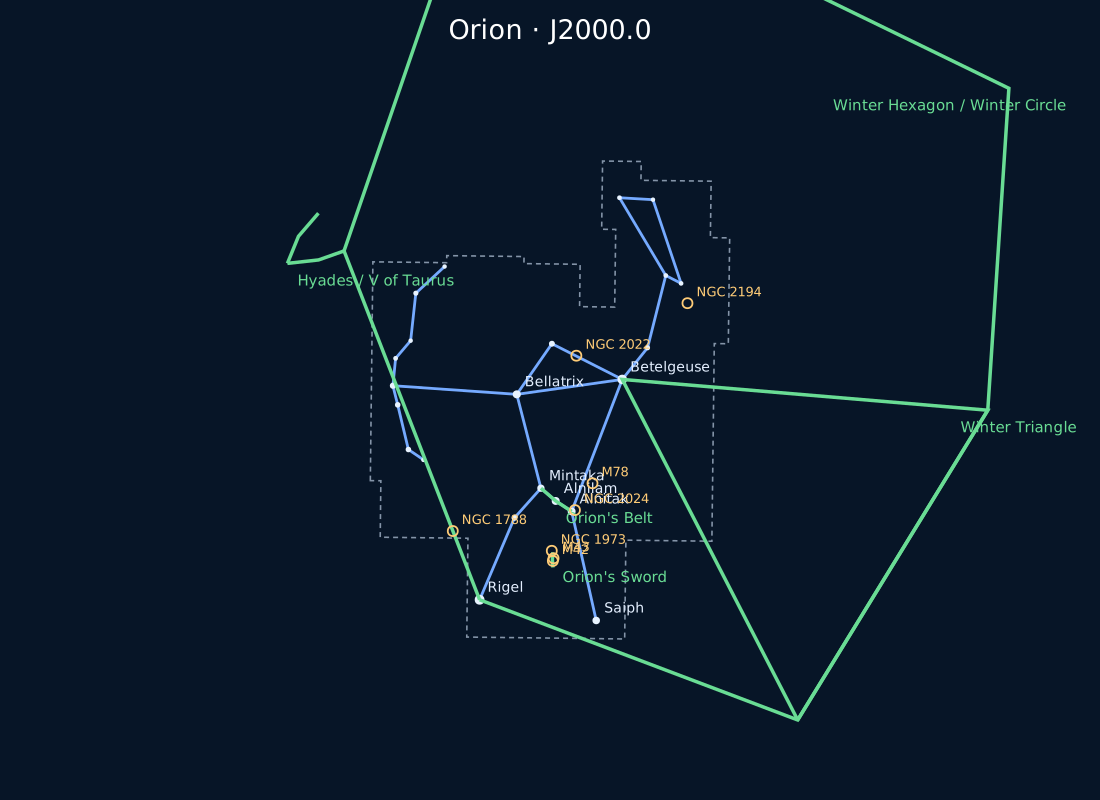
Orion’s brilliant stars have carried competing myths, while the nebula beneath his belt reveals stars still being born.
Read the story Open the chart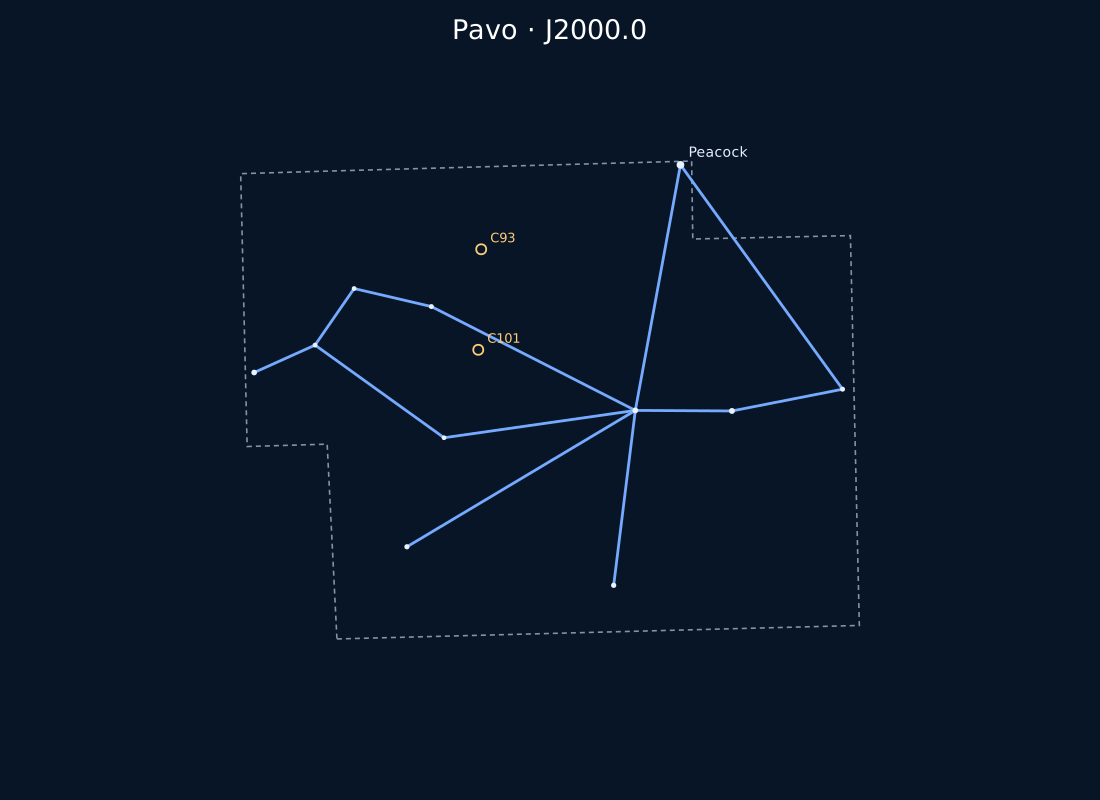
Voyagers and mapmakers gave this splendid bird a place in the sky, where an ancient cluster adds its own display.
Read the story Open the chart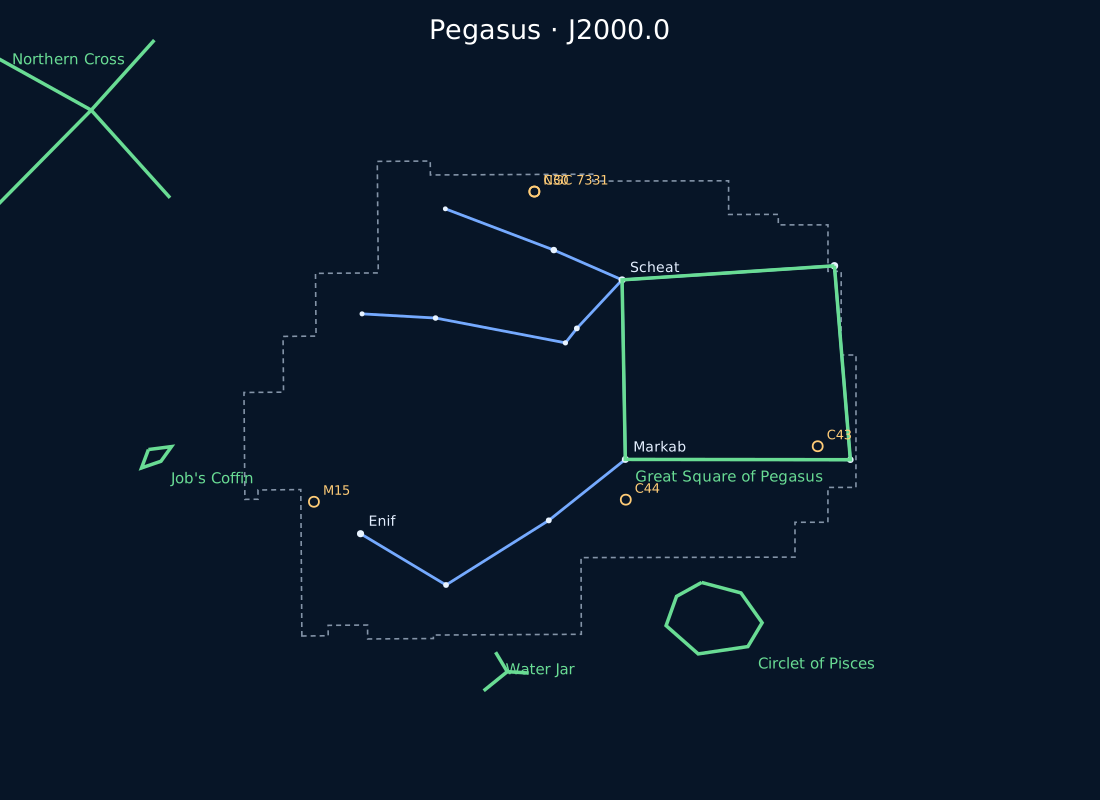
Pegasus carried Bellerophon against a monster, then continued toward heaven when the hero could go no farther.
Read the story Open the chart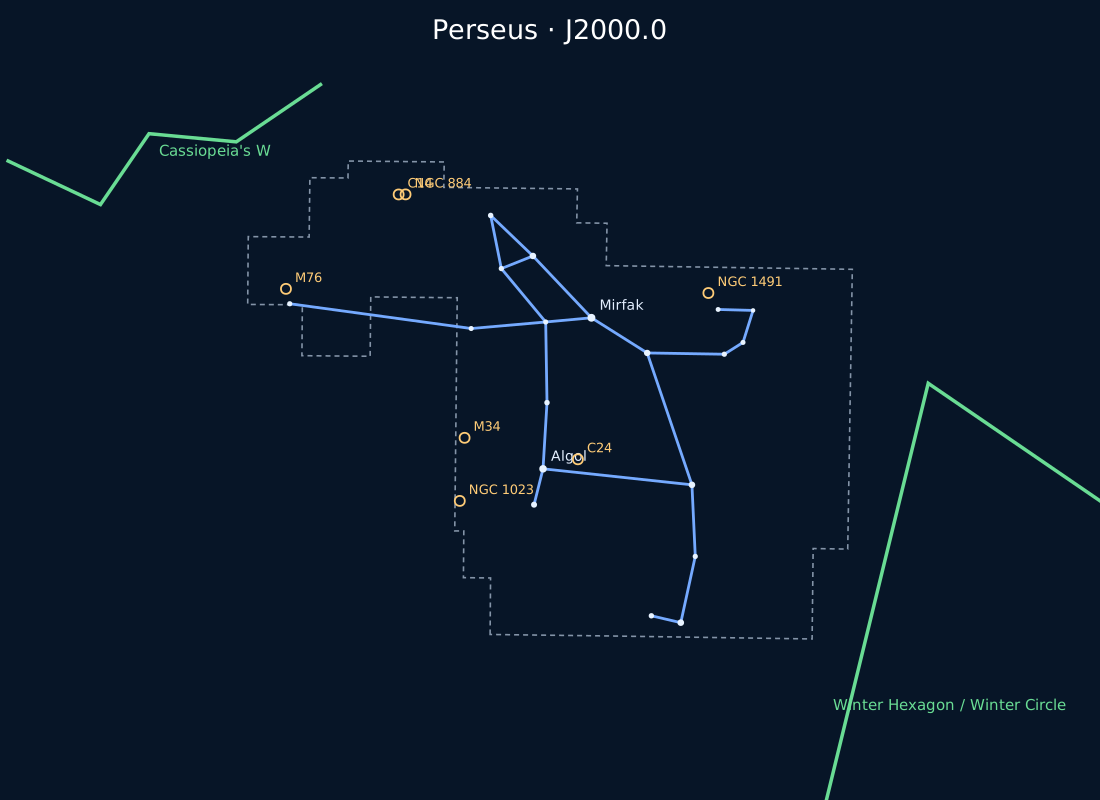
Perseus crosses the sky with Medusa’s head, a weapon whose power survived the monster’s death.
Read the story Open the chart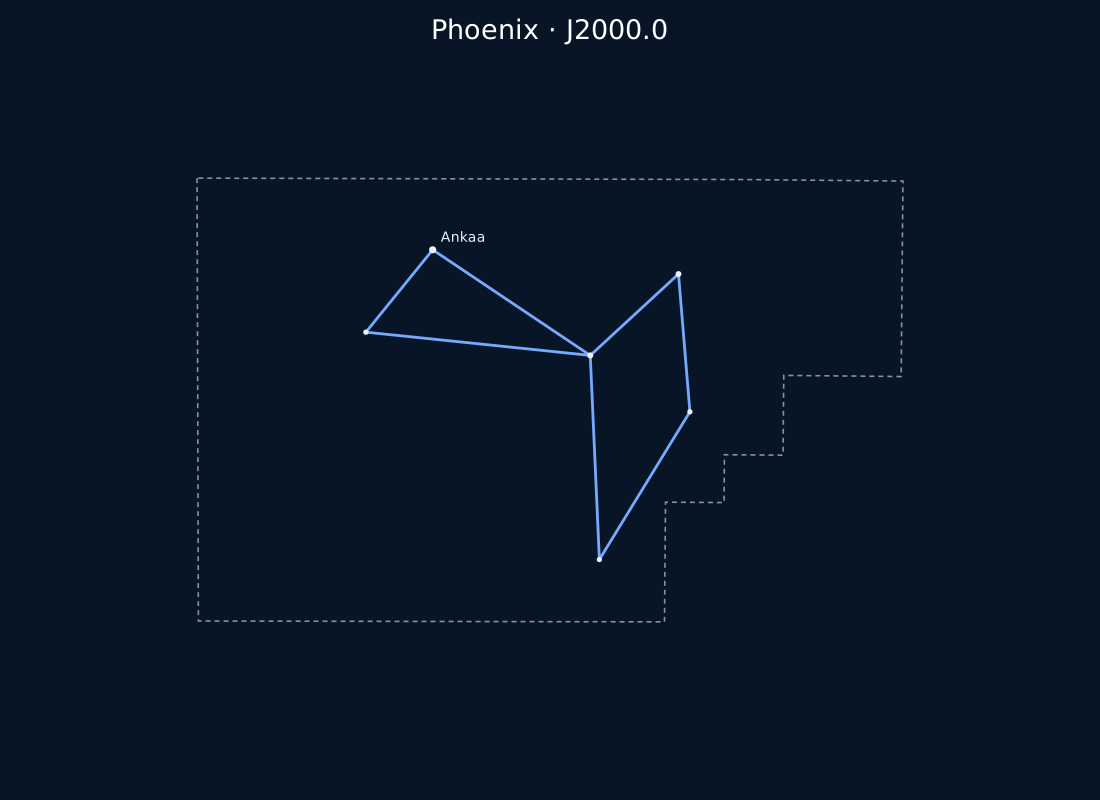
The southern Phoenix carries an ancient legend that became far more familiar than the earliest surviving account.
Read the story Open the chart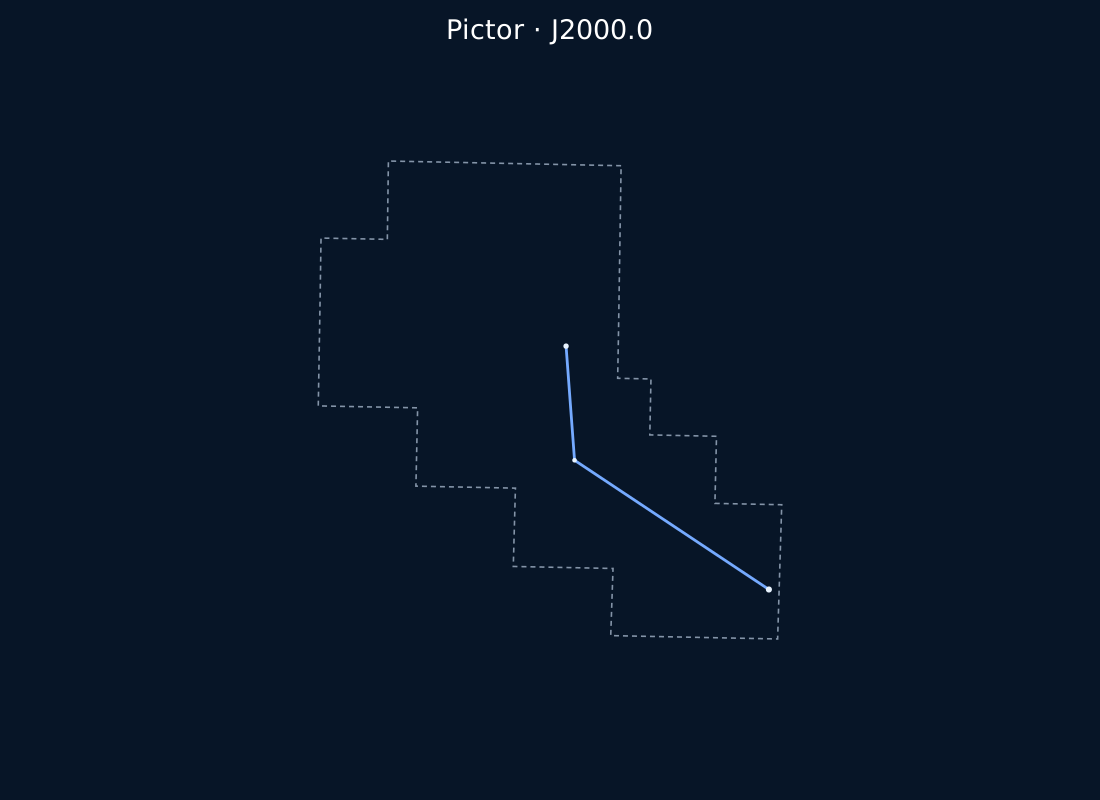
Pictor gives the artist’s work a place among Lacaille’s instruments of science and craft.
Read the story Open the chart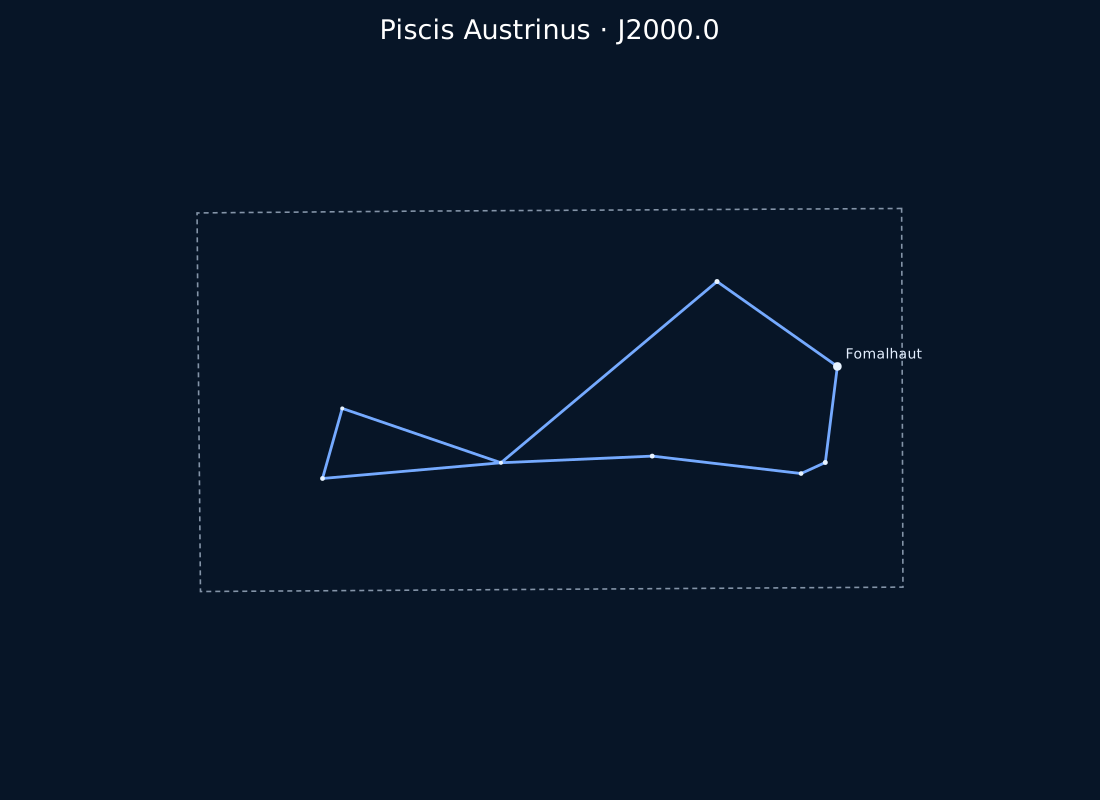
Fomalhaut marks the mouth of the Southern Fish, a bright landmark in a much fainter celestial sea.
Read the story Open the chart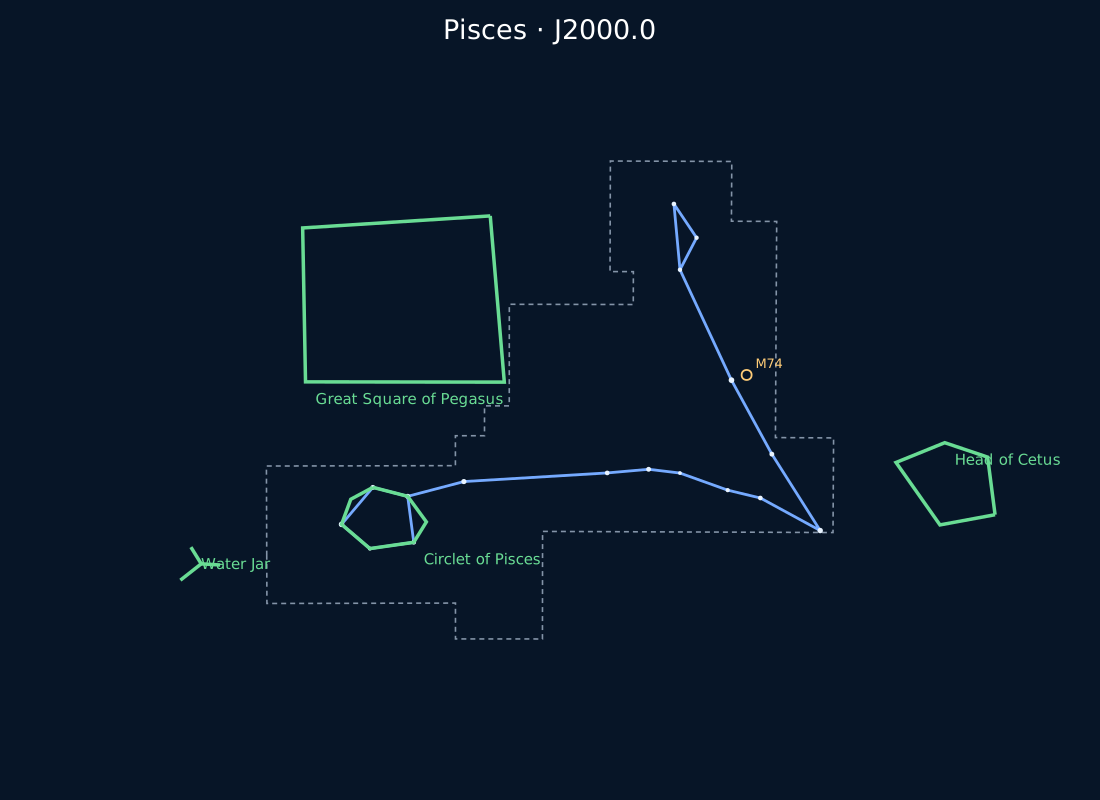
Pisces preserves stories of refuge from a monster, with its paired fish joined across a broad stretch of sky.
Read the story Open the chart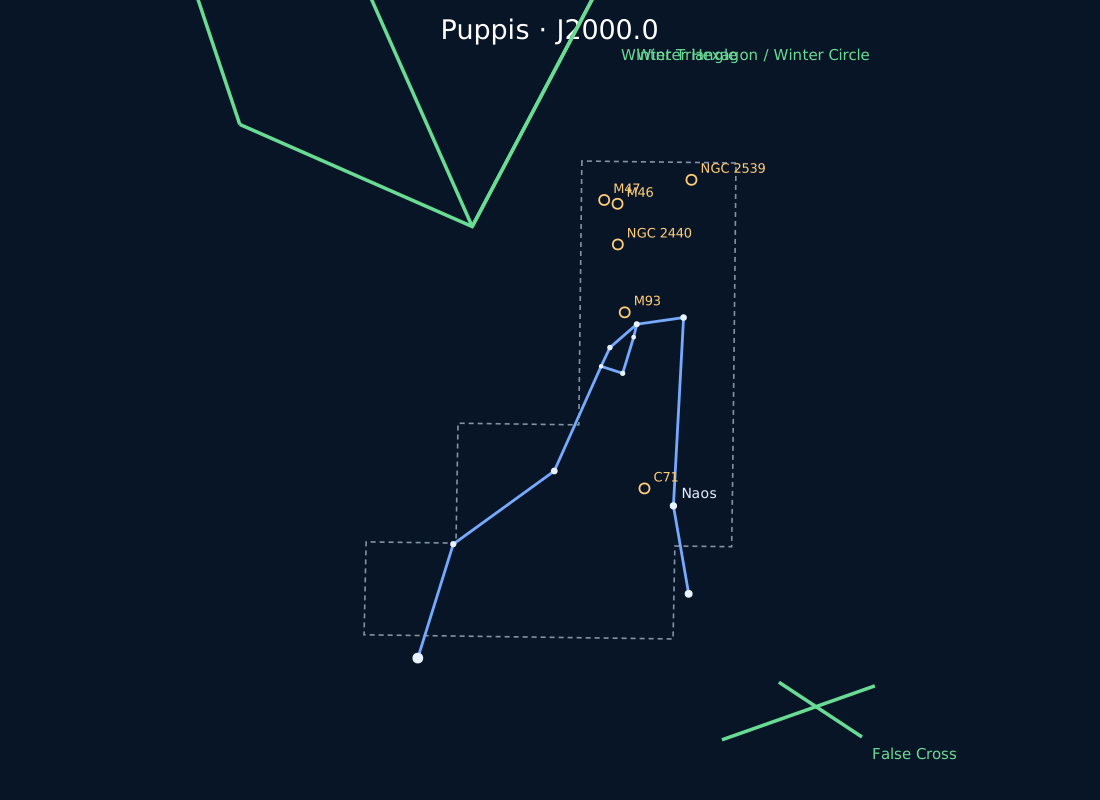
Puppis is one surviving portion of Argo, the ship that carried Jason and the Argonauts toward the Golden Fleece.
Read the story Open the chart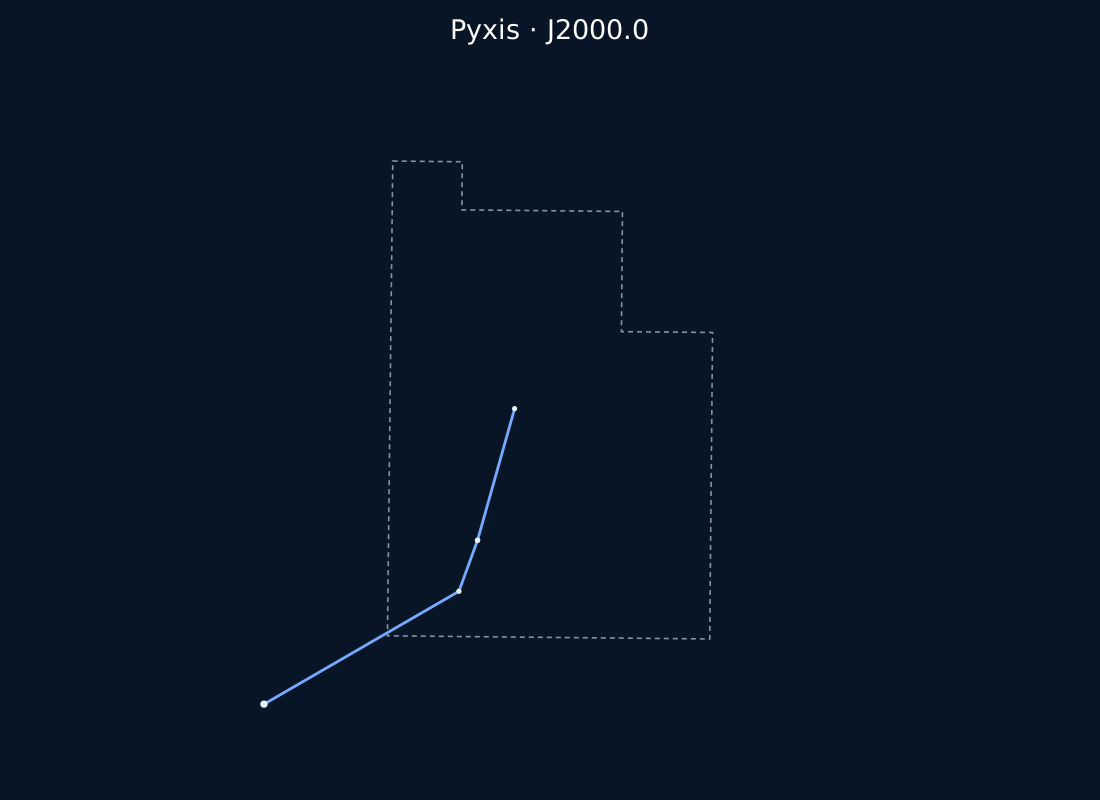
Pyxis brings an eighteenth-century instrument into a neighborhood shaped by the much older figure of Argo.
Read the story Open the chart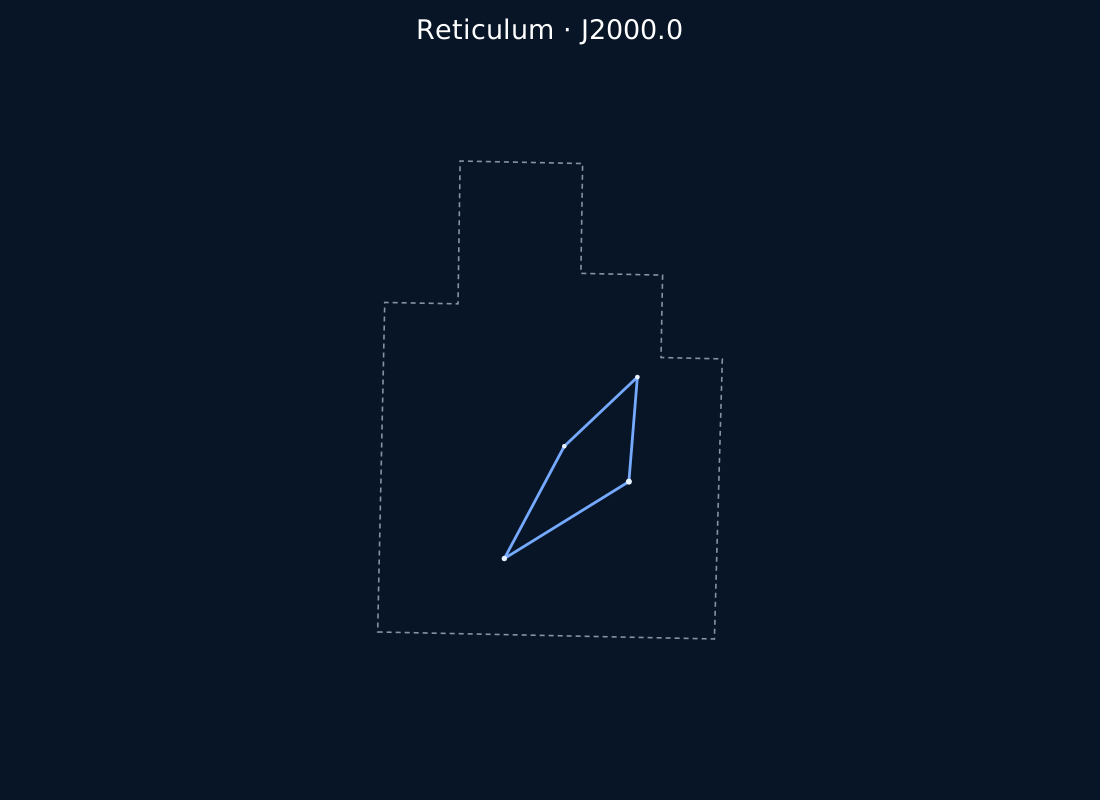
Reticulum remembers a small measuring device that helped Lacaille turn moving star images into a catalog.
Read the story Open the chart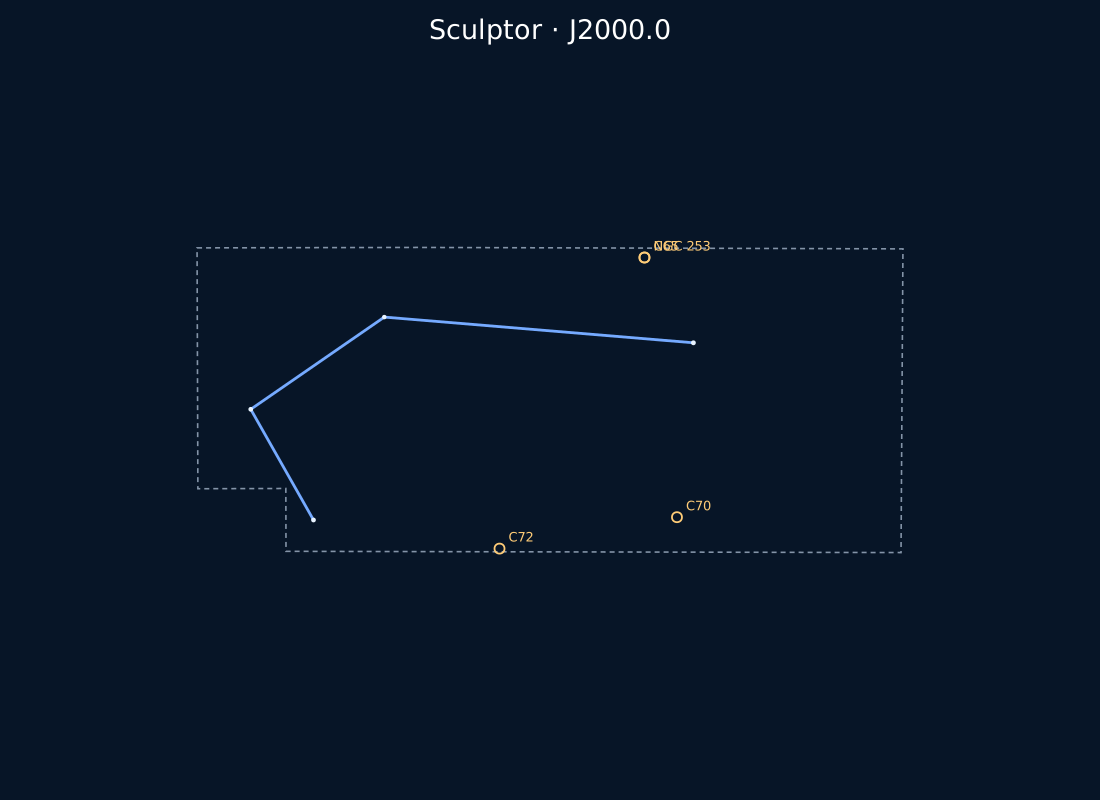
Sculptor began as a collection of an artist’s tools and materials, giving a profession its own celestial place.
Read the story Open the chart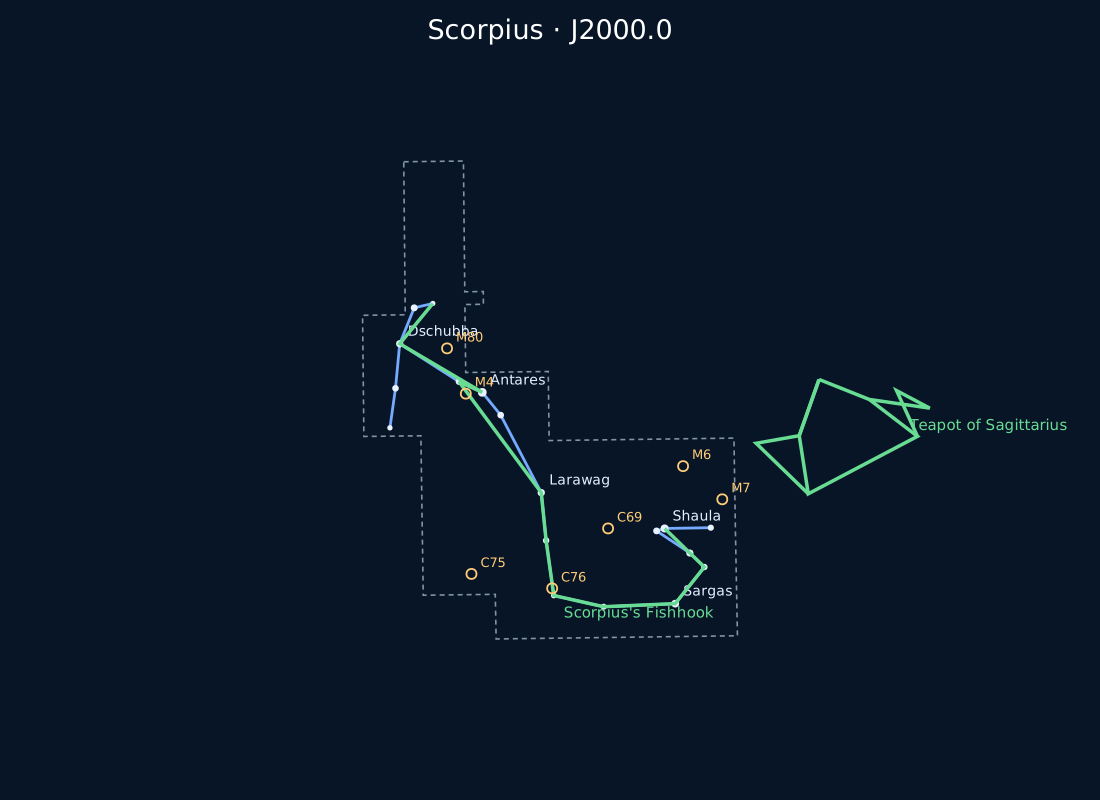
Scorpius gives Orion’s adversary a sweeping tail and a red star at the center of its celestial body.
Read the story Open the chart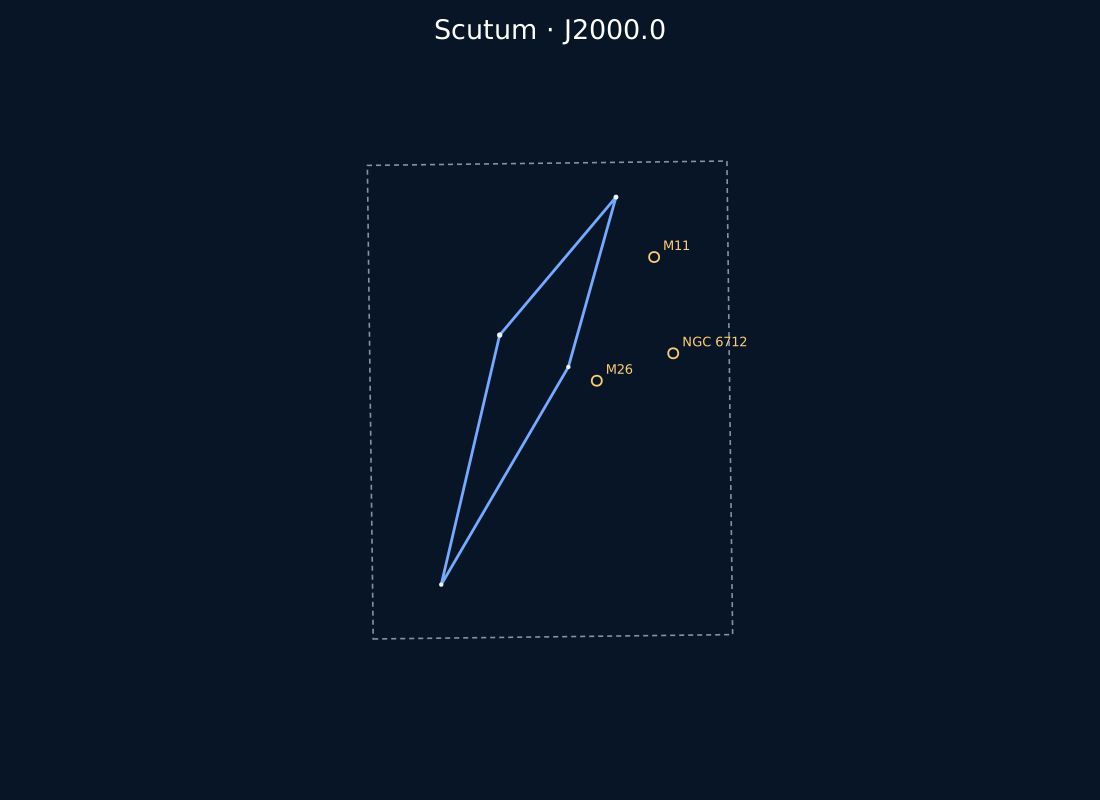
Scutum preserves a seventeenth-century act of gratitude and commemoration in a brilliant stretch of the Milky Way.
Read the story Open the chart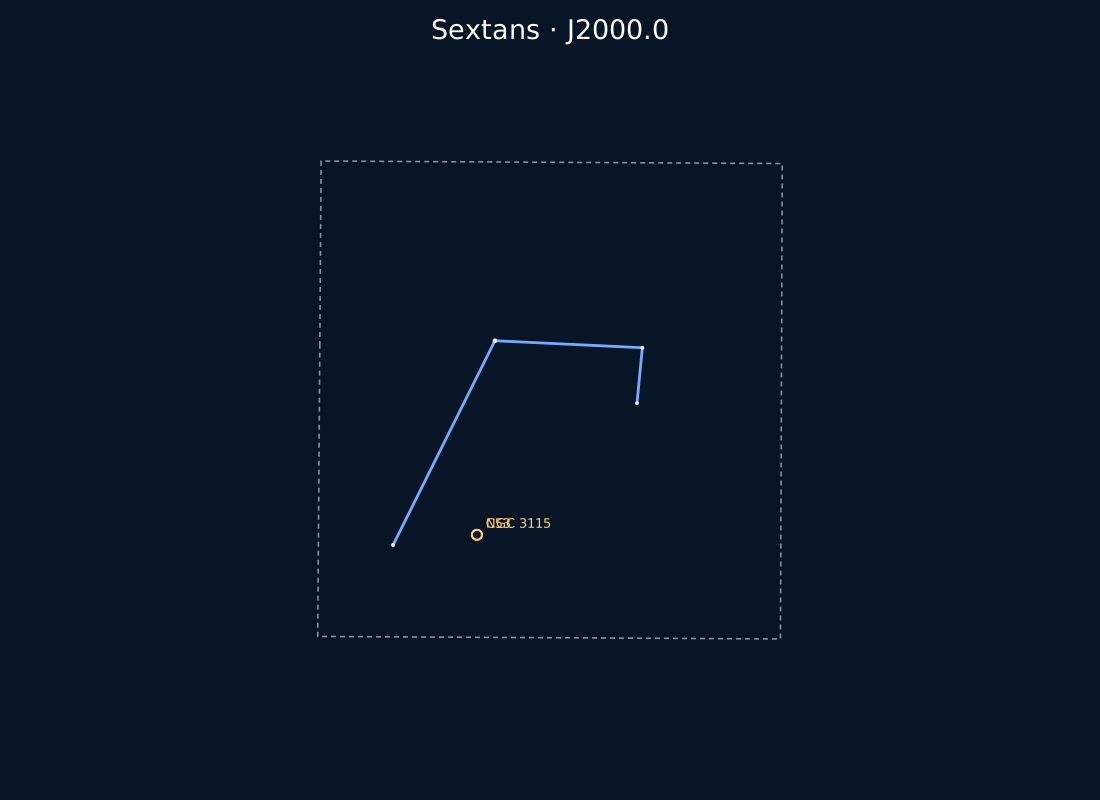
Sextans preserves the great measuring tool used by Hevelius and Elisabeth in their work on the stars.
Read the story Open the chart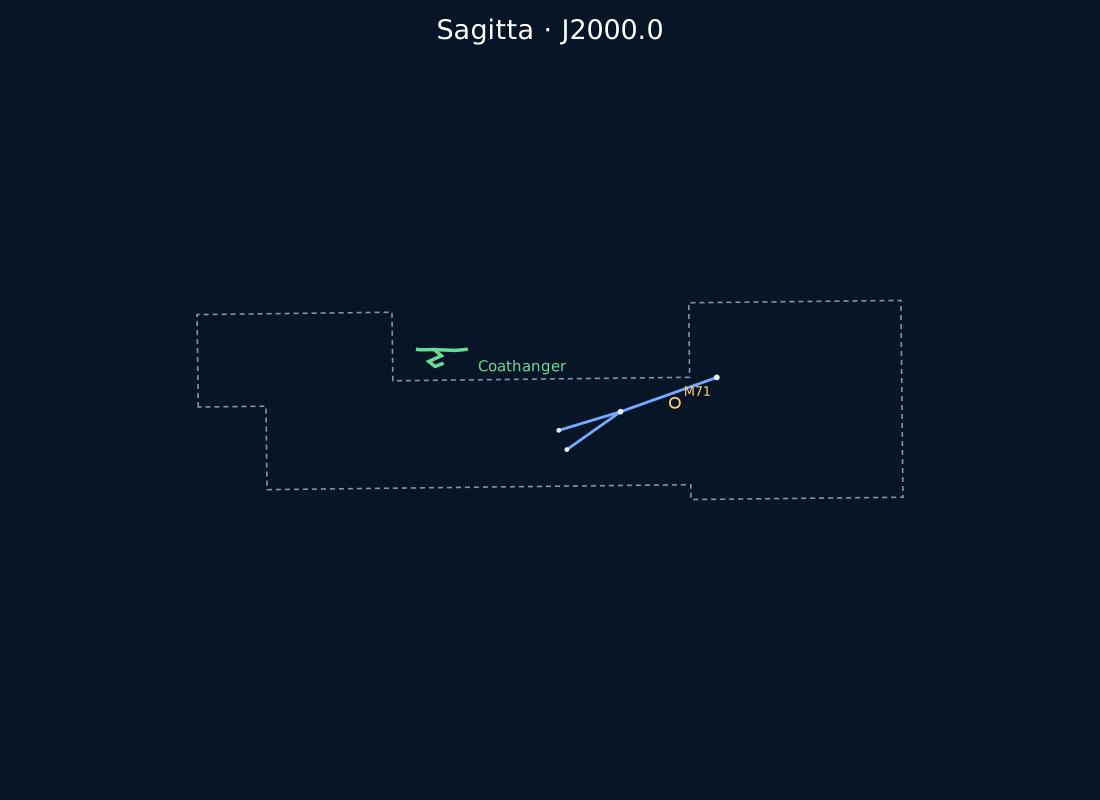
Tiny Sagitta has been assigned to heroes and gods, each giving the same short shaft a different purpose.
Read the story Open the chart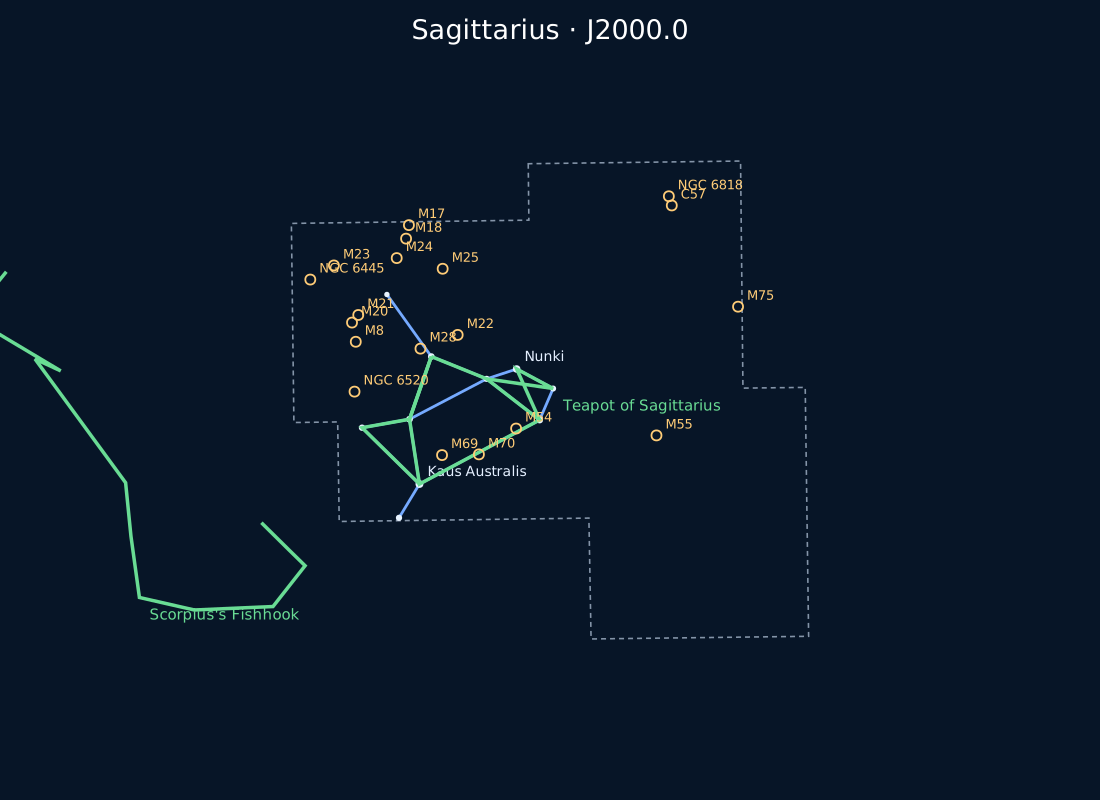
Sagittarius joins a many-layered celestial figure to one of the richest directions in the Milky Way.
Read the story Open the chart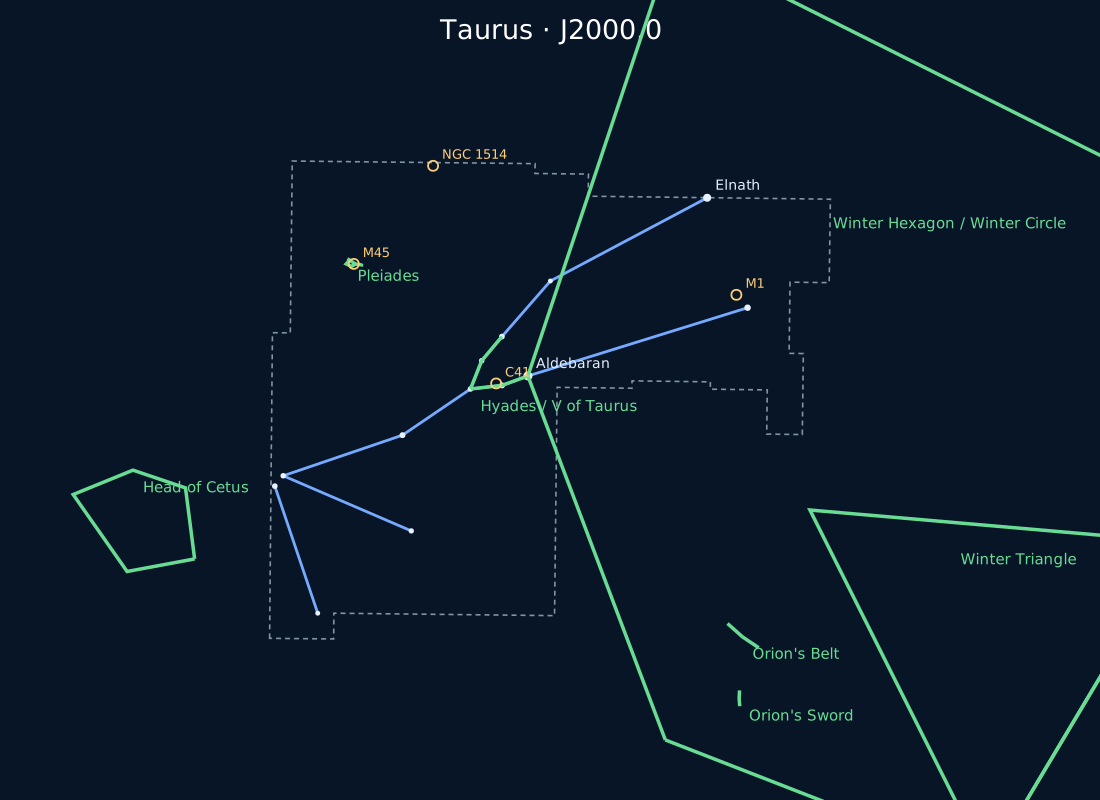
Taurus brings a bright red eye, two celebrated clusters and a troubling divine disguise into the winter sky.
Read the story Open the chart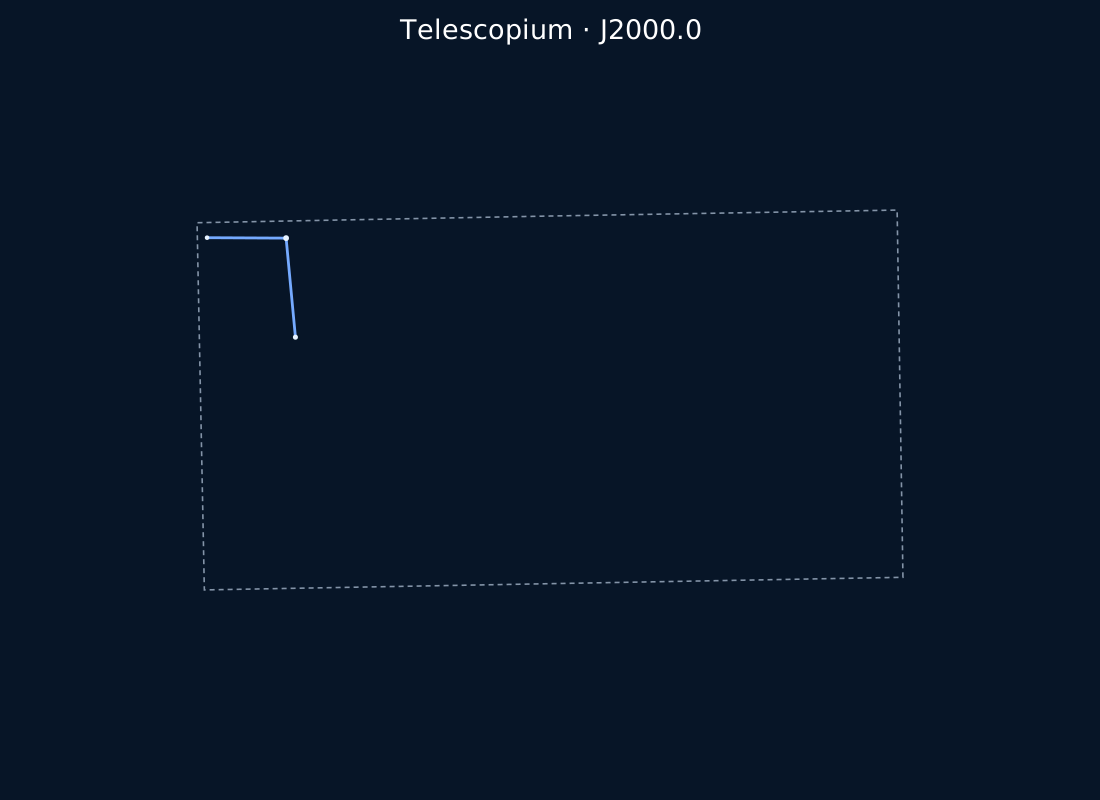
Lacaille put astronomy’s own instrument among the southern stars, honoring the means by which the familiar sky became unfamiliar.
Read the story Open the chart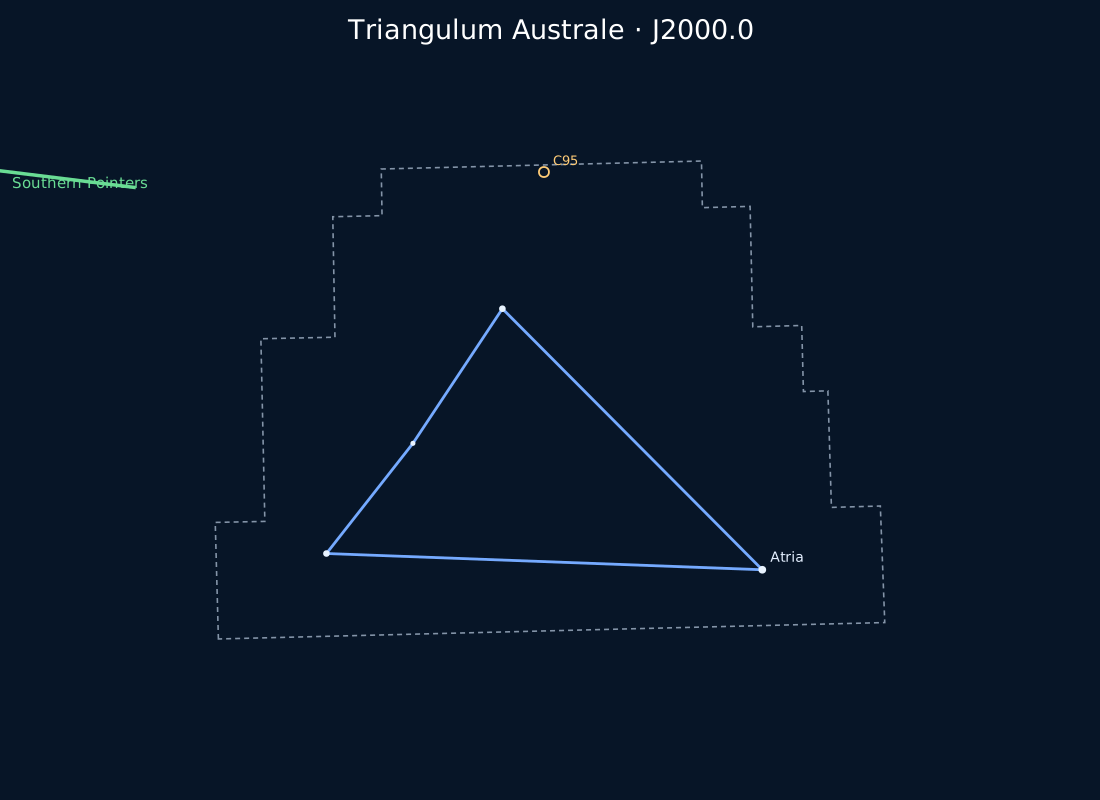
Three conspicuous stars gave voyagers and mapmakers a simple figure to carry onto the southern celestial globe.
Read the story Open the chart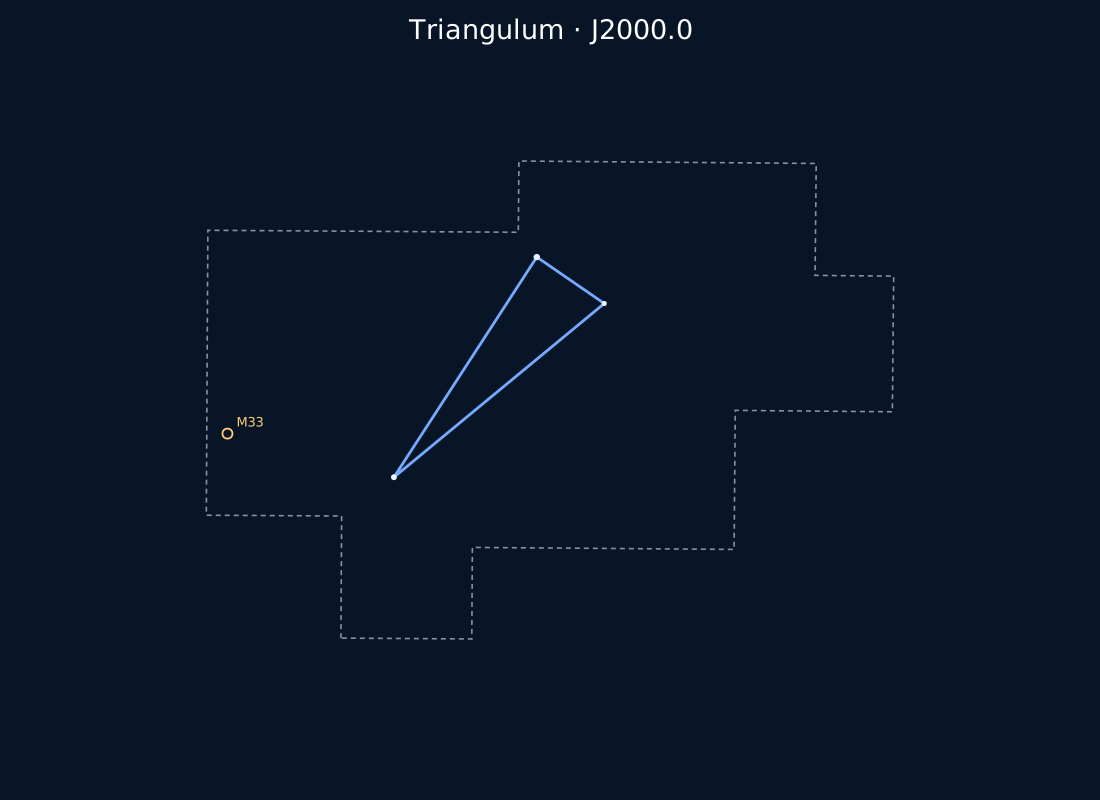
Triangulum’s simple shape has represented a letter, a landscape and a small sign beneath Andromeda.
Read the story Open the chart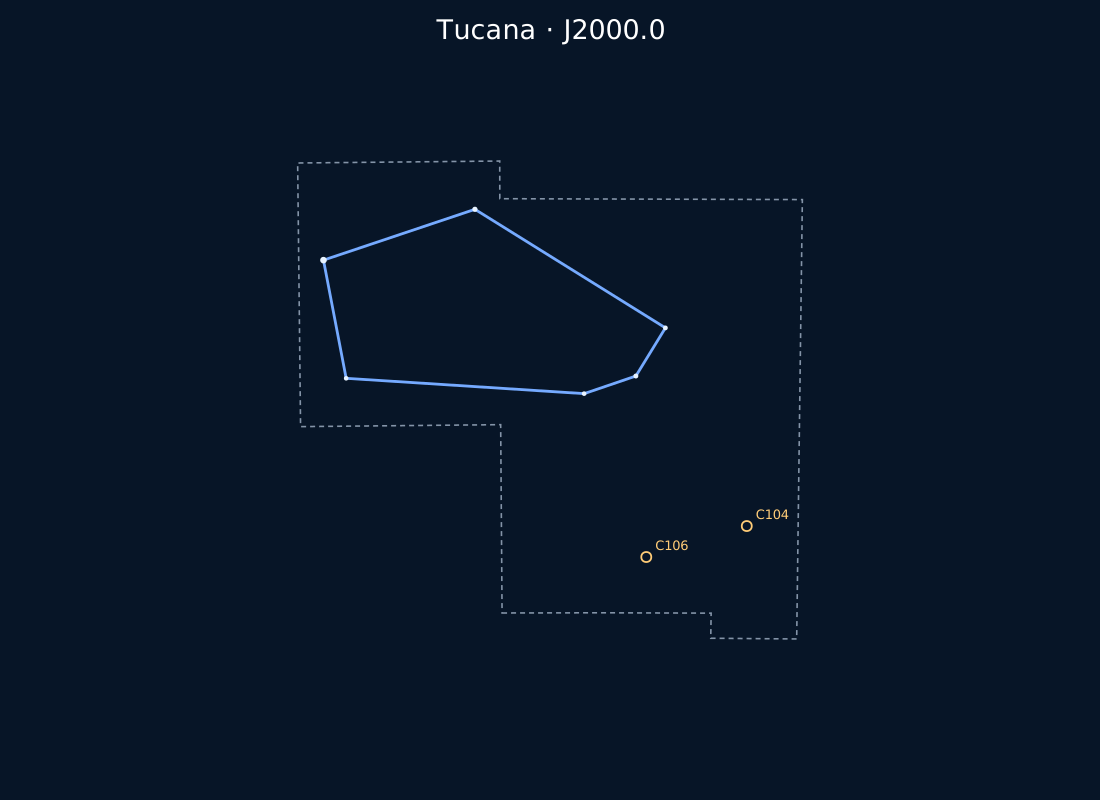
Tucana’s familiar toucan preserves a less settled history of travel, translation and changing pictures.
Read the story Open the chart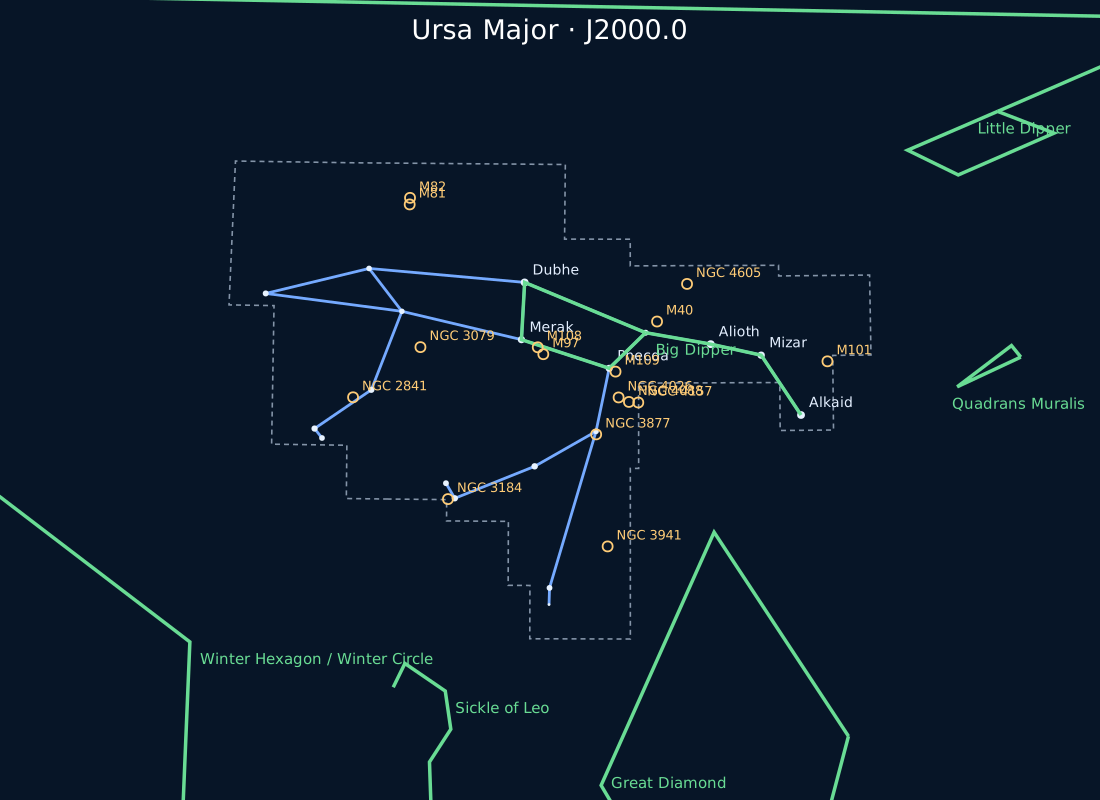
Ursa Major holds a well-known northern signpost within a much larger figure, and a story of a mother who could no longer be recognized.
Read the story Open the chart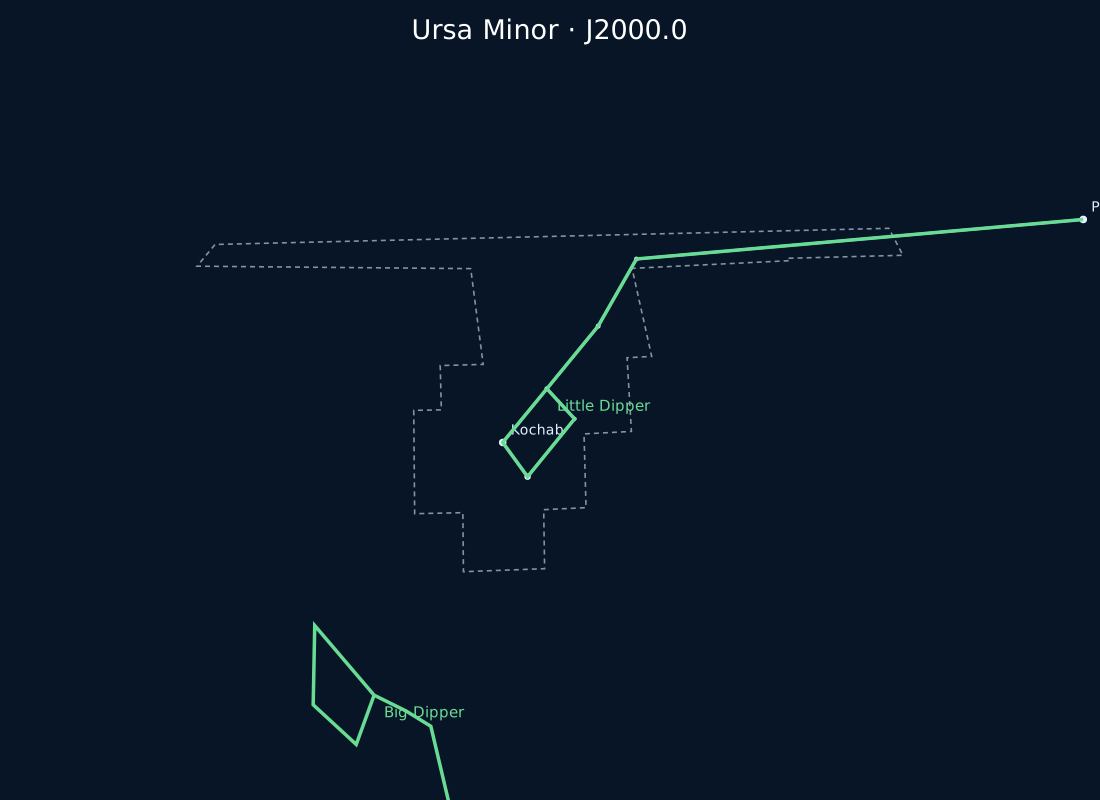
Ursa Minor’s tail leads to Polaris, a useful guide whose apparent stillness comes from Earth’s turning.
Read the story Open the chart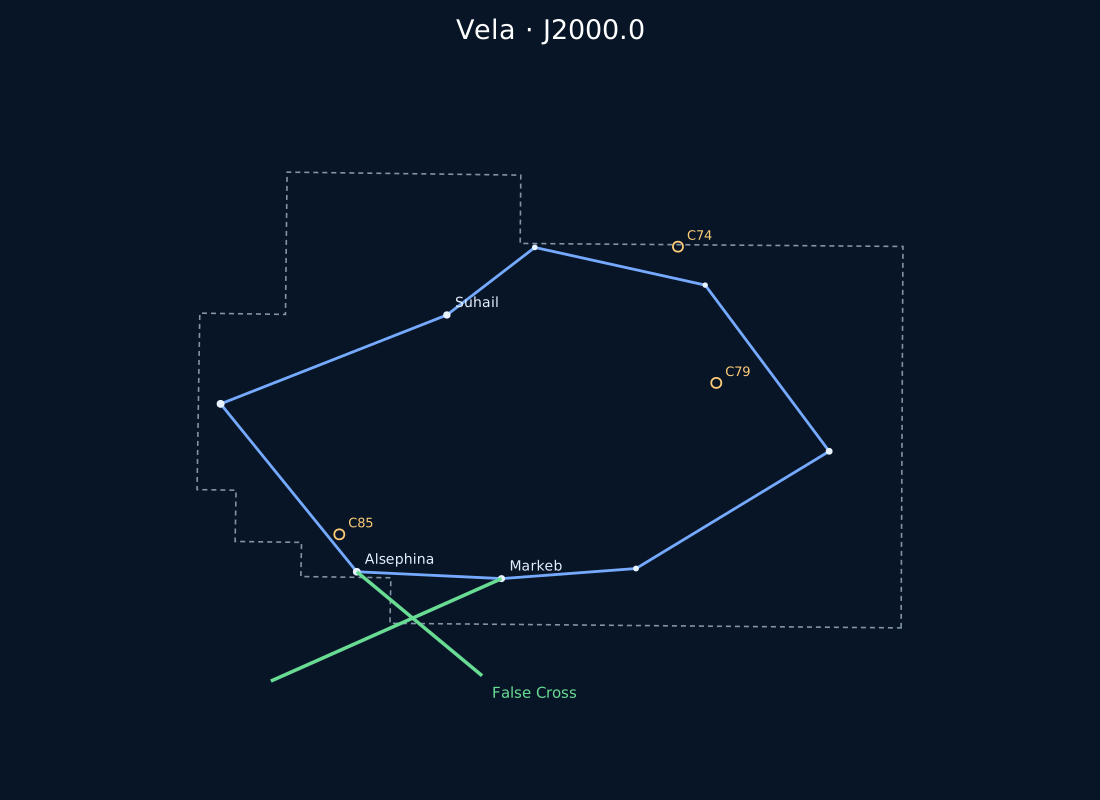
Vela preserves part of Argo’s later celestial form, above a region marked by the remains of an exploded star.
Read the story Open the chart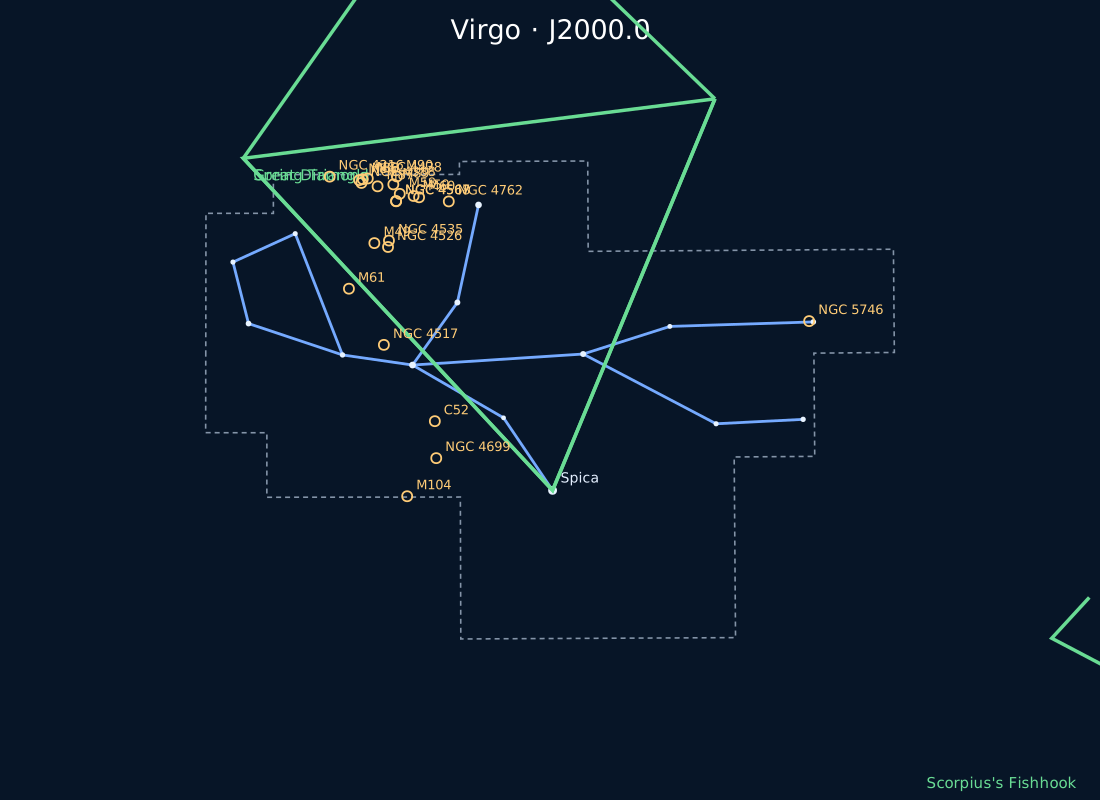
Virgo has carried the figures of harvest and justice, including a goddess who could no longer bear humanity’s violence.
Read the story Open the chart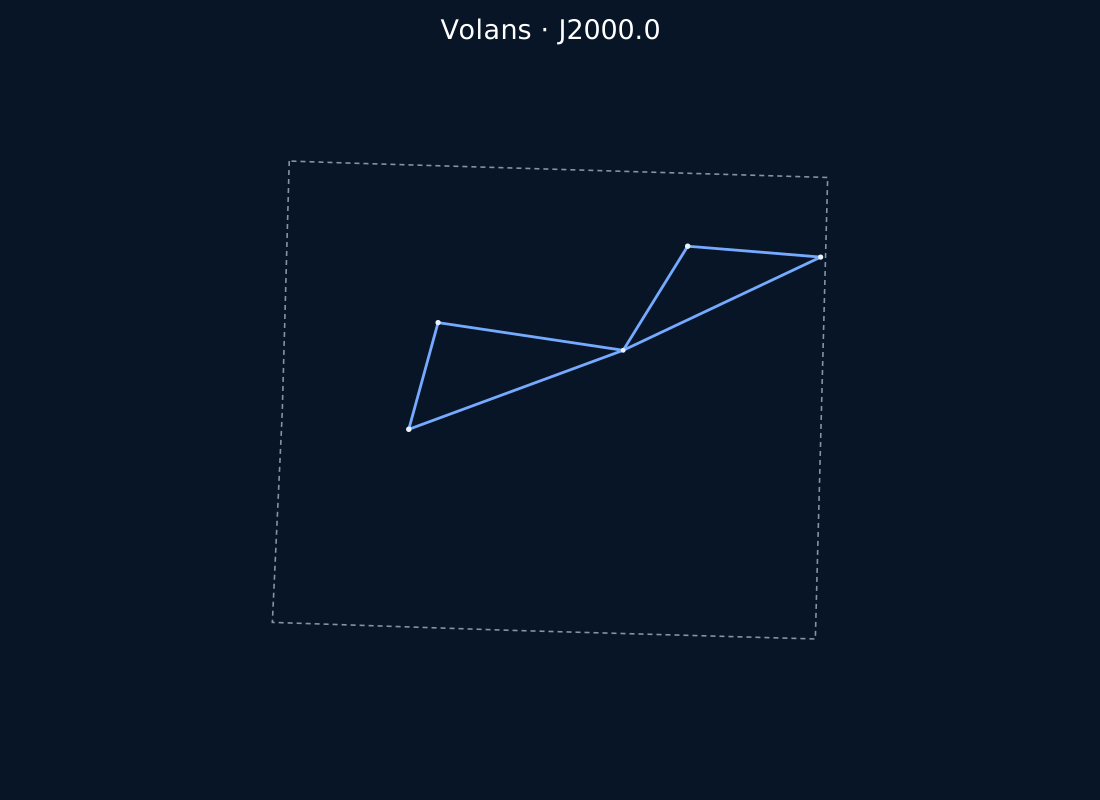
Volans carries a real marvel of ocean life into the sky mapped by early modern voyagers.
Read the story Open the chart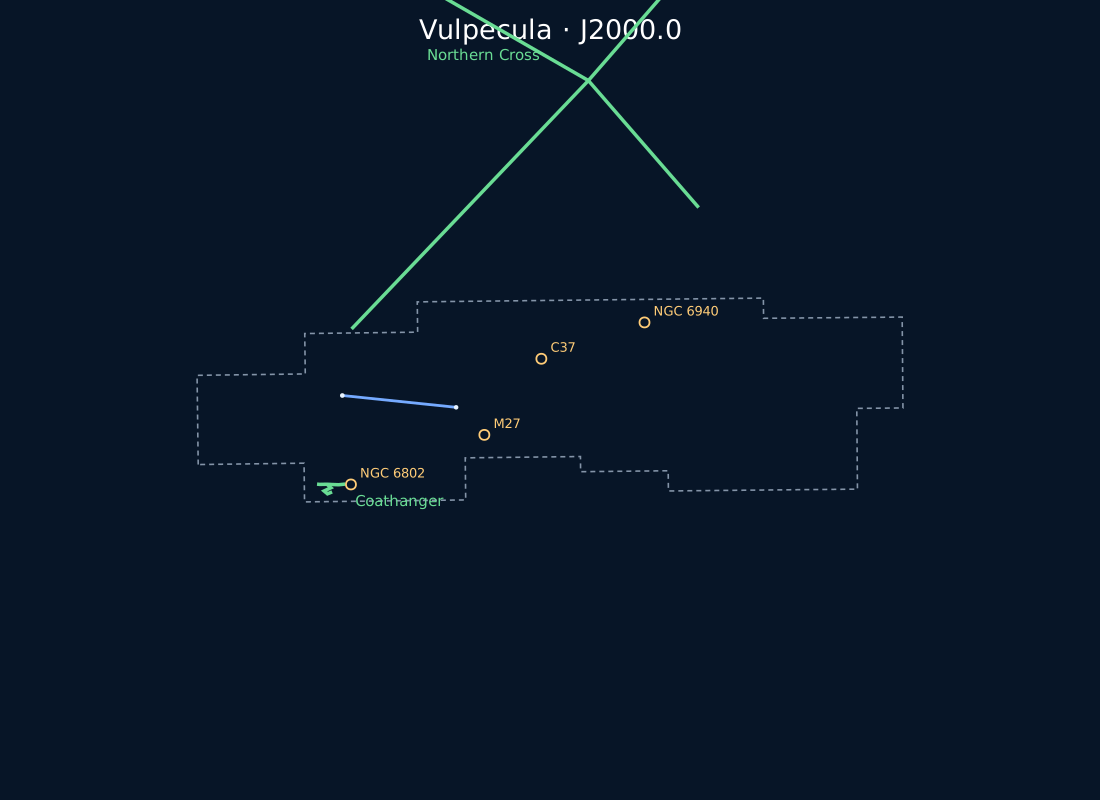
Vulpecula began as a small scene of pursuit and capture, then kept only one animal in its official name.
Read the story Open the chart